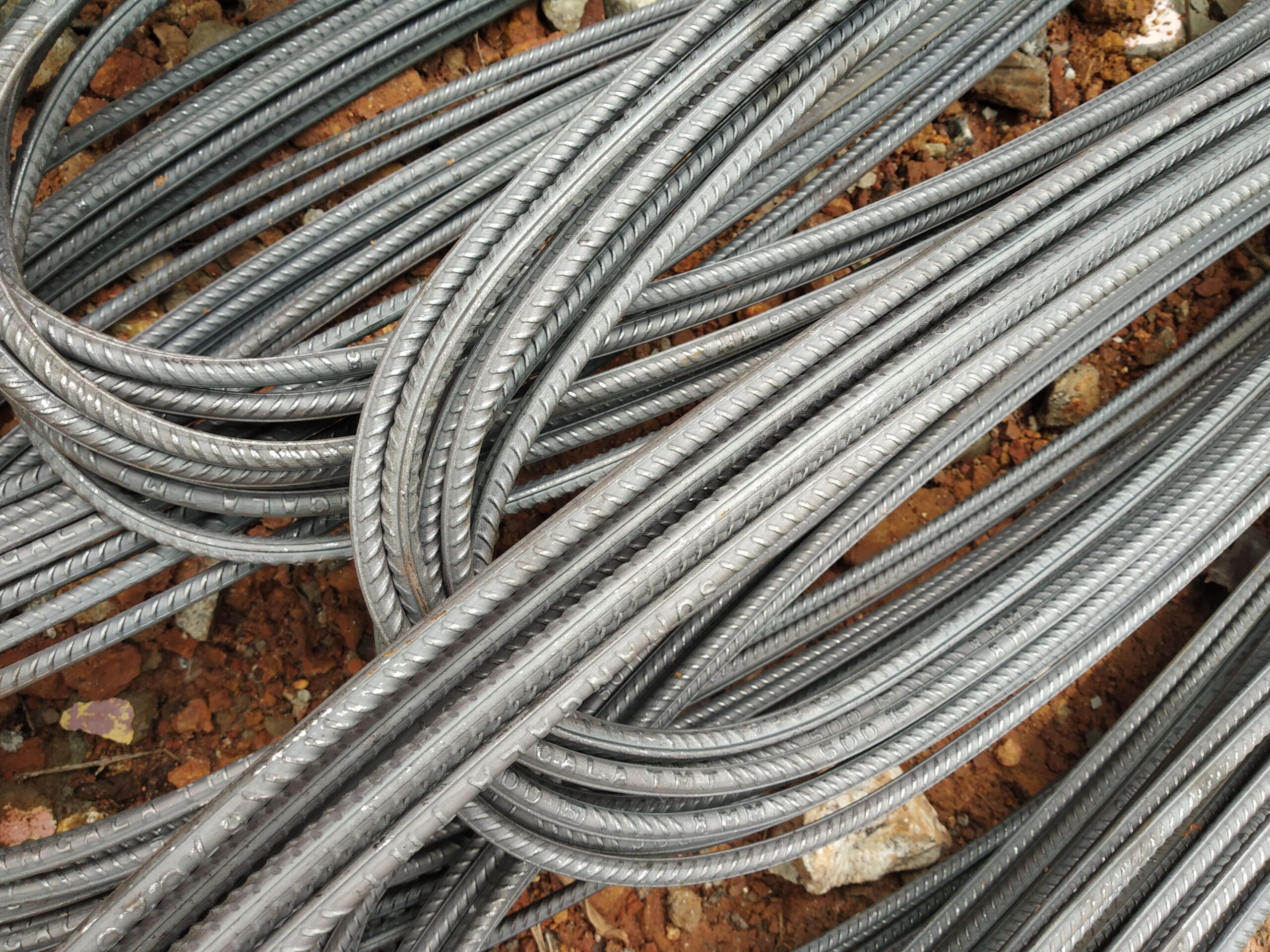
Rebar Bending Radius & Mandrel Sizes
Understanding minimum bending radii and mandrel sizes for DIN 488 B500B rebar — with a reference table covering 8 mm to 40 mm diameters, and guidance on springback and cut-length deductions.
Why Bending Radius Matters for Rebar
Bending radius — more precisely, the inside radius of a bent bar — governs whether the steel deforms plastically without cracking, splitting the ribs, or fracturing the bar. Bend too tight and the outer fibres of the bar exceed the steel’s elongation capacity, risking micro-cracking that compromises ductility. For B500B rebar this is especially significant because B500B requires a minimum elongation at maximum force (Agt) of 5.0%, and any bending damage can reduce this below the DIN 488 / EN 10080 threshold.
The mandrel size is the diameter of the bending pin or former around which the bar is bent. The inside bending radius equals half the mandrel diameter. Standards express minimum bending requirements in multiples of the bar diameter (d), making the requirement scale automatically with bar size.
Minimum Bending Radii per EN 1992-1-1 and DIN 488
Eurocode 2 (Table 8.1) and DIN 488 / EN 10080 together define the minimum mandrel diameter for bends, hooks, and loops. The values below apply to B500B (high ductility) bars bent at ambient temperature. Cold-bent or coil-straightened B500A bars use the same table but check with the manufacturer for coil-specific guidance.
| Bar Dia d (mm) | Min Mandrel Dia — Hooks & Bends (mm) | Inside Radius r (mm) | Min Mandrel Dia — Loops (mm) | Inside Radius — Loops (mm) |
|---|---|---|---|---|
| 8 | 32 (4d) | 16 | 40 (5d) | 20 |
| 10 | 40 (4d) | 20 | 50 (5d) | 25 |
| 12 | 48 (4d) | 24 | 60 (5d) | 30 |
| 16 | 64 (4d) | 32 | 80 (5d) | 40 |
| 20 | 80 (4d) | 40 | 100 (5d) | 50 |
| 25 | 100 (4d) | 50 | 125 (5d) | 62 |
| 28 | 112 (4d) | 56 | 140 (5d) | 70 |
| 32 | 128 (4d) | 64 | 160 (5d) | 80 |
| 40 | 200 (5d) | 100 | 200 (5d) | 100 |
Values based on EN 1992-1-1 §8.3 for B500 class bars bent at ambient temperature. For bars ≥ 20 mm used as hooks/bends in seismic zones (B500C), consult the relevant national annex and EN 1998-1.
Cut-Length Deduction for Bends
Every bend consumes bar material at the outside of the curve. The cut-length deduction per bend depends on the bend angle and the inside radius. For a 90° bend at 4d inside radius, the standard deduction is 2d per bend. For a 135° stirrup hook, deduct approximately 3d. These deductions are approximate; more precise values accounting for strain neutral axis shift are available in bending schedule software.
Example: a 16 mm B500B stirrup with four 90° corners and two 135° hooks:
- Sum of outer dimensions: 450 + 450 + 450 + 450 = 1,800 mm
- Deductions: 4 × 2 × 16 (90° corners) + 2 × 3 × 16 (hooks) = 128 + 96 = 224 mm
- Cut length: 1,800 − 224 = 1,576 mm
Using the formula kg/m = d² × 0.00617: 16 mm bar = 1.58 kg/m. Cut length = 1.576 m → 2.49 kg per stirrup. See our companion post on preparing a rebar cutting list for how these values feed into the full schedule.
Springback and Overbending
Rebar springs back elastically after the bending force is released. The springback angle for B500B at 4d radius is typically 2°–5° for a 90° target bend, increasing with bar diameter and decreasing with tighter radii. Automated CNC bending machines correct for springback automatically by overbending slightly. When bending is done manually or on older equipment, the operator must test and adjust. Excessive overbending to compensate can damage the bar surface — a reason to use factory fabrication (cut-and-bend service) where tight tolerances matter. Our cut-and-bend supply covers stirrups and shaped bars to DIN 488 shape codes.
Cold Bending vs. Hot Bending
DIN 488 bars are always bent cold (at ambient temperature). Hot bending — heating a bar red-hot to reduce force — is not permitted for B500B and B500C because heat alters the microstructure, reduces yield strength, and destroys the ductility grading. Where a very tight radius is unavoidable, mechanical couplers or a redesign of the detail is preferred over hot bending. If rebar has been bent and needs re-straightening, EN 1992-1-1 §8.3 permits re-straightening of bars ≤ 16 mm only in non-critical positions and subject to the engineer’s approval.
Bending Requirements for Seismic Grade B500C
B500C rebar (seismic grade, k ≥ 1.15–1.35, Agt ≥ 7.5%) is used in primary seismic structural elements under EN 1998-1. The higher ductility requirement means bending radii must be strictly maintained and re-bending is not permitted. Stirrups in seismic columns must have 135° hooks with a straight extension of at least 10d or 70 mm — verify against EN 1998-1 §5.6 and the applicable national annex for the destination country.
Frequently Asked Questions
Common questions about rebar bending radii and mandrel sizes.
What is the minimum bending radius for 16 mm B500B rebar?
Can I re-bend rebar that has already been bent?
Why does the mandrel size requirement differ for loops vs. hooks?
Do coil rebar (B500A) have the same bending requirements?
How do I specify bending requirements on an export order?
Source German-standard rebar with full export documentation
Tell us your specification and destination port — we’ll respond with a detailed quotation.