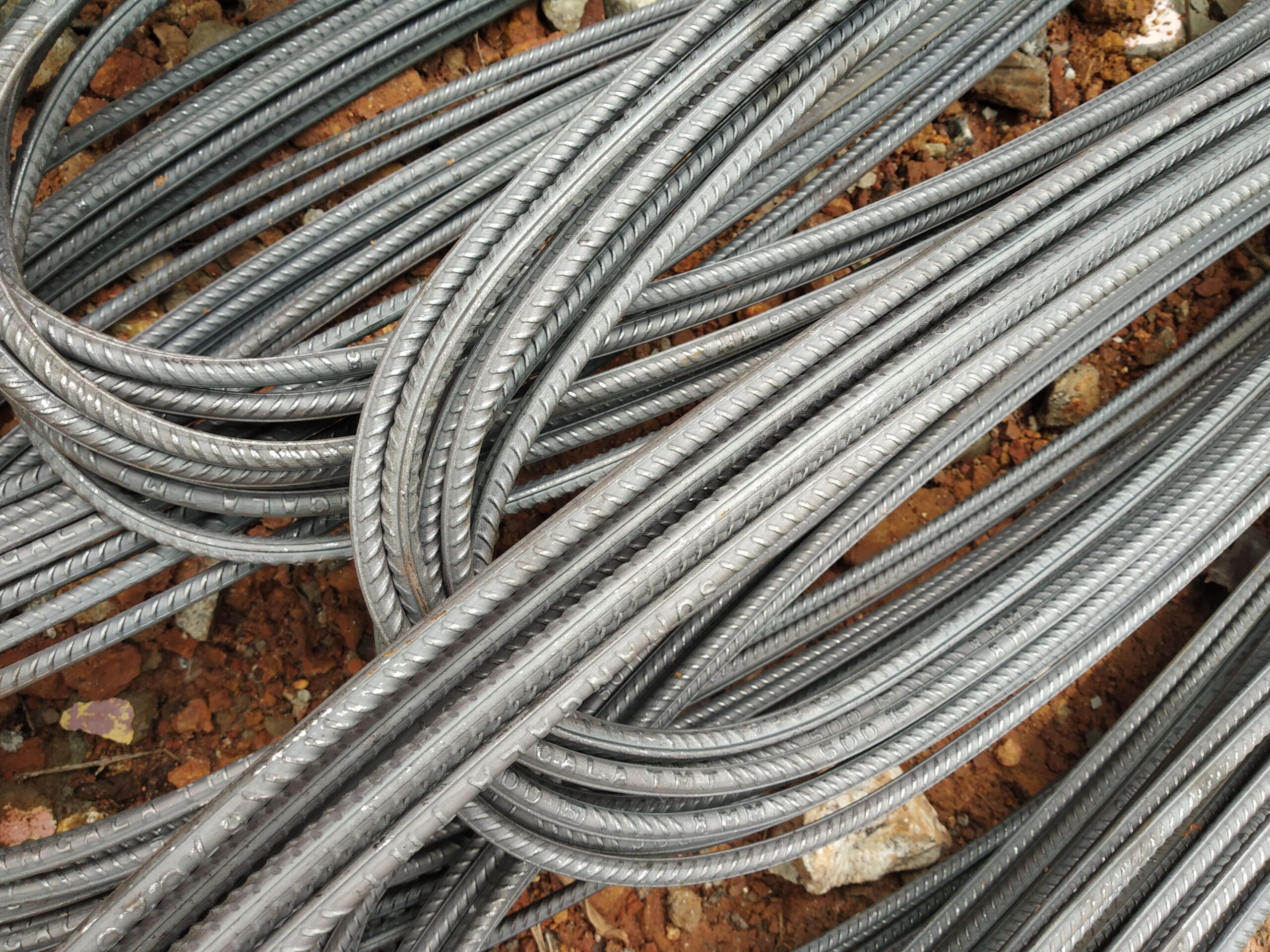
Epoxy-Coated Rebar: Pros, Cons & When to Specify It
Epoxy-coated rebar offers a fusion-bonded barrier against chloride-induced corrosion, but comes with trade-offs in bond strength, handling requirements, and cost. This guide covers the key advantages, limitations, and project contexts where it makes sense — and when uncoated B500B with adequate cover is the better choice.
What Is Epoxy-Coated Rebar?
Epoxy-coated rebar (ECR) is conventional carbon steel reinforcing bar — typically to ASTM A775 / A934 in North American markets, or equivalent — that receives a factory-applied fusion-bonded epoxy (FBE) coating, typically 175–300 µm thick. The coating acts as a dielectric barrier, interrupting the electrochemical corrosion cell that forms when chloride ions (from seawater, de-icing salts, or marine spray) penetrate concrete cover and reach unprotected steel.
Epoxy-coated rebar is not a common product in the German/European standards framework under DIN 488 or EN 10080, which instead rely on minimum concrete cover rules, high-quality concrete, and optional stainless or galvanised alternatives for aggressive exposure classes (XS, XD). Buyers specifying ECR for export projects should confirm the base steel specification aligns with the local structural standard.
Advantages of Epoxy-Coated Rebar
- Chloride barrier: An intact FBE coating significantly reduces the rate of chloride ingress to the bar surface — the primary driver of reinforcement corrosion in bridge decks, marine structures, and car parks treated with de-icing salts.
- Cost vs. stainless: ECR costs considerably less than stainless steel rebar (AISI 316LN / 2205 duplex), making it an economical upgrade over black bar for moderately aggressive exposures (Eurocode XD2 / XS1 equivalent).
- Established specification: ASTM A775 / A934 are well-defined, widely understood standards with decades of field history — particularly in US bridge and highway infrastructure.
- Compatible with standard B500 base steel: The coating is applied to conventional 500 MPa reinforcing bar; structural mechanical properties (yield, tensile, ductility) are unchanged.
Disadvantages and Limitations
- Reduced bond strength: The smooth epoxy surface reduces the bar-to-concrete bond by approximately 20–25 % compared to uncoated deformed bar. Development lengths must be increased accordingly (AASHTO LRFD applies a modification factor of 1.2–1.5 depending on cover and coating).
- Coating damage in handling: FBE is vulnerable to impact, abrasion, and bending. On-site cuts, bends, and tying operations damage the coating; damaged areas must be patched with compatible repair compound — adding labour cost and quality risk.
- Holiday (pinhole) corrosion: If chlorides reach an unrepaired holiday through cracked concrete, galvanic action can accelerate corrosion at the defect site — potentially faster than for uncoated bar where corrosion spreads more evenly.
- Limited European standardisation: No DIN or EN product standard for FBE-coated rebar exists. European projects in aggressive exposure classes typically rely on increased cover (Eurocode 2 Table 4.4N), high-performance concrete (W/C ≤ 0.40), or galvanised/stainless rebar instead.
- Temperature sensitivity: Fusion bonding requires controlled factory conditions; field repairs cannot replicate factory coating integrity.
Epoxy-Coated vs. Galvanised vs. Uncoated Rebar: Quick Comparison
| Property | Uncoated B500B | Epoxy-Coated (FBE) | Hot-Dip Galvanised |
|---|---|---|---|
| Corrosion protection | None (relies on cover) | Good (chloride barrier) | Good (sacrificial zinc) |
| Bond to concrete | Full (deformed ribs) | Reduced ~20–25 % | Slight reduction |
| Weldability | Yes (DIN EN ISO 17660) | Remove coating first | Yes (with precautions) |
| European standard | DIN 488 / EN 10080 | No EN standard | EN ISO 1461 / prEN 10348 |
| Relative cost | Baseline | Moderate premium | Moderate–high premium |
| Typical application | General structural | Bridge decks, marine (US) | Marine, coastal, tunnels |
When to Specify — and When Not To
ECR is most justified where concrete cover is inherently limited (thin bridge deck slabs, precast elements) and chloride exposure is high (marine splash zones, exposed bridge decks in cold climates). It is less relevant where adequate cover depth and high-quality concrete can be achieved, which is the preferred European approach under Eurocode 2 exposure classes.
For projects requiring German or EU-standard rebar with corrosion protection, Steel Rebar Germany recommends discussing the exposure class requirements with your structural engineer first. In many cases, B500B with XS or XD-class concrete mix design and 40–55 mm nominal cover provides the most cost-effective and standards-compliant solution. Where a coated product is genuinely required, we can source and supply to the applicable specification with full documentation. See our Standards & Certification page for exposure-class guidance, and our Galvanised Rebar post for a related alternative.
Frequently Asked Questions: Epoxy-Coated Rebar
Is epoxy-coated rebar available to DIN 488 / EN 10080?
Does the epoxy coating affect the rebar’s structural performance?
Can epoxy-coated rebar be welded?
What happens if the epoxy coating is damaged on site?
Source German-standard rebar with full export documentation
Tell us your specification and destination port — we’ll respond with a detailed quotation.