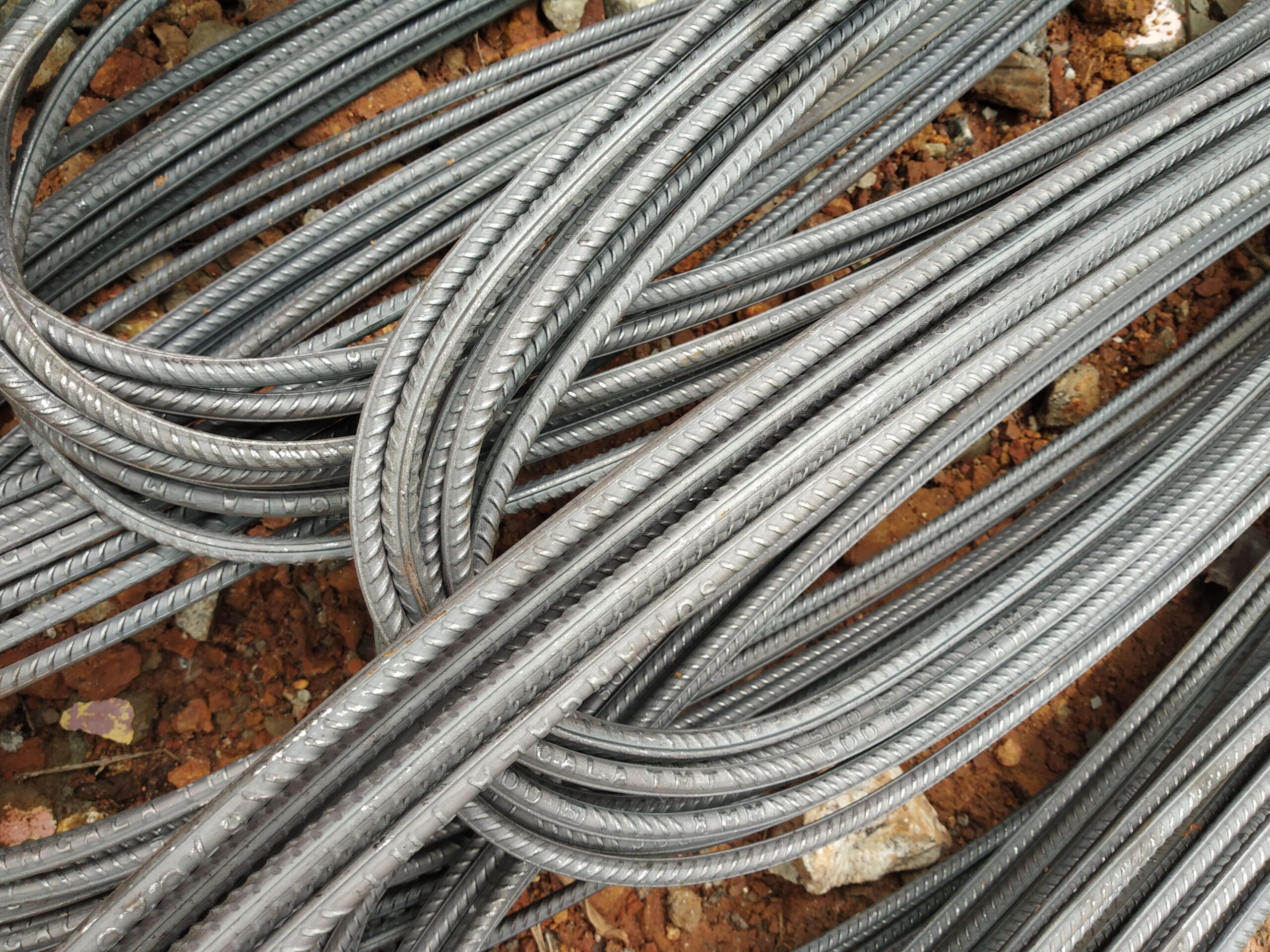
Rebar in Precast vs In-Situ Concrete: Key Differences for International Buyers
Choosing the right reinforcement strategy — precast or cast-in-place — affects rebar grade, bar diameter, tolerances, and documentation requirements. This guide breaks down each method with technical specifics and procurement implications.
Why the Precast vs In-Situ Choice Matters for Rebar Procurement
When international buyers source German-standard reinforcing steel, one of the most consequential early decisions is whether the rebar will go into a precast concrete facility or into cast-in-place (in-situ) pours on site. Both methods consume B500B or B500A grade steel to DIN 488 / EN 10080, yet the physical form, cutting tolerances, coil vs. bar format, and certification pathways differ meaningfully. Getting this specification right before placing an order avoids costly mill re-cuts, customs re-inspection, and programme delays on site.
Steel Rebar Germany supplies to both production environments. This guide is written so procurement engineers and project buyers can align their purchase order with the actual construction method — and request the correct mill documentation from the outset.
Precast Concrete: Rebar Requirements and Characteristics
Precast elements — floor slabs, wall panels, beam cages, hollow-core units, filigree slabs — are manufactured under controlled factory conditions. This introduces several rebar-specific requirements:
- Tight dimensional tolerances: Factory jigs demand cut lengths within ±5 mm or better. Standard BS 8666 / DIN 488 shape-code cut-and-bend accuracy (typically ±25 mm on straight lengths) may need to be specified tighter. Confirm your precast plant’s requirements with the supplier before ordering pre-cut material.
- Welded mesh (Betonstahlmatte): Precast floor panels and wall elements frequently use factory-welded mesh to DIN 488-4 (Q and R types), which is faster to place in a mould than loose bars. Standard panel size is 6.0 × 2.3 m; bespoke sizes are available. Mesh wire is typically B500A (Agt ≥ 2.5 %).
- Lattice girders (Gitterträger): Filigree composite slabs integrate a prefabricated lattice girder — a welded assembly of top chord, diagonals and bottom chord in B500B — which acts as structural reinforcement and temporary propping during lifting. Lattice girder heights typically range from 60 mm to 200 mm depending on slab depth.
- B500A coil feed: Automated stirrup benders and mesh-welding lines in precast plants run from coil (6–16 mm, hot- or cold-rolled B500A). Coil format reduces handling and enables continuous feeding into CNC machines.
- Traceability requirements: Many precast plants operate under ISO 9001 or national approvals that require heat-traceable Mill Test Certificates (EN 10204 3.1) linked to each delivery lot.
In-Situ Concrete: Rebar Requirements and Characteristics
Cast-in-place reinforced concrete — foundations, columns, shear walls, transfer slabs, bridge decks — is placed and poured on the construction site. The rebar environment is more variable and the bar range wider:
- Large-diameter bars dominate: Columns, pile caps, and deep foundations regularly call for Ø25, Ø28, Ø32, and Ø40 mm B500B bars, diameters rarely needed in standard precast production. Weight per metre climbs steeply: a 32 mm bar weighs 6.31 kg/m vs. 0.617 kg/m for 10 mm.
- Long stock lengths: Site reinforcing typically uses bars in 12 m stock lengths (up to 18 m for large infrastructure), cut and bent on-site or in a nearby processing yard. Minimising on-site offcuts reduces waste and cost.
- Mechanical couplers: Where lap splices are impractical — high-rise columns, pile-to-cap connections, post-tensioned anchorage zones — parallel-thread or taper-thread mechanical couplers (dia 12–40 mm) provide a code-compliant connection without congested laps.
- B500B bar grade: In-situ structural elements predominantly specify B500B (high ductility, k ≥ 1.08, Agt ≥ 5.0 %) to satisfy ductility demand categories in Eurocode 2. Seismic zones may further require B500C (Agt ≥ 7.5 %, 1.15 ≤ k < 1.35).
- Export packing: For international site delivery, bars are bundled in seaworthy packs of approximately 2 tonnes, banded with steel strapping, and shipped in containers or break-bulk. Mill Test Certificates and Certificate of Origin accompany each consignment.
Side-by-Side Comparison: Precast vs In-Situ Rebar
| Parameter | Precast Concrete | In-Situ Concrete |
|---|---|---|
| Typical diameter range | 6–20 mm (mesh/lattice: 4–12 mm) | 8–40 mm |
| Primary grade | B500A (coil/mesh), B500B (cages) | B500B; B500C in seismic zones |
| Common supply format | Coil, welded mesh, lattice girder | Straight bar (6–18 m), cut-and-bend |
| Dimensional tolerance | Tight (plant jig requirements) | Standard DIN 488 / BS 8666 |
| Splicing method | Weld (DIN EN ISO 17660) or lap | Lap, coupler, or weld |
| Key cert requirement | EN 10204 3.1, lot traceability | EN 10204 3.1, CoO, CE/DoP |
| Handling unit | Coil, mesh panel, cage | Bundle (~2 t), loose bar |
How Rebar Grade Properties Affect the Decision
Both B500A and B500B share the same minimum yield strength of 500 MPa and are covered by DIN 488 and EN 10080. The critical distinction is ductility. B500A (k ≥ 1.05, Agt ≥ 2.5 %) is adequate for elements where plastic hinge formation is not expected — a common situation in statically loaded precast elements designed to Eurocode 2 without seismic provisions. B500B (k ≥ 1.08, Agt ≥ 5.0 %) provides the higher ductility margin required in moment-resisting frames and seismic design situations.
For in-situ elements in seismically active regions (e.g., Southern Europe, Middle East, North Africa), B500C with characteristic uniform elongation Agt ≥ 7.5 % and a controlled k range (1.15 ≤ k < 1.35) is frequently mandated by the national annex of EN 1998 (Eurocode 8). Always check the structural engineer’s specification before placing an order — grade substitution on structural reinforcement is not permitted without engineer approval.
Procurement Tips When Ordering for Both Methods on One Project
Large infrastructure and mixed-use projects often combine precast elements (staircases, columns, wall panels) with substantial in-situ pours (foundations, cores). When ordering across both construction methods, consolidate the following:
- Issue separate purchase orders (or clearly segregated line items) for coil/mesh vs. bar stock — they ship in different pack formats and may originate from different product lines.
- Specify the EN 10204 3.1 Mill Test Certificate for all structural product lines. Request that heat/cast numbers are referenced on delivery notes so traceability survives site handling.
- Confirm that bar and coil markings (rolled-on identification marks per DIN 488 Part 1) are visible and legible on arrival — these identify grade and manufacturer without needing to cross-reference paperwork.
- For export destinations, state the destination country in the quote request so the correct Certificate of Origin and any country-specific test requirements can be included.
See our full product range covering B500B bars, coils, welded mesh, lattice girders, couplers, and cut-and-bend services, or visit the cut-and-bend page for shape-code processed material suitable for precast cage fabrication.
Frequently Asked Questions
Common questions from international buyers comparing precast and in-situ rebar specifications.
Can the same B500B bar be used in both precast and in-situ elements?
Why do precast factories prefer B500A coil over B500B bar?
What documentation should I request for precast-production rebar?
For in-situ seismic structures, which rebar grade should I specify?
How are rebar bundles packed for container export?
Source German-standard rebar with full export documentation
Tell us your specification and destination port — we’ll respond with a detailed quotation.