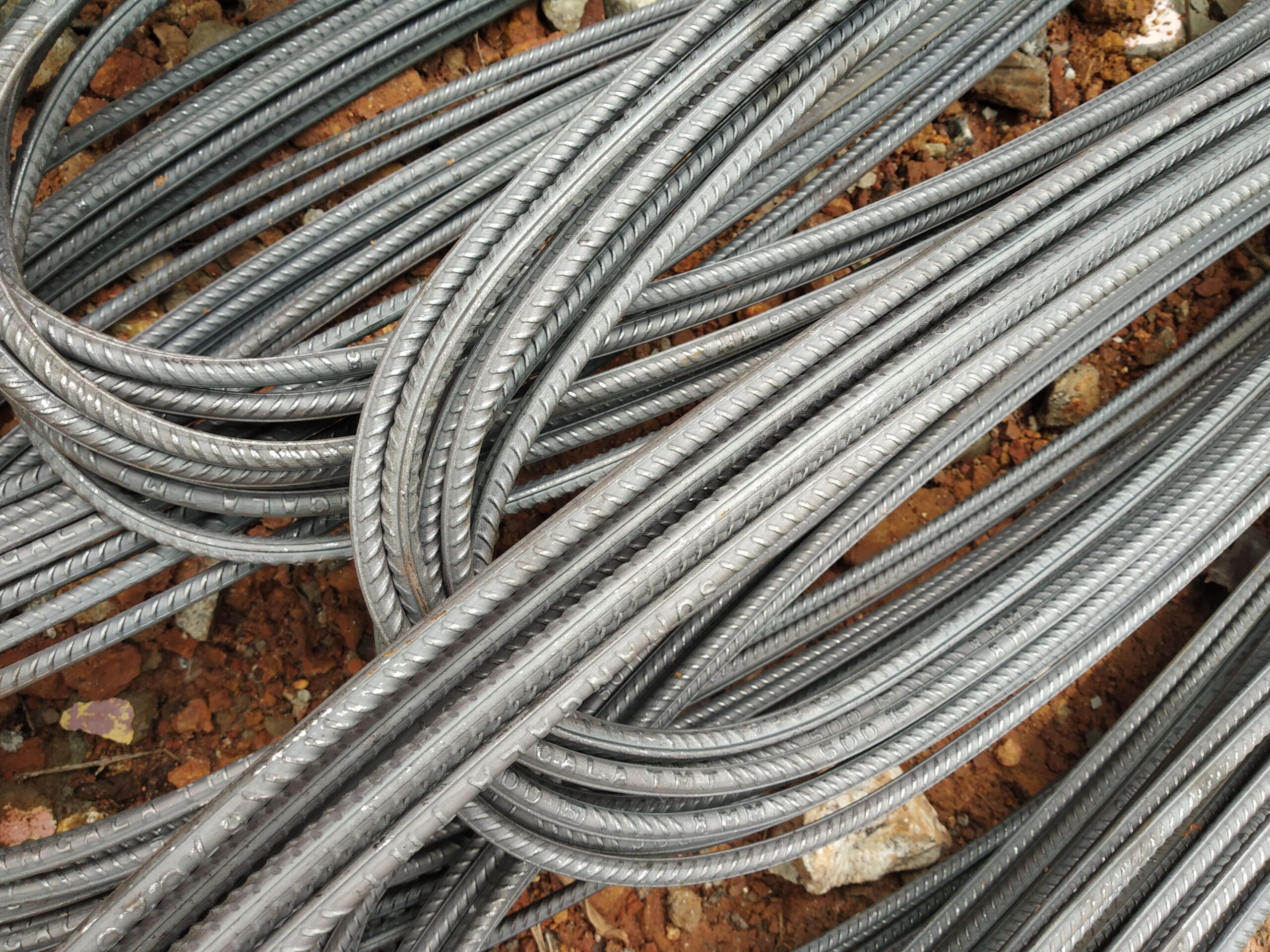
What Concrete Cover Does Rebar Need?
Exposure classes XC, XD, and XS explained — with nominal cover values, construction tolerances, and practical guidance for DIN 488 / EN 10080 reinforcing steel projects worldwide.
Why Concrete Cover for Rebar Matters
Concrete cover for rebar — the distance from the outer face of the concrete to the nearest surface of the reinforcing steel — is one of the most critical durability parameters in any reinforced concrete structure. Too little cover and aggressive agents (CO₂, chlorides, moisture) reach the steel surface prematurely, initiating corrosion that can lead to cracking, spalling, and structural loss within decades. Too much cover, and the structural depth of the element is wasted. Eurocode 2 (EN 1992-1-1) and the supporting standard EN 206 provide a rigorous, exposure-class-based framework for determining the correct cover for any project.
The cover requirement applies equally whether the bar is B500A, B500B, or B500C per DIN 488 — all are carbon-manganese steel requiring the same passivation protection from the concrete matrix.
Eurocode 2 Exposure Classes: XC, XD, XS and Beyond
EN 206 and EN 1992-1-1 Table 4.1 classify environments into exposure classes that directly drive minimum cover and minimum concrete strength class. The main groups relevant to reinforcement corrosion are:
- XC1–XC4 — Carbonation-induced corrosion: XC1 (dry or permanently wet interior), XC2 (wet, rarely dry), XC3 (moderate humidity — most sheltered exterior surfaces), XC4 (cyclic wet and dry — exposed facades, bridge decks).
- XD1–XD3 — Chloride from de-icing salts: XD1 (moderate humidity), XD2 (wet, rarely dry), XD3 (cyclic wet/dry — road bridge decks, parking structures).
- XS1–XS3 — Marine chloride: XS1 (airborne salt, not direct contact), XS2 (permanently submerged), XS3 (tidal, splash and spray — most aggressive).
- XF1–XF4 — Freeze-thaw (affects concrete; increased cover also beneficial).
- XA1–XA3 — Chemical attack (sulfates, aggressive soils/water).
A single structural element may carry multiple exposure classes. The most demanding class governs minimum cover for each face.
Nominal Cover, Minimum Cover, and Tolerance
Eurocode 2 (Clause 4.4.1) defines three cover terms that must be understood together:
- cmin — minimum cover, the lower limit. Must satisfy both bond requirements (cmin,b, typically equal to bar diameter) and durability requirements (cmin,dur, from exposure class table).
- Δcdev — construction tolerance allowance, standardly 10 mm (reducible to 5 mm with assured quality control).
- cnom — nominal cover = cmin + Δcdev. This is the value specified on drawings and checked on site.
| Exposure Class | Typical Environment | cmin,dur (mm) | cnom with Δcdev=10 mm |
|---|---|---|---|
| XC1 | Dry interior, permanently submerged | 15 | 25 mm |
| XC2 | Foundations, wet rarely dry | 25 | 35 mm |
| XC3 | Sheltered exterior facades | 25 | 35 mm |
| XC4 | Exposed facades, cyclic wet/dry | 30 | 40 mm |
| XD1 | Moderate humidity near de-icing salts | 35 | 45 mm |
| XD3 / XS3 | Bridge decks, marine splash/spray | 45 | 55 mm |
Structural Class Adjustments
The table above is based on Structural Class S4 (the default for 50-year design life buildings). Eurocode 2 Table 4.3N allows the structural class — and hence cmin,dur — to be adjusted by one class up or down based on: design service life (100-year → +1 class), concrete strength class above minimum required (≥C35/45 for XC → −1 class), slab geometry (position assured → −1 class), and special quality assurance (−1 class). Infrastructure designed for 100 years typically lands at S5 or S6, adding 5–10 mm to cmin,dur.
Bond Cover vs Durability Cover
For large-diameter bars, bond requirements may govern. cmin,b is typically equal to the bar diameter (db) for individual bars, or 1.0 × db for bundled bars. For a 32 mm bar in an XC1 interior environment, the durability minimum is 15 mm but bond minimum is 32 mm — so bond governs, and cnom = 32 + 10 = 42 mm. In most practical cases with 12–20 mm bars in exterior environments, durability governs.
Maintaining Cover on Site: Spacers and Chairs
Specifying the correct nominal cover is necessary but not sufficient. Cover must be physically achieved during concrete placement. DBV-compliant plastic or mortar spacers and rebar chairs are used to hold the reinforcement at the specified position during the pour. Inadequate spacer spacing allows bars to deflect under the weight of fresh concrete, locally reducing cover. Our rebar spacers and accessories page covers the DBV spacing guidelines and available spacer types. See also our post on rebar depth in slabs for placement guidance.
Frequently Asked Questions
Concrete cover questions from structural engineers and project buyers.
What is the minimum concrete cover for rebar in an interior slab?
How much cover does rebar need in a marine environment?
What is the difference between minimum cover and nominal cover?
Does bar diameter affect the required concrete cover?
How does Eurocode 2 define exposure classes for concrete cover design?
Source German-standard rebar with full export documentation
Tell us your specification and destination port — we’ll respond with a detailed quotation.