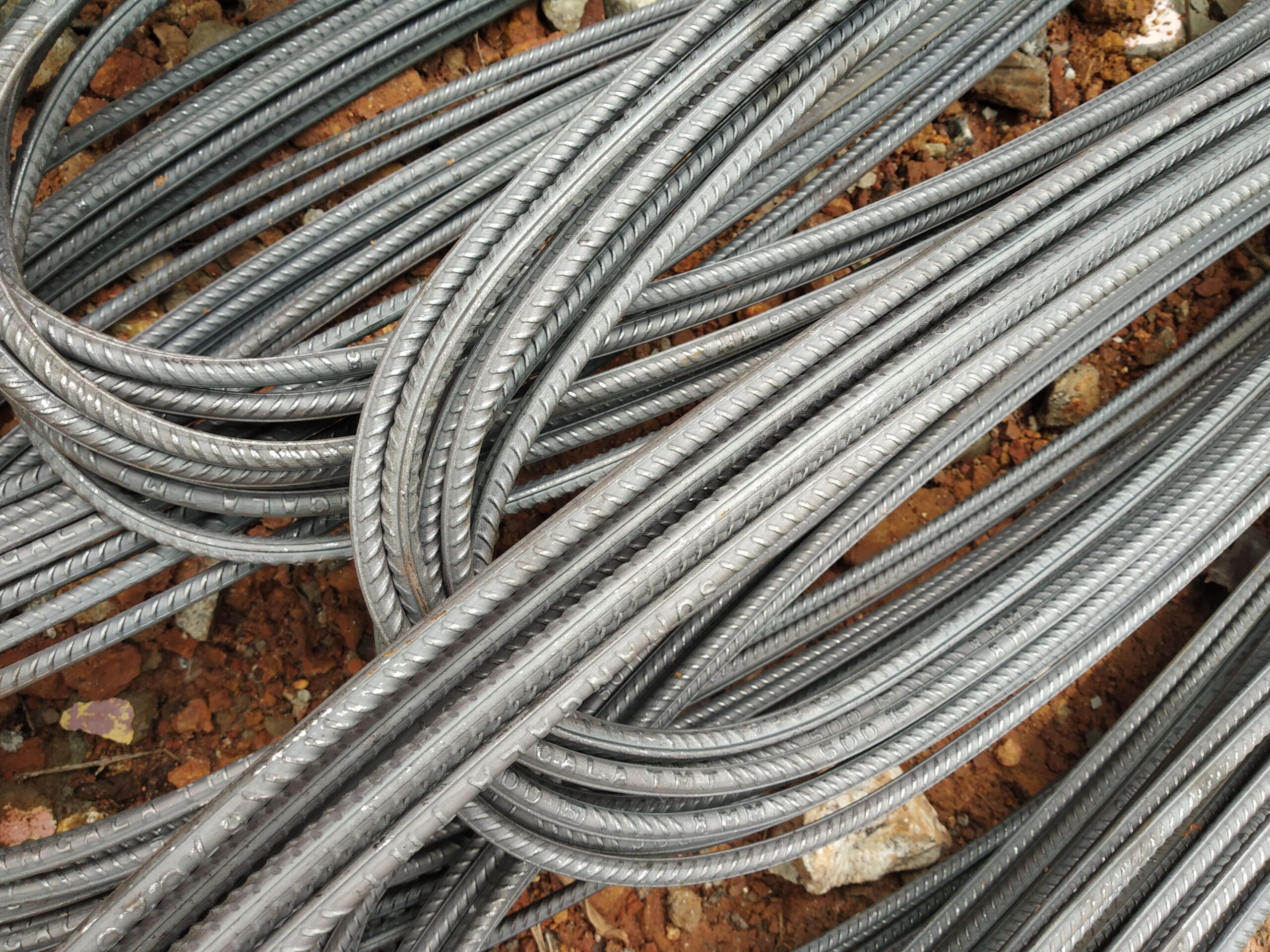
Position (Positional) Rebar Couplers
The specialist mechanical splice for joining bars in fixed or pre-assembled cages where rotation is impossible — sizes 12–40 mm, full bar-strength performance, compliant with Eurocode 2.
What Is a Position (Positional) Rebar Coupler?
A position coupler — sometimes called a positional coupler or one-way coupler — is a mechanical splice designed for situations where one or both bars cannot be rotated. In a standard parallel-thread coupler, both bars are screwed into the sleeve from each end by rotating them. This is straightforward for loose bar ends but impractical when bars are already fixed in position inside a reinforcement cage or embedded into hardened concrete.
The position coupler solves this by incorporating a locking mechanism — typically a lock-nut, grub-screw, or segmented ring — that fixes the threaded bar in place after a single-direction insertion. One bar end (typically the protruding starter bar) is pre-threaded and accepts the coupler half at the factory. The incoming bar is threaded and screwed into the free end of the sleeve on site, then locked off without requiring rotation of the first bar.
This makes position couplers essential for column continuity joints, wall starters cast into slabs, precast element connections, and any junction where the existing reinforcement is already fixed.
Typical Applications in High-Rise and Infrastructure Construction
Position couplers are particularly prevalent in high-rise construction where column rebar cages are lifted by crane and landed onto protruding starter bars from the level below. Key use cases include:
- Column-to-column continuity — starter bars projecting from the column below accept position couplers; incoming cage bars are threaded and locked without disturbing the lower cage.
- Core wall construction — jump-form and slip-form systems leave short projecting bars that cannot rotate once formwork is in place.
- Precast-to-in-situ connections — precast columns or wall panels are cast with couplers on the top face; in-situ bars are inserted and locked on site.
- Pile cap connections — pile reinforcement projecting into the cap cannot be rotated; position couplers allow the cap cage to be connected cleanly.
Size Range
| Bar Dia (mm) | Cross-Section (mm²) | Weight (kg/m) | Typical Sleeve O.D. (mm)* |
|---|---|---|---|
| 12 | 113 | 0.888 | ~26 |
| 16 | 201 | 1.58 | ~32 |
| 20 | 314 | 2.47 | ~38 |
| 25 | 491 | 3.85 | ~46 |
| 32 | 804 | 6.31 | ~56 |
| 40 | 1257 | 9.86 | ~70 |
*Sleeve O.D. values are indicative; actual dimensions depend on coupler system. Confirm exact envelope dimensions at quotation stage to verify concrete cover compliance.
Compliance and Documentation
Position couplers supplied by Steel Rebar Germany are selected from manufacturers who can provide qualification test reports demonstrating conformance with EN 1992-1-1 (Eurocode 2) splice performance criteria. The connected bars are B500B grade per DIN 488 and EN 10080, with Mill Test Certificates (EN 10204 Type 3.1) supplied as standard. Where a project requires a specific national technical approval (ETA) or third-party accreditation, this can be confirmed at tender stage.
Other Coupler Types
Complete the right splice for every connection detail
Standard (Parallel-Thread) Couplers
The everyday in-line splice where both bars can be rotated freely — the most commonly specified type in European RC construction.
Learn more →Transition / Reducer Couplers
Join two bars of different diameters — common at structural curtailment zones or where design loads vary between levels.
Learn more →Weldable Couplers
Couplers welded to structural steel plates or sections for mixed steel-concrete connections and embedded anchor assemblies.
Learn more →Frequently Asked Questions — Position Rebar Couplers
How is a positional coupler different from a standard coupler?
Do position couplers achieve the same strength as standard couplers?
Can position couplers be pre-fitted at the factory?
What concrete cover allowance is needed for position couplers?
Which standards govern position coupler use in Germany and the EU?
Source German-standard rebar with full export documentation
Specify your bar diameter, coupler type, cage configuration, and destination — we’ll respond with a complete quotation and technical data pack.