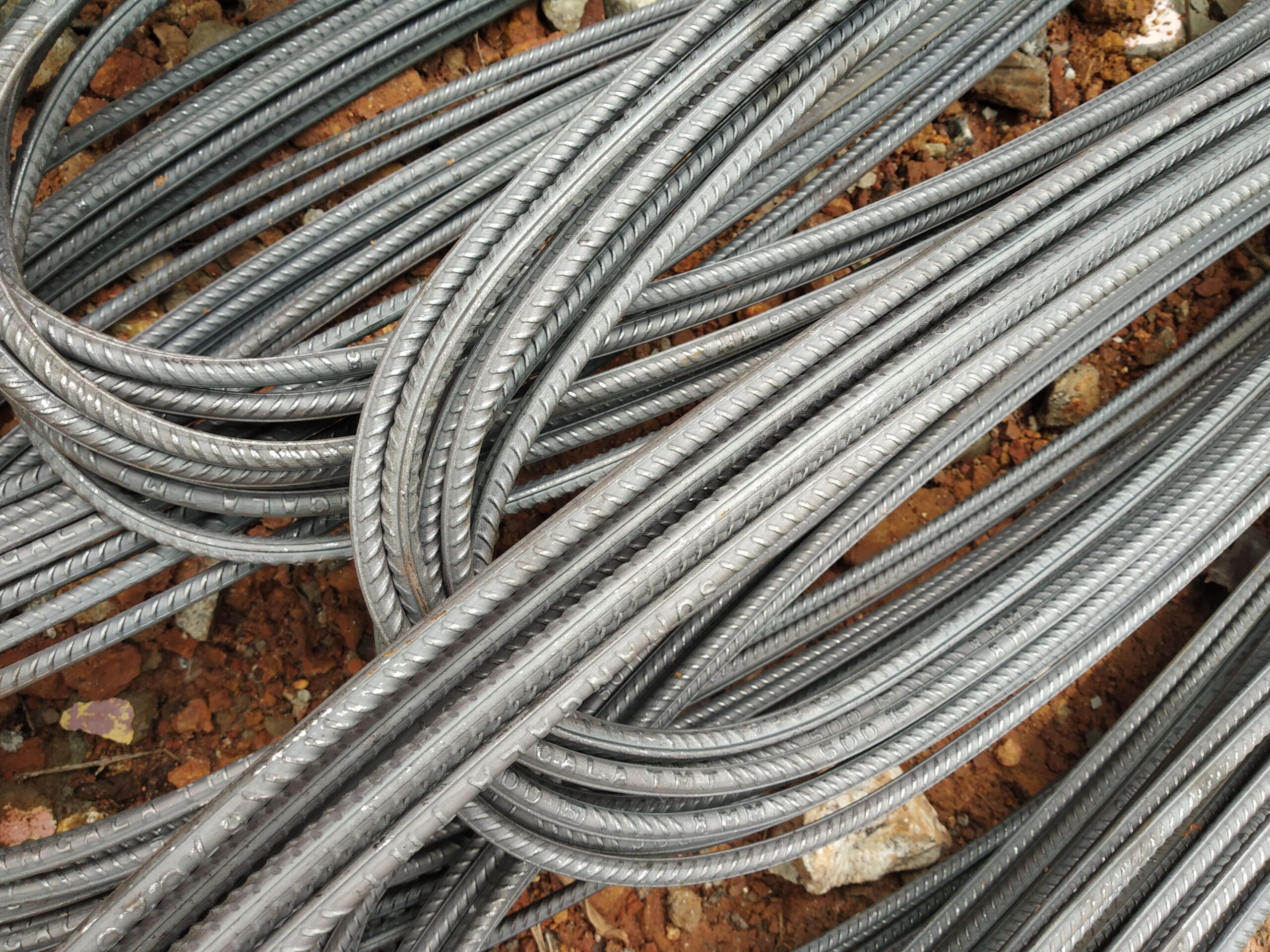
Break-Bulk Rebar Shipping Explained
For international buyers sourcing German-standard reinforcing steel, break-bulk remains one of the most practical and cost-effective ocean freight modes — especially for large tonnage lots that exceed container capacity or require oversized bundle configurations.
What Is Break-Bulk Shipping?
Break-bulk shipping refers to cargo that is loaded and transported as individual units or bundles — rather than being packed inside standardised intermodal containers. For steel rebar, this typically means strapped bundles, typically weighing around 2 tonnes each, loaded directly into the hold of a general-cargo or multi-purpose vessel.
Unlike containerised freight — where goods are sealed inside a 20-foot or 40-foot steel box — break-bulk cargo is handled piece-by-piece at the port. Stevedores lift each rebar bundle using slings or spreader bars, stowing them in the vessel’s hold in carefully arranged layers. At the destination port, the process reverses: bundles are unloaded and transferred directly to trucks, barges, or warehouse storage.
Break-bulk is the traditional method for shipping long steel products. Rebar bars come in standard lengths of 6 m, 9 m, 12 m, and up to 18 m. A 12 m bar simply will not fit inside a standard 20-foot container (internal length ≈ 5.9 m) or even a standard 40-foot container (internal length ≈ 12.0 m, with minimal clearance). Break-bulk eliminates that constraint entirely.
Why Break-Bulk Makes Sense for Rebar
Several characteristics of reinforcing steel make break-bulk particularly well-suited for large export orders:
- Length: Standard 12 m bars — the most common stock length for B500B — require vessels with adequate hold dimensions that containers cannot provide without special arrangements.
- Volume: Large infrastructure or civil-engineering projects often require hundreds or thousands of tonnes. Loading that volume into containers adds significant handling costs per tonne compared to bulk stowage.
- Bundle integrity: Seaworthy rebar bundles are strapped, tagged with heat numbers and diameter markings, and wrapped with waterproof paper or plastic on the cut ends. Break-bulk vessels can accommodate these bundles without reformatting.
- Port flexibility: Many destination ports in the Middle East, Africa, and South-East Asia have well-established general-cargo terminals with the cranes and quay space needed to discharge break-bulk steel efficiently.
Break-Bulk vs. Containerised Rebar: A Comparison
| Factor | Break-Bulk | Containerised (flat-rack / open-top) |
|---|---|---|
| Bar length | Up to 18 m, no restriction | Typically ≤ 12 m (tight fit in 40 ft) |
| Minimum order | Typically full vessel parcel (often 500 t+) | Smaller lots feasible (1–5 containers) |
| Cost per tonne | Lower for large volumes | Higher per tonne; better for small orders |
| Port requirements | General-cargo / multipurpose terminal | Container terminal |
| Transit time | May include port calls; slightly longer | More frequent liner schedules |
| Documentation | Bill of Lading + packing list per bundle lot | Bill of Lading per container |
Key Export Documents for Break-Bulk Rebar
Whether shipping via break-bulk or container, a complete set of trade documents is required by customs authorities at the destination port. For German-standard rebar, the standard export document package includes:
- Mill Test Certificate (EN 10204 Type 3.1): The primary quality document. Certifies chemical composition and mechanical properties (yield strength ReH ≥ 500 MPa, tensile strength Rm, elongation Agt, k-ratio) for each production heat. Issued and signed by the mill’s own inspection department.
- Certificate of Origin: Confirms the country of manufacture. For German-produced steel this is particularly valuable for buyers subject to import tariff regimes that grant preferential rates for EU-origin goods.
- Commercial Invoice and Packing List: Lists heat numbers, diameters, quantities, bundle weights, and gross/net weights per shipment lot.
- Bill of Lading: The shipping contract and title document issued by the carrier.
- CE Declaration of Performance / DoP: Where required under EU Construction Products Regulation, confirms conformity with EN 10080 and DIN 488.
See our detailed guide to export and delivery documentation and learn more about Certificate of Origin requirements for steel.
Seaworthy Packaging for Rebar Bundles
Proper packaging is essential to protect the steel during an ocean voyage and to pass port inspection. Standard practice for export rebar bundles includes:
- Bundles strapped with steel banding at regular intervals (typically every 1–1.5 m)
- Each bundle tagged with a label showing: grade (e.g. B500B), diameter, heat number, length, and net weight
- Cut ends wrapped with waterproof paper or plastic to reduce surface oxidation during transit
- Bundles typically kept to approximately 2 tonnes for safe crane-lift handling at both load and discharge ports
- Dunnage (timber or rubber matting) placed in vessel holds to prevent direct contact with the hull and to allow airflow that reduces condensation
Selecting the Right Freight Mode for Your Order
The choice between break-bulk and containerised shipment depends on your order volume, destination port infrastructure, and timeline. As a general guide:
- Orders of 500 tonnes or more of standard-length (12 m) bars are well-suited to break-bulk, offering better freight economics.
- Smaller lots, shorter bars (6–8 m), or time-sensitive orders may be better served by flat-rack or open-top containers on liner services.
- Coiled rebar (B500A, dia 6–16 mm) ships well in standard containers and is not typically a break-bulk product.
Our logistics team will assess your requirement and recommend the most efficient shipping mode. Explore our full range at B500B reinforcing bar and understand typical rebar lead times before planning your import schedule.
Frequently Asked Questions
Common questions from international buyers about break-bulk rebar shipping.
What minimum order quantity is typical for break-bulk rebar shipments?
How long does ocean freight take for break-bulk rebar from Germany?
Which German or North Sea ports handle break-bulk steel exports?
Is a Mill Test Certificate always included with break-bulk rebar shipments?
Can rebar of different diameters be shipped in one break-bulk consignment?
Source German-standard rebar with full export documentation
Tell us your specification, tonnage, and destination port — we’ll respond with a detailed quotation including freight options.