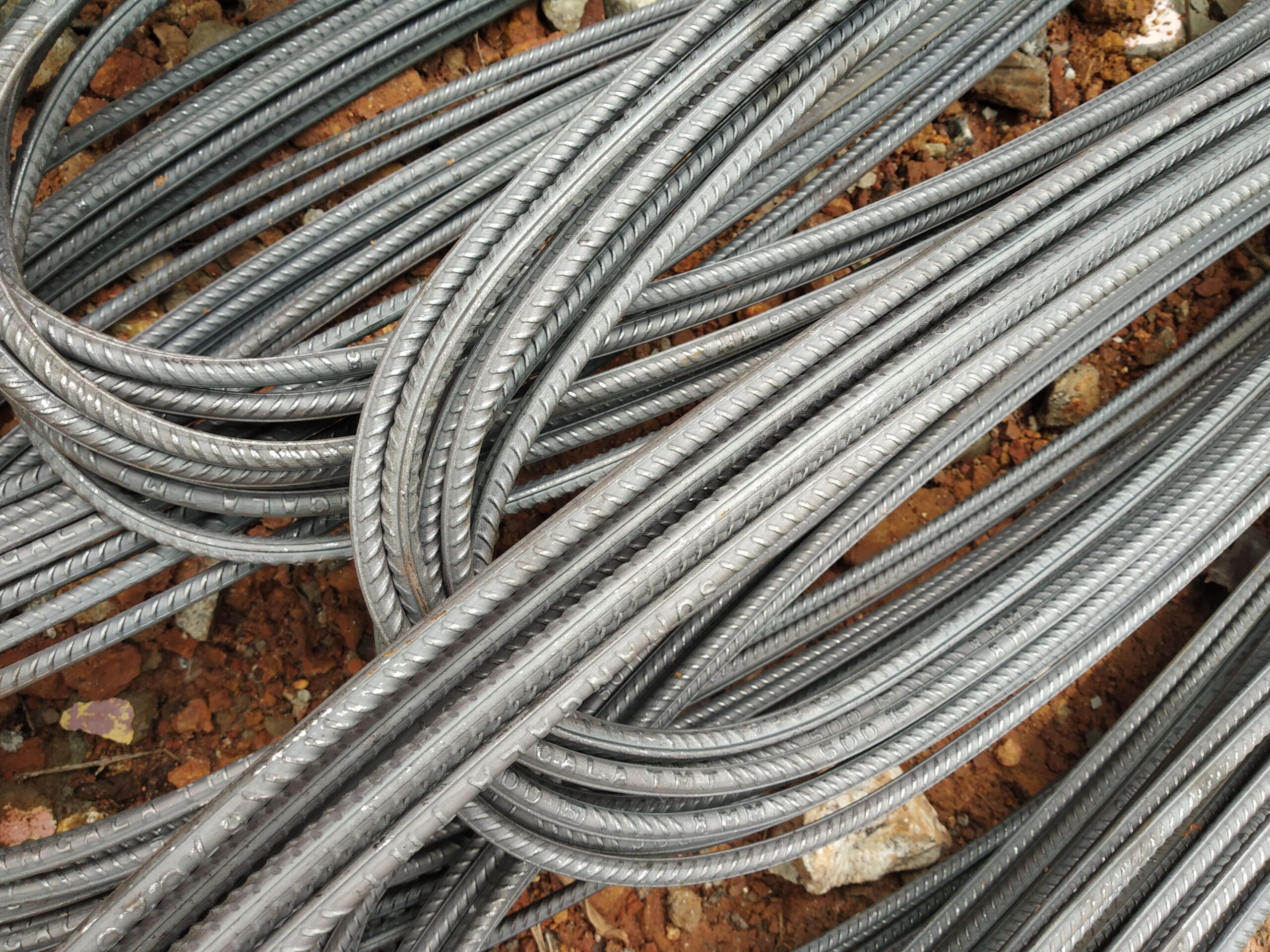
Loading Rebar into Containers
Container shipping is the dominant mode for international rebar export — but stuffing long, heavy steel bars into a standard box requires careful planning around bar length, weight limits, securing methods, and documentation. This guide covers everything international buyers need to know about loading rebar into containers for ocean freight.
Container Types Used for Rebar Shipments
The choice of container type depends primarily on bar length. Standard rebar lengths are 6 m, 12 m, and — less commonly — up to 18 m. This directly dictates which container can be used:
- 20-foot standard (6.058 m internal length): Accommodates 6 m bars with minimal overhang clearance. Payload limit is typically 21–24 tonnes depending on the container’s maximum gross weight (MGW) and tare. Dense rebar bundles can hit the payload limit before filling the volume — weight governs for rebar.
- 40-foot standard HC (12.032 m internal length): The most common choice for 12 m bars — the standard commercial export length for B500B. A 40-ft HC typically accommodates 20–26 tonnes of rebar before hitting its payload limit.
- Flat-rack (20-ft or 40-ft): Used for bars longer than 12 m or oversized bundles that cannot be stuffed through the door. Flat-racks have no sides or roof — cargo is secured with lashing chains/straps and covered with tarpaulins. More expensive than standard boxes and require specialist lashing plans.
- Open-top: An alternative for long bars — the removable roof allows overhead crane loading. Less common than flat-racks for rebar.
For standard 12 m B500B bars, a 40-ft HC container is the default choice, loaded to the container’s payload capacity rather than its volume. Buyers and their freight forwarders should confirm the specific container’s MGW before booking — container MGWs vary between 30,480 kg and 32,500 kg depending on the leasing company and container age.
Rebar Bundle Preparation for Container Loading
Before stuffing, rebar must be prepared in seaworthy bundles. Standard practice for German-standard rebar export:
- Bundle weight: Approximately 2 tonnes per bundle — manageable for forklift or overhead crane handling at the stuffing facility and at the destination terminal
- Bundle composition: Single diameter and length per bundle; mixed diameters in one bundle create handling problems and complicate the packing list/MTC matching
- Banding: Steel banding (wire or strap) at minimum two points per bundle — typically at 1.0–1.5 m from each end for a 12 m bar. Heavy bundles may require a third mid-bundle band
- Identification tag: Each bundle carries a metal tag (or stencil marking) with heat number, diameter, grade, and length — matching the information on the Mill Test Certificate. This is essential for MTC traceability at destination
- Rust prevention: Light mill scale and surface rust within DIN 488 tolerances are acceptable — no oiling or coating is applied to standard rebar. Coated or epoxy-treated rebar (project-specific) requires separate packaging to prevent coating damage during bundling
Stuffing Methods and Securing Inside the Container
Rebar bundles can be stuffed into containers by two methods:
Forklift Stuffing (Side Loading)
A forklift with extended tines slides bundles through the container door from the rear. This is the most common method at European port terminals and freight stations. Bundles are placed side-by-side, typically in 2–3 layers depending on bundle diameter and container payload capacity. Floor loading is significant — the container floor must be rated for the forklift axle load, not just the cargo weight.
Overhead Crane Stuffing
Bundles are slung and lowered into the container from above (open-top) or slid in using a crane and roller system. Less common for standard containers but used for flat-racks and heavy-lift situations.
Securing Inside the Container
Once loaded, rebar bundles must be secured to prevent longitudinal shift during sea transit (the primary risk). Standard securing methods:
- Timber chocks and wedges: Placed between bundles to prevent lateral rolling and at the front/rear stacks to prevent longitudinal movement
- Lashing straps or wire lashings: Fixed to the container’s lashing rings (anchor points) and tensioned across the top of the bundle stack — minimum 4 lashing points per container for a full load of rebar
- Dunnage bags (air bags): Inflated between bundles and container walls to fill void spaces and absorb dynamic loads
A cargo securing plan (stowage plan) should be prepared and signed off by the stuffing supervisor. This document records bundle positions, securing materials used, and total weight — it is a required supporting document for the Bill of Lading and is essential evidence in the event of any cargo damage claim.
Container Loading Reference Table for Standard Rebar
Indicative capacity and fit for common bar lengths and container types.
| Bar Length | Container Type | Internal Length | Indicative Payload | Notes |
|---|---|---|---|---|
| 6 m | 20-ft Standard | 5.898 m | Up to ~21 t | Bars fit with clearance; weight governs before volume |
| 6 m | 40-ft HC | 12.032 m | Up to ~26 t | Two rows end-to-end or bundles loaded in single run |
| 12 m | 40-ft HC | 12.032 m | Up to ~26 t | Standard choice; bars fit length of container |
| 12 m | 20-ft Flat-rack | No restriction | Up to ~30 t | Bars overhang — requires lashing plan and permit |
| Up to 18 m | 40-ft Flat-rack | No restriction | Up to ~40 t | Heavy-lift; specialist lashing; higher freight cost |
Payloads are indicative — actual capacity depends on container MGW, tare weight, and port/road weight limits at the destination. Always confirm payload with the freight forwarder before booking. Rebar weight formula: kg/m = d²(mm) × 0.00617.
Documentation for a Containerised Rebar Shipment
A complete containerised rebar export generates the following document set, all of which we provide as standard with every shipment:
- Commercial Invoice: Describing grade, diameter, quantity (kg/t), unit price, total, Incoterm, HS code (typically 7214.20 for deformed bars)
- Packing List: Bundle-by-bundle breakdown — bundle number, diameter, length, number of bars per bundle, net weight, gross weight, heat/cast number
- Mill Test Certificate EN 10204 3.1: Chemical composition and mechanical properties for each heat in the shipment — heat numbers must match bundle tags
- Certificate of Origin: Chamber of Commerce certified, required for customs duty calculation and any preferential tariff claims under EU trade agreements
- Bill of Lading: Issued by the carrier on loading. The BL description should match the commercial invoice exactly. For container loads, a Container Weight Verification (VGM) certificate is also required under SOLAS rules
- Cargo Securing Declaration / Stowage Plan: May be requested by the carrier or required by some ports’ local regulations
For Letter of Credit transactions, all documents must strictly match the LC terms. See our guide on Letter of Credit for steel imports for detailed guidance. For Incoterm selection (FOB, CFR, CIF, DAP), see our Incoterms guide.
Full export documentation is available regardless of the Incoterm agreed. Visit our export and delivery page for a complete overview of the certificates we provide per shipment.
SOLAS VGM — Container Weight Verification
Since 1 July 2016, SOLAS (Safety of Life at Sea) Regulation VI/2 requires all shippers to declare a Verified Gross Mass (VGM) for packed containers before the vessel can load them. For rebar, two methods are permitted:
- Method 1: Weigh the packed, sealed container on a calibrated scale at the stuffing facility or terminal. This is the standard method for rebar given the high cargo density
- Method 2: Sum the verified weights of all cargo items, packaging, and securing materials, plus the verified tare weight of the container. Less common for bulk rebar due to the number of bundles involved
The VGM must be submitted to the carrier and terminal operator before the container’s cut-off time. We coordinate the VGM declaration as part of our standard export process for FCL (Full Container Load) shipments.
Frequently Asked Questions
Can 12 m rebar bars fit in a standard 40-foot container?
How many tonnes of rebar can fit in a 40-foot container?
What is the SOLAS VGM requirement for rebar containers?
Does rebar need special treatment to prevent container corrosion during transit?
What if our order requires more than one container?
Source German-standard rebar with full export documentation
Tell us your specification and destination port — we’ll respond with a detailed quotation including container loading details.