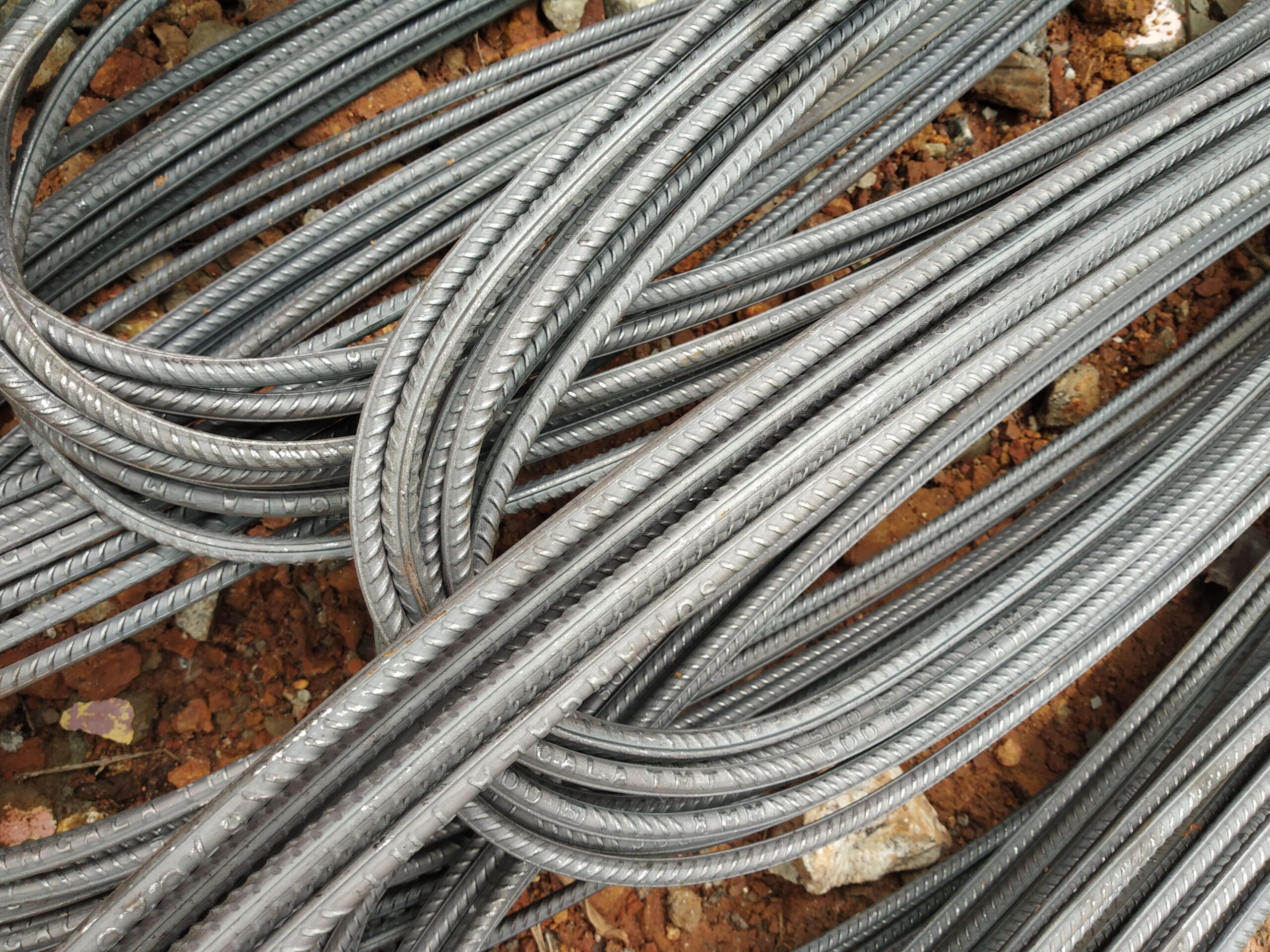
Rebar Grade Markings and Identification
Rebar grade markings are the essential code stamped into every bar that tells engineers, inspectors, and buyers exactly what steel they are working with. This guide explains how to read those markings under DIN 488 and EN 10080 — the standards that govern German and European reinforcing steel.
Why Rebar Markings Matter in International Procurement
When rebar crosses borders, the accompanying Mill Test Certificate (EN 10204 type 3.1) documents the heat number, chemistry, and mechanical properties. But it is the rolled-in markings on the bar itself that provide a fast, field-verifiable check. A site engineer in Cairo, a quality inspector in Dubai, or a procurement manager in Lagos can confirm grade compliance without laboratory equipment, simply by reading the rib pattern and letter codes.
Under German and European standards, misidentification of grade — for example confusing B500A with B500B on a seismic project — can carry serious structural consequences. Correct identification is therefore not a formality; it is a technical requirement.
The DIN 488 Marking System Explained
DIN 488 (Reinforcing steels) specifies that every bar must bear rolled-in identification marks. These are formed by the raised ribs themselves, not by paint or stamping, so they cannot wear off or be falsified in transit. A compliant bar carries three categories of information:
- Mill identification mark: One or two letters (or a symbol) uniquely registered to the producing steelworks.
- Nominal diameter: The bar size in millimetres, indicated by the number of rib gaps or a numeric code in the longitudinal rib pattern.
- Ductility class / grade mark: Distinguishes B500A, B500B, and B500C via the number of transverse ribs between the longitudinal rib gaps, or by a specific rib angle or spacing pattern defined per producer and registered with the certification body.
The exact rib geometry for each grade is documented in the producer’s declaration of performance (DoP) and the accompanying ETA or DIN certification. Buyers should request the mill’s marking key alongside the MTC for full traceability.
B500A, B500B, and B500C — How to Tell Them Apart
All three grades share a 500 MPa characteristic yield strength (fyk), but differ in ductility. The table below summarises the mechanical differences and typical marking conventions:
| Grade | Yield fyk | Tensile ratio k = ft/fy | Elongation Agt | Typical form | Ductility class |
|---|---|---|---|---|---|
| B500A | ≥ 500 MPa | ≥ 1.05 | ≥ 2.5 % | Coil / cold-rolled, mesh wire | A (normal) |
| B500B | ≥ 500 MPa | ≥ 1.08 | ≥ 5.0 % | Hot-rolled straight bar | B (high) |
| B500C | ≥ 500 MPa | 1.15 – 1.35 | ≥ 7.5 % | Hot-rolled bar, seismic zones | C (enhanced seismic) |
On a physical bar, the difference between B500B and B500C is typically encoded in the number of additional transverse rib gaps or a dedicated symbol registered to the producing mill. Always cross-check the bar marking against the MTC heat number to confirm grade identity unambiguously.
EN 10080 and the European Marking Scheme
EN 10080 (Steel for the reinforcement of concrete — weldable reinforcing steel) is the harmonised European standard underpinning CE marking. It specifies that the mark system must allow unique identification of the producer, the nominal size, and the ductility class. The precise rib geometry is set per product family in the accompanying ETA (European Technical Assessment). German producers typically hold both a DIN 488 certification and an ETA, making their bars compliant for projects specifying either standard.
From a buyer’s perspective, the key check is: does the MTC reference EN 10080 or DIN 488 (or both), and does the heat number on the MTC match the markings on the bundled bars? If yes, the material is traceable to the declared grade.
Reading Markings in the Field — Practical Steps
Follow these steps on any rebar delivery:
- Identify the mill mark — compare it to the producer’s registered mark key (available from the mill or certification body).
- Confirm the nominal diameter against the delivery note. A 16 mm bar and a 20 mm bar can look similar when cut.
- Read the ductility-class indicator — count rib gaps or identify the dedicated symbol per the mill’s mark key.
- Cross-reference the heat number stamped or tagged on the bundle to the corresponding MTC line.
- If any mark is unclear or the bar surface is heavily scaled, flag for laboratory verification before installation.
Related Resources
For a full overview of German rebar grades and mechanical properties, visit our Steel Grades guide. For product-specific data on B500B straight bars, see our B500B Rebar page. To discuss grade-certified supply with full MTC documentation, request a quote.
Frequently Asked Questions
Common questions about rebar grade markings and identification under DIN 488 / EN 10080.
What do the rolled-in marks on a rebar bar actually indicate?
How can I distinguish B500B from B500C on a delivered bar?
Is the DIN 488 marking system the same as the EN 10080 system?
What documents should accompany a rebar shipment for grade verification?
Can rebar markings be used as the sole means of grade identification on-site?
Source German-standard rebar with full export documentation
Tell us your specification and destination port — we’ll respond with a detailed quotation.