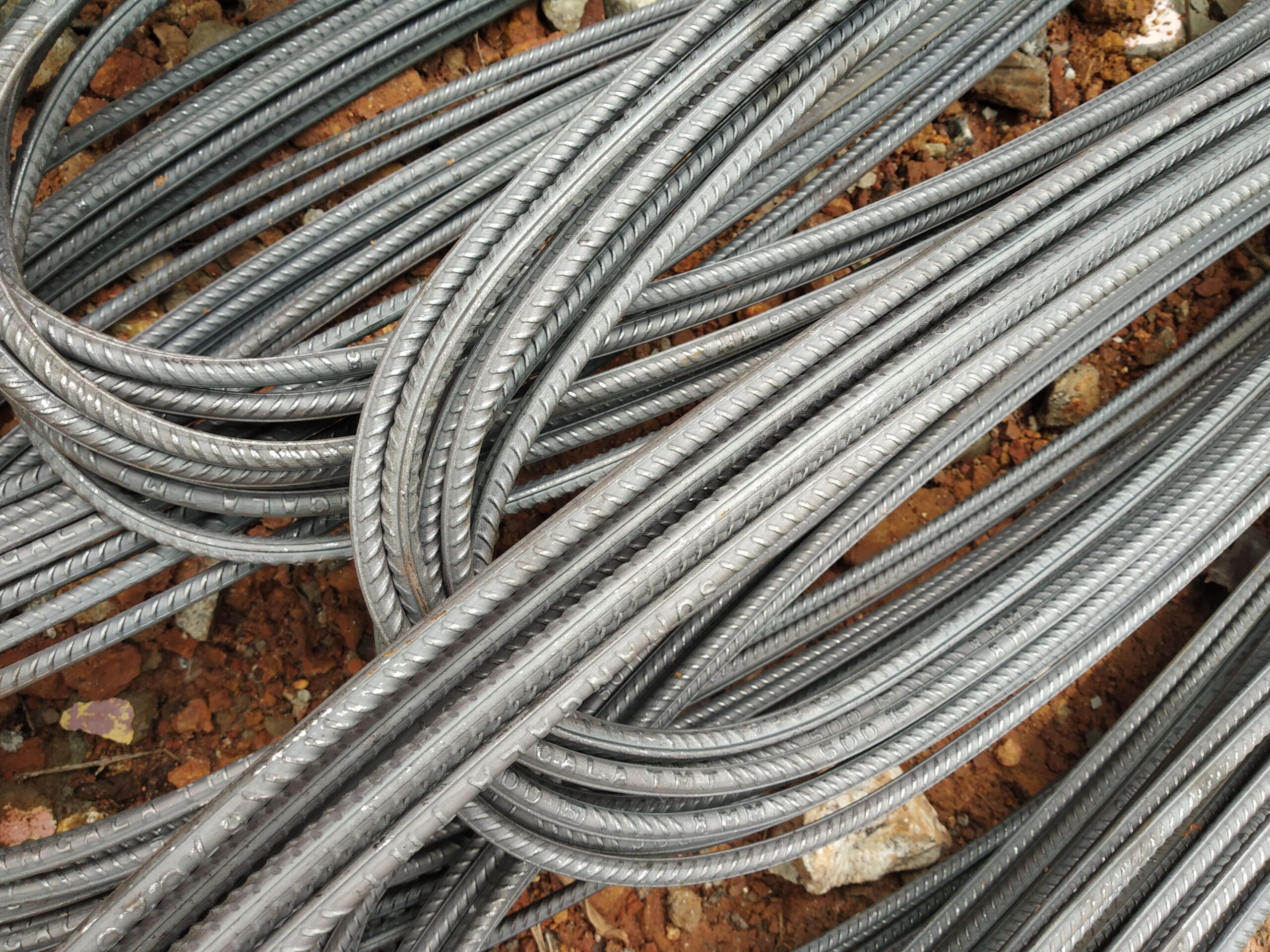
What Size Rebar for a Concrete Pool?
Practical B500B bar-size and spacing guidance for gunite, shotcrete, and cast-in-place pool shells — from wall thickness to mat layout, backed by DIN 488 and EN 10080 standards.
Rebar Size for a Concrete Pool: The Core Choices
A concrete swimming pool is a hydraulic structure that must resist hydrostatic pressure, soil movement, thermal cycling, and chemical attack from pool water — all simultaneously. Getting the rebar specification right is therefore not merely a cost question; it determines structural longevity and watertightness.
For typical residential and light-commercial concrete pools, B500B grade rebar to DIN 488 / EN 10080 is the standard choice across European and internationally aligned markets. B500B delivers a minimum yield strength of 500 MPa, a hardening ratio k ≥ 1.08, and a characteristic total elongation Agt ≥ 5.0 % — making it both strong and sufficiently ductile to absorb minor ground movement without cracking.
Typical Bar Diameters Used in Pool Construction
Most concrete pool shells use one of the following B500B bar sizes:
- 10 mm (Ø10) — the most common diameter for residential pool walls and floors; weight 0.617 kg/m, cross-section 78.5 mm².
- 12 mm (Ø12) — preferred for deeper pools (> 2.0 m), heavily loaded pool decks, and areas of concentrated stress (corners, steps, beam pockets); weight 0.888 kg/m, cross-section 113 mm².
- 8 mm (Ø8) — sometimes used for secondary distribution reinforcement in thin shotcrete shells; weight 0.395 kg/m.
- 16 mm (Ø16) — specified in commercial pools, water parks, or where design loads demand higher section area; weight 1.58 kg/m, cross-section 201 mm².
Bar Spacing and Cover Requirements
A double-layer orthogonal mat (two mats, inner and outer face) is standard practice for pool walls and base slabs. Typical spacing for residential work:
| Pool Element | Bar Size | Typical Spacing | Cover (mm) |
|---|---|---|---|
| Walls (gunite / shotcrete) | Ø10 or Ø12 | 150–200 mm c/c each way | 40–50 mm |
| Floor / base slab | Ø10 or Ø12 | 150–200 mm c/c each way | 50–75 mm (on ground) |
| Bond beam / coping beam | Ø12–Ø16 + links | Main bars at 200 mm | 40 mm |
| Steps / tread | Ø10 | 150 mm c/c | 40 mm |
| Deck / surrounds | Ø10 or mesh | 200 mm c/c | 40 mm |
Cover (concrete depth from bar face to finished surface) is critical in pools. Water-retaining structures generally require a minimum 40 mm nominal cover; where ground contact is present, 50–75 mm is typical per Eurocode 2 / EN 1992-3 guidance.
Indicative Rebar Estimate for a Typical Residential Pool
Consider a rectangular pool approximately 8 m × 4 m, 1.5 m deep, wall thickness 250 mm, base slab 300 mm, with Ø10 @ 150 mm in a double mat:
- Wall perimeter ≈ 24 m; both faces, horizontal + vertical bars — approximately 1,000–1,400 kg of Ø10 B500B.
- Base slab (8 × 4 m double mat at 150 mm) — approximately 400–600 kg of Ø10 B500B.
- Bond beam, steps, and deck reinforcement — approximately 200–400 kg of Ø12 B500B.
- Total indicative range: 1,600–2,400 kg for this pool geometry.
Why B500B for Pool Shells?
B500B (formerly BSt 500 S in the German legacy designation) is hot-rolled, ribbed, and manufactured to DIN 488 Part 1 / EN 10080. Its combination of high yield strength, controlled ductility, and excellent bond characteristics (from the rib geometry) makes it ideal for water-retaining reinforced concrete structures. The ribbed surface maximises mechanical interlock with the concrete matrix, reducing the risk of interface cracking that could compromise watertightness.
For tight radii and stirrup work around pool corners and bond beams, B500B’s Agt ≥ 5.0 % ensures bars can be bent without fracture. For heavily curved features (freeform pools, water features), B500B rebar coils and cut-and-bend service are available for precision fabrication.
Sourcing German-Standard Pool Rebar
Steel Rebar Germany supplies B500B bars in diameters 8–40 mm and standard lengths of 6–12 m, as well as custom-cut lengths and bent shapes. All material ships with an EN 10204 3.1 Mill Test Certificate and, where required, Certificate of Origin for customs clearance. Bundles are packed to seaworthy standard for container or break-bulk export worldwide.
For reference, here is the weight and cross-section data for pool-relevant diameters:
| Diameter (mm) | Weight (kg/m) | Cross-section (mm²) |
|---|---|---|
| 8 | 0.395 | 50.3 |
| 10 | 0.617 | 78.5 |
| 12 | 0.888 | 113 |
| 16 | 1.58 | 201 |
See also: B500B Steel Rebar product page and Steel Grades Guide.
Frequently Asked Questions — Pool Rebar Sizing
What is the most common rebar size for a concrete swimming pool?
Should I use a single mat or double mat of rebar in pool walls?
What concrete cover is required over rebar in a swimming pool?
Can B500B rebar supplied to DIN 488 be used in pools outside Germany?
How do I calculate how much rebar I need for a pool?
Source German-standard rebar with full export documentation
Tell us your pool specification, bar schedule, and destination port — we’ll respond with a detailed quotation including Mill Test Certificate and Certificate of Origin.