Quality Control and Inspection of Steel Rebar
Quality control and inspection of steel rebar encompass everything from mill-level testing under DIN 488 and EN 10080 to site-level receiving inspection and documentation review. For international B2B buyers, understanding this process is as important as the rebar specification itself.
The Mill Test Certificate: Foundation of Rebar QC
The primary quality document for any rebar delivery is the Mill Test Certificate (MTC), issued under EN 10204. The most common type required for structural applications is the type 3.1 certificate: an inspection document prepared by the manufacturer and validated by an authorised inspectorate representative, confirming that the supplied material meets the specified requirements.
A conforming EN 10204 3.1 MTC for B500B rebar will include: heat (cast) number, chemical analysis (ladle and product analysis), mechanical test results (yield strength, tensile strength, elongation A5, Agt), dimensional verification (mass per metre, rib geometry), and the certifying signatory. All values must be traceable to the specific heat and coil/bar batch delivered.
Key Tests and Acceptance Criteria Under DIN 488 / EN 10080
| Test | Standard method | B500B requirement | Frequency (typical) |
|---|---|---|---|
| Yield strength (ReH or Rp0.2) | EN ISO 6892-1 | ≥ 500 MPa | Per heat |
| Tensile strength (Rm) | EN ISO 6892-1 | Ratio k = Rm/ReH ≥ 1.08 | Per heat |
| Total elongation at max force (Agt) | EN ISO 6892-1 | ≥ 5.0 % | Per heat |
| Bend test | EN ISO 7438 | No crack at mandrel 4d (≤16mm), 7d (>16mm) | Per diameter per heat |
| Re-bend test | EN 10080 | No crack after bend + ageing + re-bend | Per diameter per heat |
| Mass per metre | Weighing / rib measurement | Nominal ± 4.5 % (single bar), ± 3.5 % (consignment) | Per diameter |
| Chemical composition | EN ISO 14284 / OES | C ≤ 0.22 %, CEV ≤ 0.50 % | Per heat |
| Weldability (CE) | Calculated from ladle analysis | Per DIN EN ISO 17660 | Per heat |
Third-Party Inspection: When and Why
Third-party inspection (TPI) by an independent body such as SGS, Bureau Veritas, or TÜV is often required by project specifications or letter-of-credit (L/C) terms on international rebar shipments. TPI provides an additional layer of assurance beyond the producer’s 3.1 MTC by performing or witnessing physical tests on production samples and verifying that the shipped quantities match the certified documentation.
Common TPI scope for rebar includes: pre-shipment sampling and testing; dimensional measurement (diameter, rib spacing, rib height, rib angle); witness of mechanical tensile tests; mark verification; bundle weight check; and issue of an Inspection Certificate or Report. For large project orders, TPI is a routine and prudent procurement step.
Receiving Inspection at the Project Site
On delivery, the following inspection steps are recommended:
- Document check: Confirm MTC heat numbers match tags on bundles. Verify grade, diameter, and standard against the purchase order.
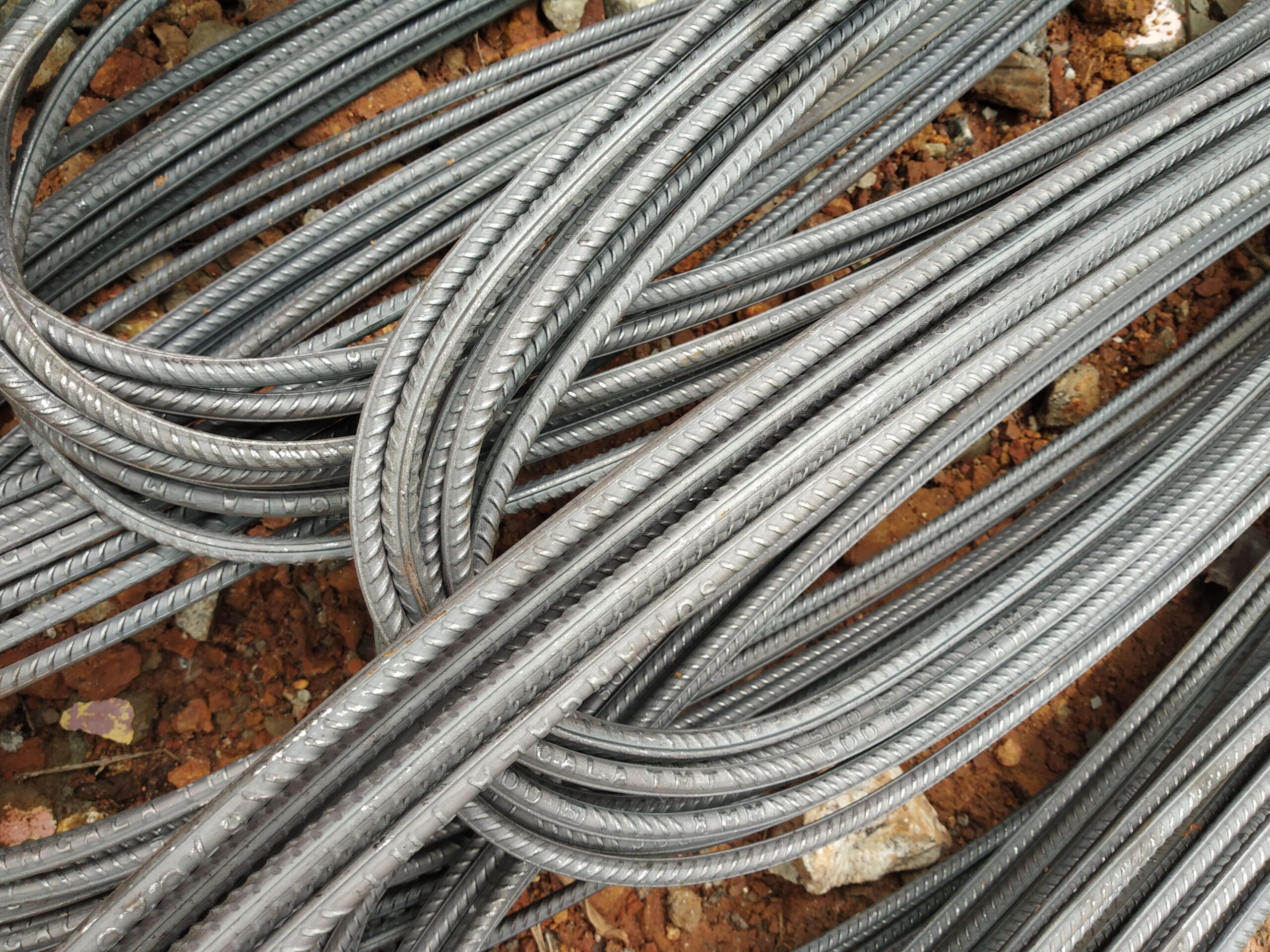
- Visual inspection: Check for surface cracks, excessive scale, or delamination. Light surface rust is acceptable provided it is not pitting. Check rib pattern integrity and bar markings.
- Dimensional check: Weigh a sample of bars and calculate mass per metre. Compare to the theoretical value (d² × 0.00617 kg/m). A deviation beyond ±4.5 % for a single bar warrants investigation.
- Segregation: Store different grades and diameters in clearly labelled separate areas. Never mix B500B and B500C unless both are acceptable for the element in question.
- Non-conformance: Any lot that cannot be matched to a valid MTC, or that fails a receiving check, must be quarantined and not incorporated until cleared.
Storage and Handling to Preserve Quality
Rebar stored correctly retains its mechanical properties indefinitely. Key practices: store on timber or concrete supports above ground level to prevent soil contact and corrosion; keep different diameters and grades separated with clear labelling; avoid stacking bundles that could cause deformation in lower bars; do not store adjacent to materials containing chlorides. Moderate surface rusting that can be removed by hand wire-brushing is not detrimental to bond performance.
For more detail on applicable standards, visit our Standards and Certification page. For documentation requirements on export deliveries, see our Export and Delivery guide. To request material with specified QC documentation, contact us.
Frequently Asked Questions
Common questions about rebar quality control and inspection.
What is the difference between an EN 10204 type 3.1 and type 2.2 certificate?
How often should rebar be tested on a construction site?
What does the carbon equivalent (CE) value on a MTC mean?
Can surface rust on delivered rebar be accepted?
What documents should I ask for when importing rebar internationally?
Source German-standard rebar with full export documentation
Tell us your specification and destination port — we’ll respond with a detailed quotation.