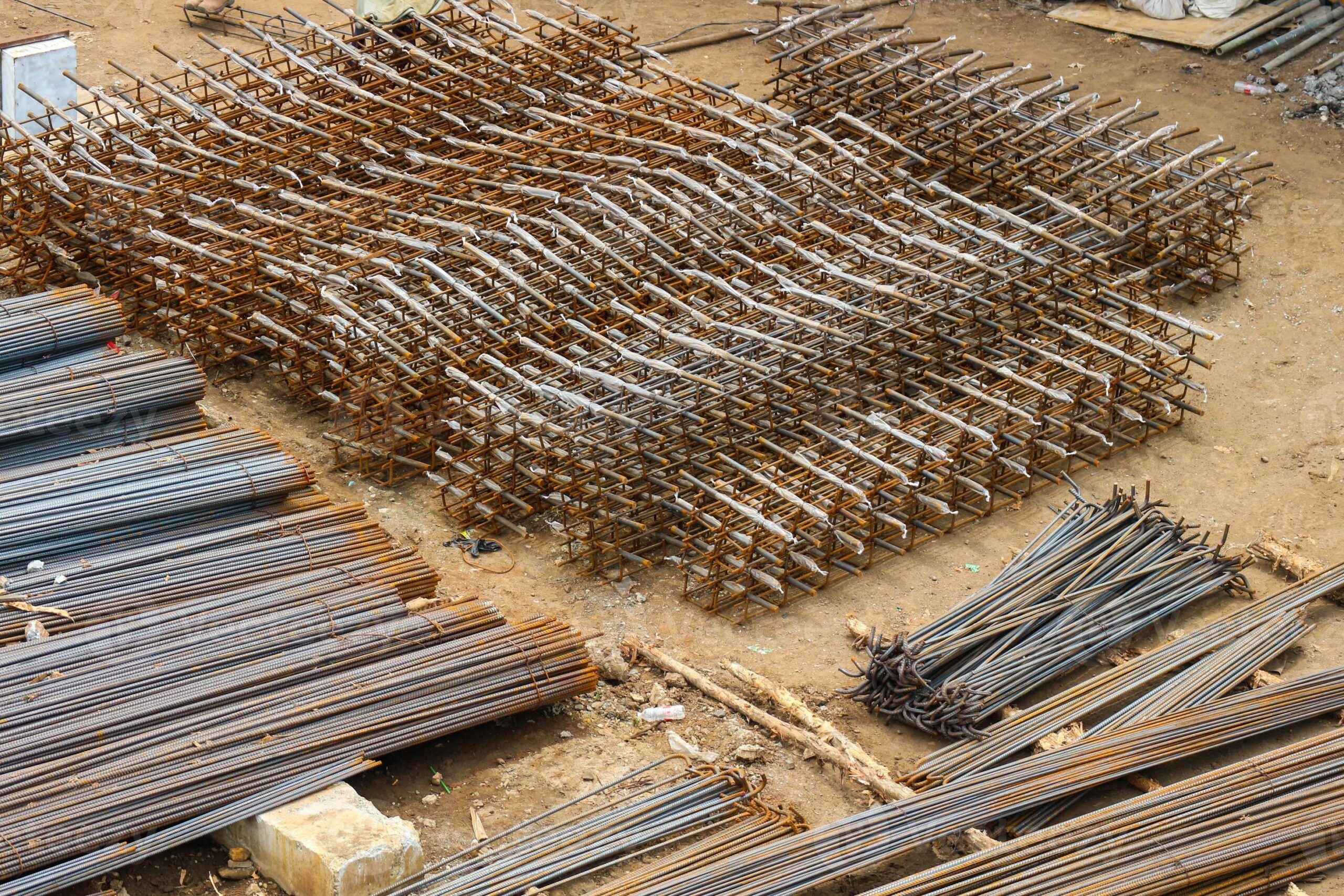
B500C Reinforcing Steel
B500C rebar is the seismic, high-ductility grade of the European reinforcing steel family — 500 MPa yield with a strictly bounded tensile ratio (1.15 ≤ k < 1.35) and uniform elongation ≥ 7.5 %. Specified under Eurocode 8 for high-demand and earthquake-zone structures.
What Is B500C Reinforcing Steel?
B500C rebar is the highest ductility class in the European B500 family under DIN 488 and EN 10080. The “C” in the designation stands for ductility Class C, as defined in EN 1992-1-1 (Eurocode 2) and mandated by EN 1998-1 (Eurocode 8) for structures designed in seismic zones and critical high-ductility moment frames.
Its defining mechanical parameters are: minimum yield strength fyk ≥ 500 MPa, a tensile-to-yield ratio 1.15 ≤ k < 1.35 (both a floor and a ceiling — to ensure controlled ductility without over-strength surprises), and uniform elongation at maximum force Agt ≥ 7.5 %. The upper bound on k is a critical seismic safety provision: it limits the actual tensile strength relative to yield so that capacity design calculations for beams, columns and joints remain reliable.
Where B500C Is Specified
B500C is predominantly specified in:
- High-ductility (DCH) seismic frames — moment-resisting frames, coupled walls, and dual systems per EN 1998-1 where plastic hinge regions must absorb repeated cyclic loading.
- Medium-ductility (DCM) seismic structures in moderate seismicity zones where national annexes require Class C.
- Critical infrastructure — bridges, nuclear-adjacent structures, and tunnels in seismic areas.
- Export to earthquake-prone markets — Middle East (Turkey, Iran), Southern Europe (Italy, Greece), North Africa, and parts of Asia where local codes mandate the equivalent of Eurocode 8 Class C.
For standard (non-seismic) reinforced concrete the workhorse grade is B500B. For mesh and coil applications see B500A. A full side-by-side comparison is on the steel grades page.
B500C Mechanical Specification Table
Key parameters per DIN 488 / EN 10080 and Eurocode 2/8 for project specification.
| Property | B500C Value | Compare: B500B | Standard |
|---|---|---|---|
| Characteristic yield fyk | ≥ 500 MPa | ≥ 500 MPa | DIN 488 / EN 10080 |
| Tensile/yield ratio k | 1.15 ≤ k < 1.35 | ≥ 1.08 | EN 1992-1-1 |
| Uniform elongation Agt | ≥ 7.5 % | ≥ 5.0 % | DIN 488 / EN 10080 |
| Ductility class | C (seismic) | B (high) | EN 1992-1-1 |
| Seismic design use | DCH & DCM (EN 1998) | DCM only | EN 1998-1 |
| Surface | Ribbed (deformed) | Ribbed | DIN 488 |
| Weldability | Yes (Ceq controlled) | Yes | DIN EN ISO 17660 |
| Typical diameters | 8–40 mm | 8–40 mm | DIN 488 |
B500C Export: Documentation for International Projects
Seismic-grade rebar exports demand rigorous documentation. Steel Rebar Germany provides the full paper trail.
EN 10204 3.1 Mill Certificate
Heat-specific inspection document with chemical composition and full mechanical test results — essential for seismic-grade acceptance.
Compliance to EN 1998
Documentation demonstrating conformity with Eurocode 8 Class C ductility requirements for acceptance by structural engineers and authorities.
Certificate of Origin
German or EU origin for customs and import duty purposes — available for all standard export destinations.
Seaworthy Packing
Bundled in seaworthy steel strapping, ~2 t units, for container or break-bulk. Full packing list included.
Frequently Asked Questions — B500C Rebar
Why does B500C have an upper limit on the tensile-to-yield ratio?
Can B500C replace B500B in non-seismic structures?
What is the difference between B500C and BSt 500 S?
Which markets most frequently specify B500C?
How do I order B500C rebar from Steel Rebar Germany?
Source German-standard rebar with full export documentation
Tell us your B500C specification and destination port — we’ll respond with a detailed quotation.