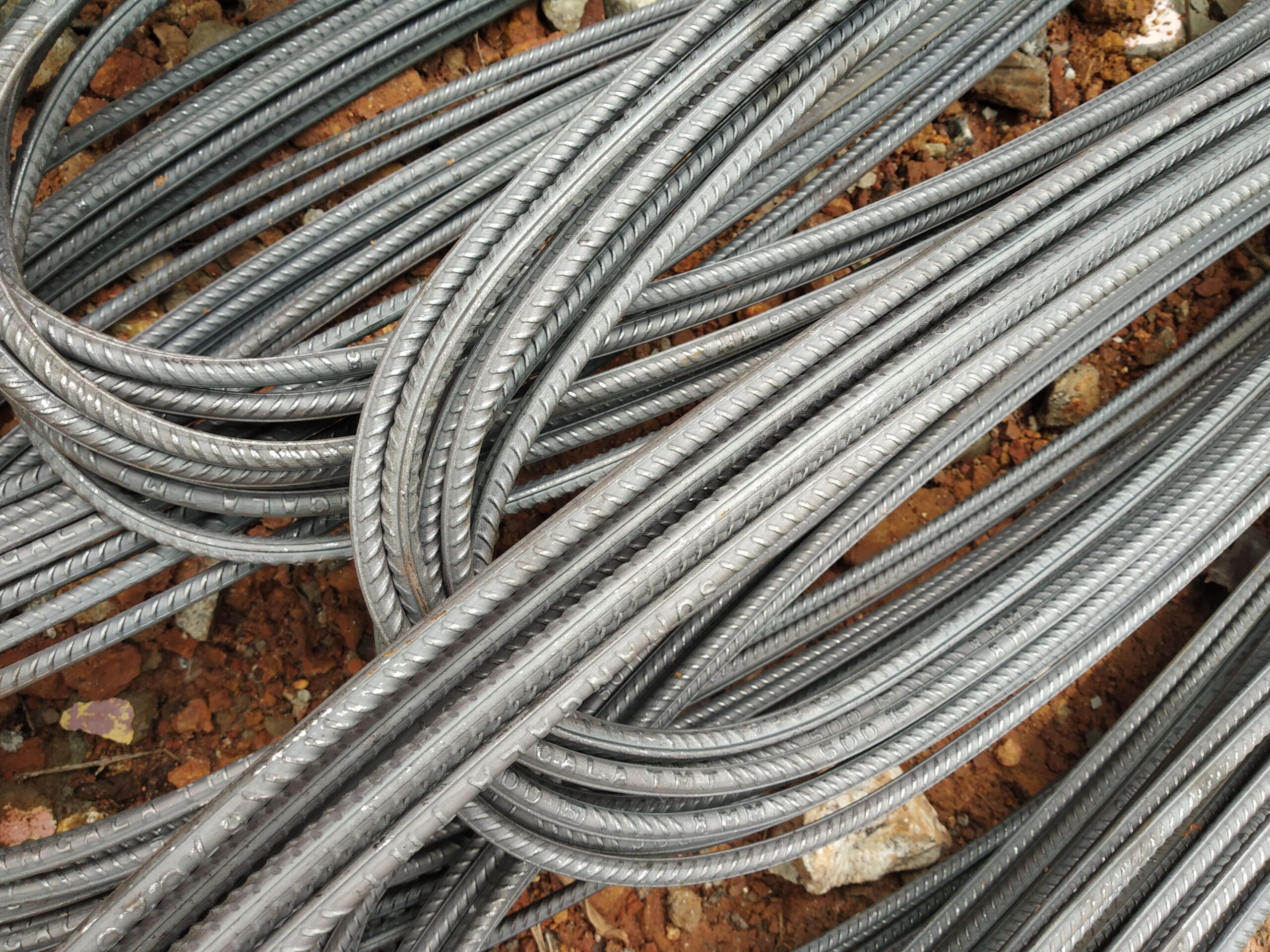
Writing a Rebar Order Specification
A practical buyer and QA guide to assembling a complete rebar order specification — covering grade, diameter, length, standard, tolerances, and export documentation for DIN 488 / EN 10080 reinforcing steel.
A well-written rebar order specification is the single most important document in any structural steel procurement. It eliminates ambiguity between buyer, supplier, and mill; it anchors quality acceptance criteria before a single tonne ships; and it forms the contractual backbone for Mill Test Certificates, customs declarations, and insurance. Yet many buyers submit only a diameter and a quantity — leaving critical grade, ductility class, length tolerance, and documentation requirements unresolved until it is too late to fix without cost.
This guide walks through every field a complete rebar specification should contain, explains why each matters, and provides a model checklist you can adapt for DIN 488 / EN 10080 reinforcing steel sourced from Germany or elsewhere in the EU. For more context on how these specifications translate into shipment planning, see our guide on export and delivery services.
1. Specify Grade and Ductility Class First
The most consequential field in any rebar spec is the grade and ductility class. Under DIN 488 and EN 10080 the three principal grades are:
- B500A — 500 MPa minimum yield, normal ductility (k ≥ 1.05, Agt ≥ 2.5%). Typical for welded mesh and coil-fed automated fabrication.
- B500B — 500 MPa minimum yield, high ductility (k ≥ 1.08, Agt ≥ 5.0%). The standard workhorse hot-rolled bar for general structural use.
- B500C — 500 MPa minimum yield, enhanced seismic ductility (1.15 ≤ k < 1.35, Agt ≥ 7.5%). Required where Eurocode 8 seismic design governs.
Always state the ductility class explicitly. “B500” alone is incomplete and may result in supply of either A or B depending on what the mill has available. If your structural design is governed by Eurocode 2 (EN 1992-1-1), confirm with your structural engineer which class is required before submitting the order spec.
For welded connections, note that DIN EN ISO 17660 requires weldability to be confirmed by the mill — request this on the MTC where relevant.
2. Diameter, Length, and Weight — The Core Dimensions
After grade, the three numeric fields that define the physical product are nominal diameter, bar length, and estimated weight. State all three clearly:
| Nominal Dia (mm) | Weight kg/m | Cross-section mm² | Common stock length |
|---|---|---|---|
| 8 | 0.395 | 50.3 | 6 m, 12 m |
| 10 | 0.617 | 78.5 | 6 m, 12 m |
| 12 | 0.888 | 113 | 6 m, 12 m |
| 16 | 1.580 | 201 | 12 m |
| 20 | 2.470 | 314 | 12 m |
| 25 | 3.850 | 491 | 12 m |
| 32 | 6.310 | 804 | 12 m |
| 40 | 9.860 | 1257 | 12 m |
Weight per metre is derived from the formula kg/m = d²(mm) × 0.00617. To estimate the total order weight, multiply kg/m by the total number of bar metres. These are standard theoretical values; actual weights will vary within the tolerances permitted by DIN 488 or EN 10080. Always confirm total tonnage with the mill against the final cut list.
State whether you require stock lengths (e.g. 12 m mill lengths) or cut-to-length bars. If cut-to-length, attach or reference a bar bending schedule following BS 8666 or DIN 488 shape codes. Length tolerances under DIN 488 are typically +100 mm / −0 mm for stock bars and tighter for prefabricated elements.
3. Standards, Tolerances, and Testing Requirements
A complete specification names the governing standard(s) and the testing regime expected. Use this checklist as a template:
| Specification Field | What to State |
|---|---|
| Governing product standard | DIN 488 and/or EN 10080 (state both where applicable) |
| Design standard reference | EN 1992-1-1 (Eurocode 2) or national annex |
| Grade & ductility class | B500A / B500B / B500C |
| Nominal diameter(s) | e.g. Ø16 mm, Ø20 mm, Ø25 mm |
| Length / bar schedule | 12 m stock OR cut list attached |
| Surface finish | Ribbed (deformed) — standard for structural rebar |
| Chemical composition | Per mill heat analysis; C, Mn, P, S, Si limits per DIN 488 |
| Mechanical testing | Tensile test, yield, Rm/Re ratio (k), elongation Agt per EN ISO 15630-1 |
| Weldability | State if required; request confirmation per DIN EN ISO 17660 |
| Quantity / weight (mt) | Tonnes per diameter, total order weight |
| Delivery condition | Straight bars in bundles; seaworthy packing if export |
Tolerances on cross-section and mass are defined in EN 10080 and DIN 488-2. For most structural applications ±4.5% on mass per metre is acceptable; tighter tolerances for precast or precision applications should be stated explicitly.
4. Documentation and Certification Requirements
Export procurement adds a layer of documentation requirements beyond the mill’s standard QA package. State each required document in the specification so the supplier can confirm availability and price it correctly from the outset.
- Mill Test Certificate (MTC) — EN 10204 3.1: The foundational traceability document, issued by the mill’s authorised inspector, covering heat number, chemical analysis, and mechanical test results. Specify 3.1 (third-party validation) rather than 2.2 for structural or public-sector projects.
- Certificate of Origin: Required by many destination customs authorities, especially outside the EU. Specifies the country of manufacture and enables preferential tariff treatment where EU trade agreements apply.
- CE Marking / Declaration of Performance (DoP): Mandatory for rebar placed on the EU market under the Construction Products Regulation. Request the DoP reference number and the notified body ID.
- Packing List: Bundle-level itemisation of diameters, lengths, piece counts, and net/gross weights per bundle and per container.
- Bill of Lading / CMR: For sea or road shipment respectively. State which Incoterms apply (e.g. FOB Hamburg, CIF Jebel Ali) so responsibility for these documents is clear.
- Phytosanitary / fumigation certificate: Required by certain destination countries for wooden packing materials. Confirm with your freight forwarder.
For a full walkthrough of how these documents are assembled for an export shipment, see our export and delivery page and the related post on planning rebar delivery lead times.
5. Common Specification Mistakes That Cause Delays
Even experienced procurement teams make recurring errors that stall approvals or trigger costly re-orders. The most common include:
- Omitting ductility class: “B500” without A, B, or C suffix leaves the mill to choose — and the cheaper grade may not meet your structural design requirements.
- Specifying MTC 2.2 when 3.1 is required: 2.2 is a manufacturer-issued certificate; 3.1 carries independent inspection. Many contract specifications, insurance policies, and public-sector frameworks require 3.1 as a minimum.
- No Incoterms stated: Without an agreed Incoterm, responsibility for freight, insurance, export customs, and import duties is ambiguous and often contested after shipment.
- Weight calculated as pieces × length × kg/m but no tolerance stated: Theoretical weight calculations provide a reliable planning figure, but actual shipped weight will differ within tolerance. Invoices are typically settled on actual weighed weight — confirm this in the order terms.
- Requesting non-standard lengths from stock: Mills roll to standard lengths; non-standard cuts require a minimum quantity and additional lead time. State requirements early.
Frequently Asked Questions
What is the minimum information needed to request a rebar quote?
Is DIN 488 the same as EN 10080?
Can I specify rebar by ASTM or BS standard and still source from a German mill?
How is theoretical rebar weight calculated?
Do I need a Certificate of Origin for every rebar shipment?
Further Reading
Related guides and product pages to support your procurement.
Export & Delivery
How we package, document, and ship rebar to international buyers worldwide.
Learn more →Standards & Certification
DIN 488, EN 10080, CE marking, and Mill Test Certificate explained.
Learn more →Planning Delivery Lead Times
What to expect at each stage of the export process and how to plan accordingly.
Read the guide →Source German-standard rebar with full export documentation
Tell us your specification and destination port — we’ll respond with a detailed quotation.