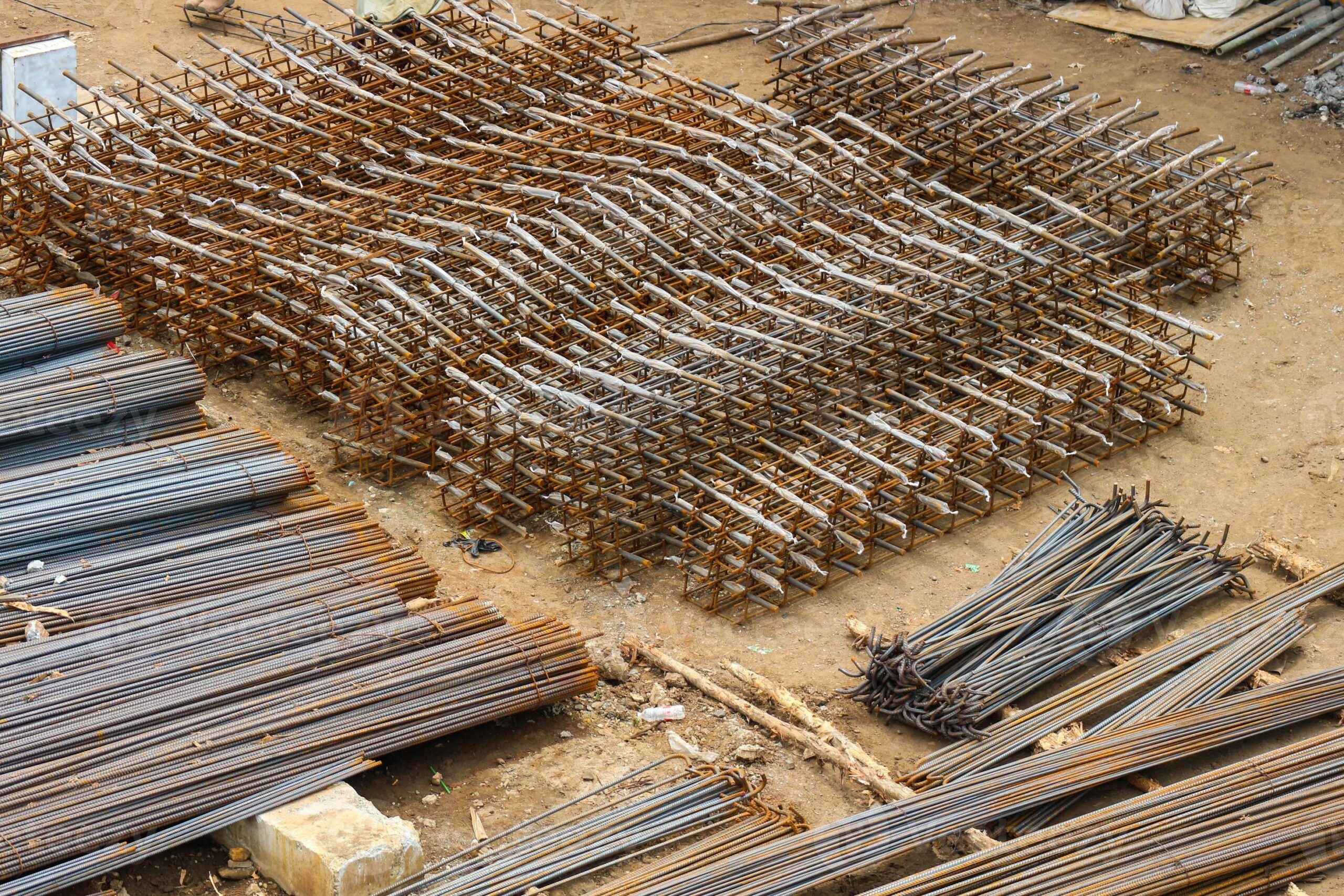
Deformed vs Plain Round Bar: Which Rebar Type Does Your Project Need?
Understanding the structural, mechanical, and cost differences between deformed and plain round reinforcing bar is fundamental for every concrete project — from residential slabs to large-scale infrastructure. This guide gives procurement teams and engineers a precise comparison aligned with DIN 488 and EN 10080.
What Defines Deformed Rebar?
Deformed reinforcing bar — also called ribbed bar or high-yield bar — features a series of transverse ribs, lugs, or indentations rolled directly onto the bar surface during production. These deformations are not cosmetic: they create mechanical interlock between the steel and the surrounding concrete matrix, dramatically increasing the bond strength compared to a smooth surface.
Under DIN 488 and EN 10080, deformed bars must meet minimum relative rib area (fR) requirements to guarantee adequate bond. The German standard grade B500B — the primary workhorse for structural reinforcement — is always supplied as deformed bar. Its properties: minimum yield strength 500 MPa, characteristic tensile-to-yield ratio k ≥ 1.08, and minimum uniform elongation at maximum force (Agt) ≥ 5.0 %. Grade B500C for seismic applications demands Agt ≥ 7.5 %.
Deformed bars are available in diameters from 8 mm to 40 mm, with 12 m stock length being the most common for export. Weight per metre follows the formula: kg/m = d²(mm) × 0.00617. For example, a 16 mm bar weighs 1.58 kg/m and provides a cross-section of 201 mm².
What Is Plain Round Bar?
Plain round bar (also called smooth bar) has a circular cross-section with no ribs or surface deformations. Bond with concrete relies entirely on friction and end anchorage — hooks, bends, or mechanical anchors are almost always required to prevent slip. Under modern Eurocode 2 (EN 1992-1-1), plain bars are permitted in specific applications but are no longer the default for primary structural reinforcement.
Plain bars are produced in grade B500A (normal ductility, k ≥ 1.05, Agt ≥ 2.5 %) and are typically supplied in smaller diameters — 6 mm to 16 mm — often as coil for automated stirrup-bending and mesh-welding machines. They are also common for dowels, pins, tie bars, and secondary reinforcement where slip at the interface is structurally acceptable or even desired (e.g. expansion joints).
Head-to-Head Comparison: Deformed vs Plain Bar
The table below summarises the key engineering and procurement factors side by side.
| Property | Deformed Bar (e.g. B500B) | Plain Round Bar (e.g. B500A) |
|---|---|---|
| Surface profile | Transverse ribs + longitudinal ribs | Smooth, no deformations |
| Bond mechanism | Mechanical interlock (superior) | Friction + end anchorage only |
| Min. yield strength | 500 MPa (B500B) | 500 MPa (B500A) |
| Ductility class | High (k ≥ 1.08, Agt ≥ 5.0 %) | Normal (k ≥ 1.05, Agt ≥ 2.5 %) |
| Typical diameters | 8–40 mm (bars) | 6–16 mm (often coil) |
| Primary application | Structural beams, columns, slabs | Stirrups, ties, mesh, dowels |
| Lap splice efficiency | High — shorter lap lengths | Low — longer laps or hooks needed |
| Applicable standard | DIN 488 / EN 10080 B500B/C | DIN 488 / EN 10080 B500A |
| Weldability | DIN EN ISO 17660 | DIN EN ISO 17660 |
| Relative unit cost | Moderate–higher (larger dia) | Generally lower (small dia/coil) |
Strength, Ductility, and Durability Considerations
Both bar types share the same 500 MPa minimum yield strength threshold, so yield strength alone does not differentiate them. The critical distinction lies in ductility and bond behaviour.
High ductility (B500B, B500C) allows a structure to redistribute stresses after local yielding — crucial in seismic zones and anywhere plastic hinge formation is part of the structural design. Eurocode 2 and seismic codes require high-ductility reinforcement for most primary structural elements. Plain B500A bars, with lower Agt, are therefore not suitable for primary structural reinforcement in earthquake-risk regions.
From a durability standpoint, deformed bars present marginally more surface area to corrosive environments, but the difference is negligible when adequate concrete cover is maintained to EN 1992 recommendations. Both bar types benefit equally from corrosion-resistant options (epoxy-coated, stainless, or galvanised) where aggressive exposure classes apply.
Where Each Bar Type Wins
Choose deformed bar (B500B/B500C) for all primary load-carrying elements: foundation piles, retaining walls, bridge decks, columns, beams, and slabs in frame structures. The mechanical bond reduces required lap lengths and development lengths, saving both material and labour. Our B500B deformed bar is available in diameters 8–40 mm with full EN 10204 3.1 Mill Test Certificates.
Choose plain round bar (B500A coil) for stirrups, lateral ties, welded mesh production, dowel bars in pavement joints, and secondary reinforcement. B500A coil feeds directly into automated CNC stirrup-bending machines at your precast plant or on-site bar-processing facility, minimising waste. For projects specifying plain bar for expansion joint dowels, we supply cut lengths to your exact specification.
Many large projects procure both types simultaneously: deformed B500B for longitudinal bars and plain B500A coil for processing into stirrups and mesh. Cut-and-bend services can combine both in a single fabricated order.
Procurement and Export Documentation
Whether you order deformed or plain bar, Steel Rebar Germany provides the full export documentation package: EN 10204 3.1 Mill Test Certificate (MTC) traceable to the specific heat, Certificate of Origin, CE Declaration of Performance (DoP), and a packing list with bundle weights. Bars are bundled in seaworthy units (typically ~2 t) suitable for container or break-bulk shipment to any destination port.
Lead times, minimum order quantities, and available diameter/length combinations depend on current mill schedules. Submit a specification request and we will respond with full commercial terms.
Frequently Asked Questions
Common questions from engineers and procurement teams comparing deformed and plain reinforcing bar.
Can plain round bar be used as primary structural reinforcement under Eurocode 2?
What surface rib requirement does DIN 488 impose on deformed bar?
Is plain round bar cheaper than deformed bar?
Can deformed and plain bar be welded together on site?
What diameters of plain round bar does Steel Rebar Germany supply?
Source German-standard rebar with full export documentation
Tell us your specification and destination port — we’ll respond with a detailed quotation.