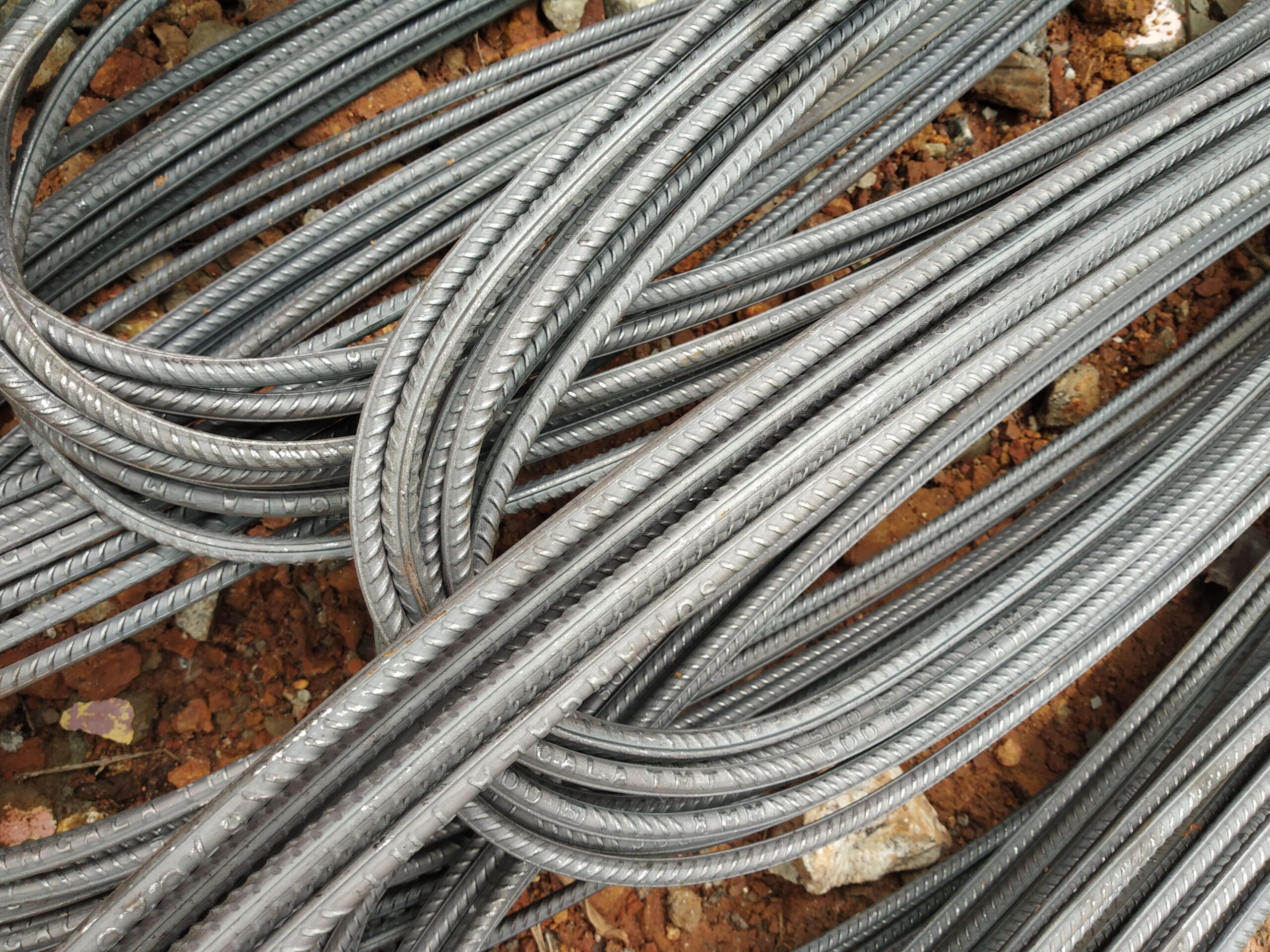
How to Tie Rebar (Wire & Patterns)
Tying rebar correctly keeps the cage dimensionally stable during concrete placement. This guide covers wire gauges, snap ties, saddle ties, wrap-and-saddle ties, and the right spacing patterns for slabs, beams, and columns.
Why Tying Wire Matters
Tying rebar is not a structural connection — the wire does not add load-bearing capacity. Its purpose is purely positional: holding bars at the design spacing and cover depth while concrete is placed and vibrated. A poorly tied cage shifts under the pressure of wet concrete or the vibrator, compromising cover, lap lengths, and overall structural performance. For this reason, site supervisors should specify tie patterns and wire gauge in the bar-fixing method statement.
Choosing the Right Tying Wire
Tying wire (also called binding wire or annealed wire) is soft, annealed low-carbon steel wire. Annealing removes the spring-back that makes harder wire difficult to twist tightly by hand or with a rebar tying gun. Standard gauges and their typical applications:
| Wire gauge | Diameter (approx.) | Typical use |
|---|---|---|
| 16 SWG / 1.6 mm | 1.6 mm | General tying of 8–20 mm bars; most common on site |
| 18 SWG / 1.2 mm | 1.2 mm | Lighter bars, mesh, and tie-gun cartridges |
| 14 SWG / 2.0 mm | 2.0 mm | Heavy bars (≥ 25 mm), column cages, seismic reinforcement |
Pre-cut and looped tie wire coils speed up repetitive fixing work on large slabs. Rebar tying guns (battery-operated) accept cartridges of 1.0–1.6 mm wire and can complete a tie in under one second, significantly reducing hand-fatigue on large projects.
The Three Core Tie Types
1. Snap Tie (Simple Tie)
The snap tie is the fastest and most common method. Loop a 200–250 mm cut length of wire diagonally under the intersection, cross the ends over the bar, and twist with a bar hook or pliers until snug. The twist sits on top of the bar, away from the concrete face, to avoid a corrosion path. Snap ties are suitable for slabs and walls where the cage is supported from below and the bars are lightly loaded during placement.
2. Saddle Tie (Figure-of-Eight Tie)
Fold a longer wire (300–350 mm) in half, place the fold under the lower bar, bring both legs up and over the upper bar crossing them in a figure-of-eight, then twist together above the intersection. The saddle tie resists vertical lift as well as lateral movement — making it the preferred choice for beams, columns, and top-mat slab reinforcement where the cage may be lifted during placement.
3. Wrap-and-Saddle Tie
A wrap-and-saddle tie starts like a saddle tie but additionally wraps one or both legs once around the lower bar before twisting. This locks the intersection against rotation — essential at column-to-beam connections and wherever bars must be held at a precise angle. It uses more wire and more time than the simpler ties; reserve it for structurally critical nodes.
Tie Spacing Patterns by Element
Not every intersection in a rebar mat needs to be tied — only enough to prevent the cage shifting. Typical guidance (always verify against your project method statement and engineer’s instructions):
| Element | Minimum tie pattern | Notes |
|---|---|---|
| Ground-bearing slab | Alternate intersections (“checker” pattern) | All perimeter intersections tied; interior alternate |
| Suspended slab (top & bottom mat) | All intersections in support zones; alternate mid-span | Extra ties at columns and edges |
| Beam cage | All stirrup-to-main-bar intersections; alternate longitudinal crosses | Snap or saddle ties at stirrups |
| Column cage | All link-to-vertical intersections | Wrap-and-saddle at corners |
| Retaining wall | Alternate vertical, all horizontal at face bars | Spacers critical to maintain cover |
Cover Spacers and the Complete Accessory Kit
Tying wire alone cannot maintain the specified concrete cover — spacers and chairs do that job. DBV (Deutscher Beton- und Bautechnik-Verein) guidelines classify plastic, mortar, and steel wire spacers by application and cover depth. A complete bar-fixing kit therefore combines correct tie wire (gauge and pattern) with the appropriate spacers to hold the cage at the design depth. Steel Rebar Germany can supply tying wire and DBV-compliant spacers alongside the reinforcing steel to simplify your procurement.
Frequently Asked Questions
Practical questions about rebar tying methods and site practice.
What gauge tying wire should I use for rebar?
Does tying rebar add structural strength?
How many intersections need to be tied in a slab mat?
What is the best tie for a column cage?
Can I use a rebar tying gun instead of hand tying?
Source German-standard rebar with full export documentation
Tell us your specification and destination port — we’ll respond with a detailed quotation.