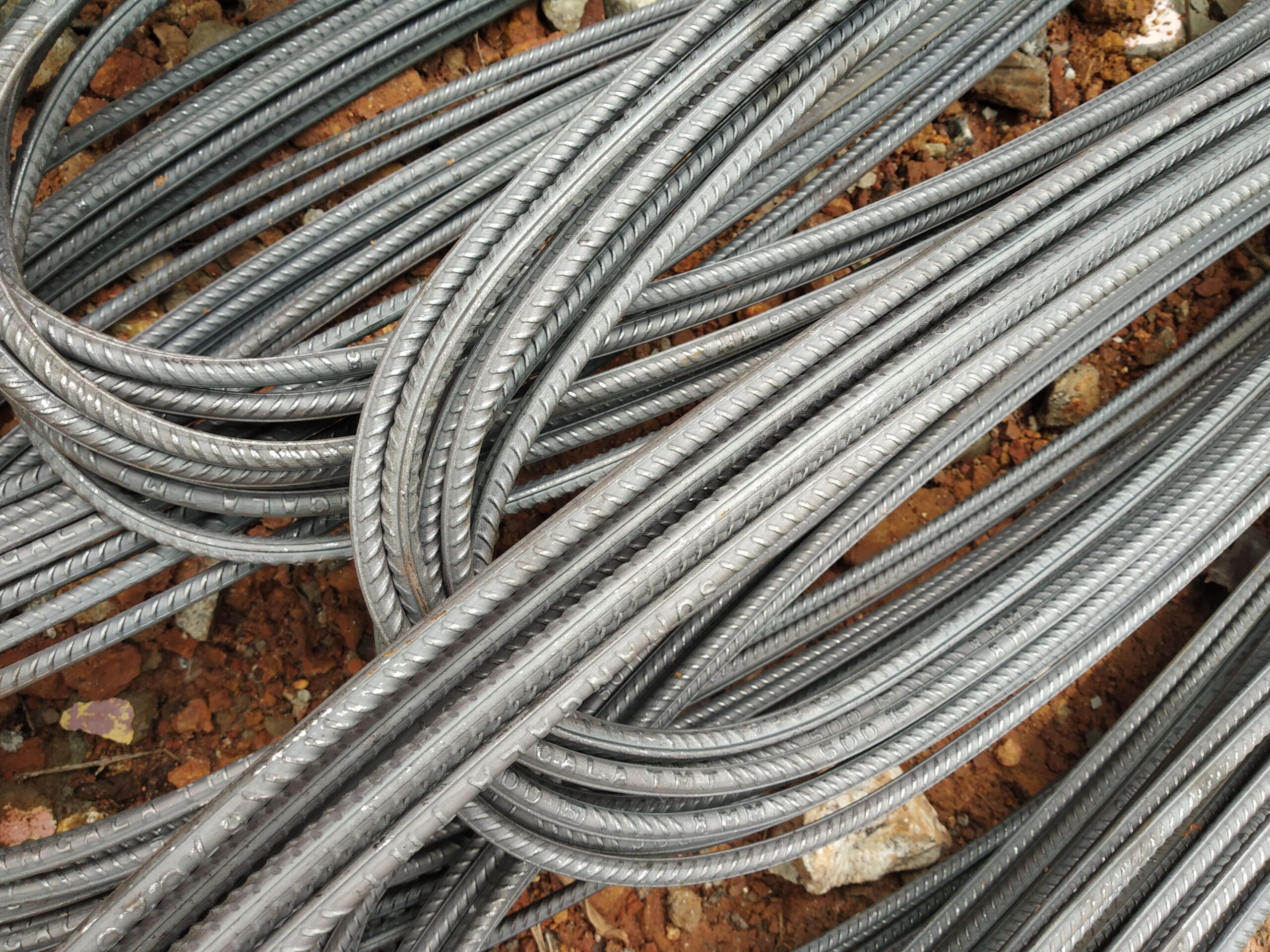
Rebar Tensile Test Explained: EN 10080 & DIN 488 Requirements
The tensile test is the primary mechanical quality gate for reinforcing steel. This guide covers the relevant clauses of EN 10080 and DIN 488, the parameters measured, acceptance thresholds for each B500 ductility class, and how to read a Mill Test Certificate result.
Why the Tensile Test Is the Cornerstone of Rebar Quality Assurance
When an international buyer orders DIN 488-compliant reinforcing steel, the tensile test result on the accompanying Mill Test Certificate (EN 10204 3.1) is the first document a structural engineer examines. The test gives direct, quantitative evidence of three critical properties: yield strength, tensile strength, and elongation at fracture — the trio that determines how reinforced concrete will behave under both service loads and seismic overload.
EN 10080:2005 (Steel for the reinforcement of concrete — Weldable reinforcing steel — General) is the European product standard harmonised under the Construction Products Regulation. DIN 488 is the German national implementation, published in multiple parts, and it cross-references EN 10080 while adding national annex values. Together they define the test methodology, sampling frequency, and acceptance criteria that German mills must satisfy before issuing a conformity declaration.
The Three Core Parameters — and Their Physical Meaning
A standard uniaxial tensile test, performed to ISO 6892-1 (the referenced test method under EN 10080), measures a machined or full-section rebar specimen pulled to fracture on a calibrated testing machine. The stress-strain curve yields:
- Yield strength Re (MPa): The stress at which the steel begins permanent plastic deformation. For B500-class rebar, the characteristic value Rek = 500 MPa minimum (0.05 fractile of production).
- Tensile strength Rm (MPa): The maximum stress before necking and fracture. The standard does not fix an upper limit for most classes, but defines a minimum ratio Rm/Re — the “strain-hardening ratio” k — to ensure the bar can redistribute stresses before collapse.
- Total elongation at maximum force Agt (%): The uniform strain across the gauge length at peak load. This is the ductility parameter that distinguishes the three B500 classes and directly governs plastic hinge rotation capacity in seismic frames.
B500A, B500B, B500C: How the Acceptance Limits Differ
DIN 488-1 (Table 1) and EN 10080 (Table C.1, National Annex) define three ductility classes for 500 MPa rebar. All share the same minimum yield strength but differ in ductility requirements:
| Grade | Min Rek (MPa) | Min k = Rm/Re | Min Agt (%) | Typical form |
|---|---|---|---|---|
| B500A | 500 | ≥ 1.05 | ≥ 2.5 | Cold-rolled coil, welded mesh |
| B500B | 500 | ≥ 1.08 | ≥ 5.0 | Hot-rolled straight bar (workhorse) |
| B500C | 500 | 1.15 ≤ k < 1.35 | ≥ 7.5 | Hot-rolled, seismic / special ductility |
These are characteristic (fractile) values based on statistical sampling of a production heat. Individual test values on a Mill Test Certificate may vary slightly; the production must satisfy the characteristic threshold, not every individual bar.
Sampling, Frequency, and the Mill Test Certificate
EN 10080 Clause 7 specifies that mechanical tests are carried out per heat (melt) and per diameter group. A heat is the steel produced in one continuous melting and casting cycle — typically several hundred tonnes. DIN 488-6 supplements this with product-specific conformity control requirements.
Each set of test results is recorded on an EN 10204 3.1 Mill Test Certificate (MTC), signed by the manufacturer’s authorised inspector. The MTC reports the heat number, chemical analysis, tensile test values (Re, Rm, Agt, k), bend/re-bend test result, and dimensional measurements. For export shipments, Steel Rebar Germany supplies the full MTC set alongside the packing list and Certificate of Origin.
Reading a Tensile Result on the MTC: A Practical Guide
When you receive an MTC for a B500B shipment, check the following columns in sequence:
- ReL or ReH (lower/upper yield): For hot-rolled rebar, the lower yield plateau ReL is reported. Confirm ≥ 500 MPa.
- Rm: Divide by the Re value; confirm ratio ≥ 1.08 for B500B.
- Agt: Confirm ≥ 5.0% for B500B (or ≥ 7.5% for B500C).
- Heat number cross-reference: Match to the bundle tag/label. Mismatches are grounds for rejection.
- Inspector signature & stamp: Must be present for a valid 3.1 certificate.
See also our guide to rebar acceptance criteria on delivery for the full incoming inspection checklist, and our rebar bend & re-bend test explainer for the companion test that checks surface ductility.
Frequently Asked Questions: Rebar Tensile Testing
Common questions from international buyers and QA engineers about EN 10080 / DIN 488 tensile requirements.
What is the minimum yield strength for B500B rebar under DIN 488?
What does the k-ratio (Rm/Re) mean in practice?
Is Agt the same as the traditional elongation A5 or A10?
How many specimens are tested per heat under EN 10080?
Can I request specific tensile test data for my project’s diameter and heat?
Source German-standard rebar with full export documentation
Tell us your specification and destination port — we’ll respond with a detailed quotation including Mill Test Certificate provision.