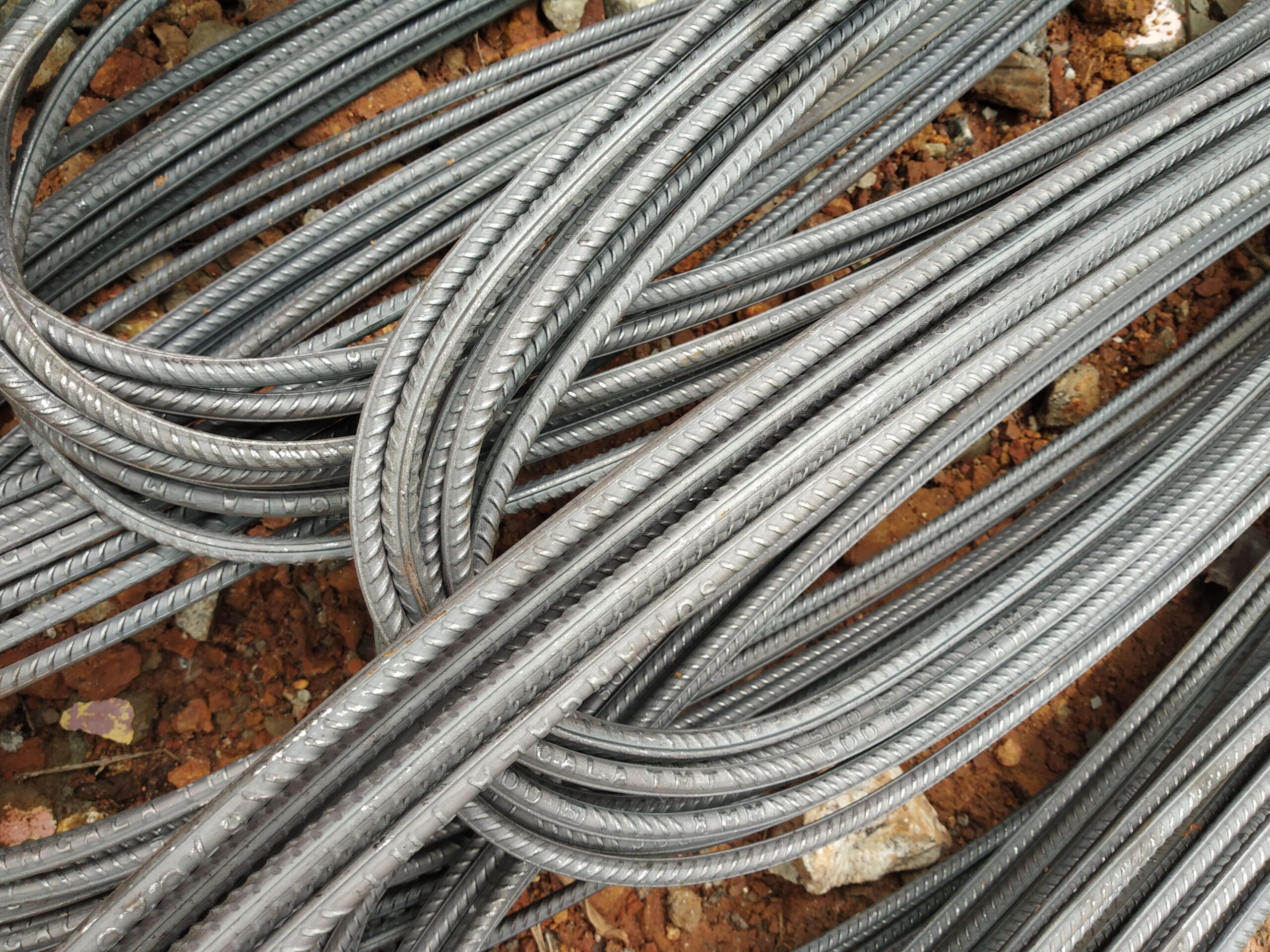
Recycled Content in Steel Rebar: What Buyers and Specifiers Need to Know
How electric arc furnace steelmaking delivers high recycled content in reinforcing steel — what it means for your project’s environmental credentials, LEED points, and structural performance.
Recycled Content in Steel Rebar: The Production Route Determines Everything
Steel is the world’s most recycled structural material. The recycled content of any given piece of reinforcing steel is determined almost entirely by the production route used to make it. Understanding the two principal routes — the Basic Oxygen Furnace (BOF) and the Electric Arc Furnace (EAF) — is the starting point for any sustainability specification or environmental product declaration (EPD) assessment.
Basic Oxygen Furnace (BOF / Integrated Route)
The BOF route processes primarily iron ore (via a blast furnace) into liquid steel, with scrap steel typically comprising 10–25% of the furnace charge. BOF steel dominates flat products (sheet, plate) and is used for some long products including rebar in regions where scrap availability is limited. Its recycled content is typically in the range of 15–30% by mass.
Electric Arc Furnace (EAF / Minimill Route)
The EAF route melts scrap steel (post-consumer and post-industrial) using high-voltage electric arcs — with scrap comprising 70–100% of the furnace charge. Most European and German reinforcing steel bars (B500B, B500A) are produced in EAF minimills. The recycled content of EAF rebar is typically 70–100% by mass, depending on the scrap-to-DRI (direct reduced iron) mix used by the specific mill.
Recycled Content Table: Production Route Comparison
| Parameter | BOF (Integrated) | EAF (Minimill) |
|---|---|---|
| Primary raw material | Iron ore + coal (coke) | Scrap steel (+ DRI supplement) |
| Typical recycled content | 15–30% | 70–100% |
| CO₂ intensity (approx.) | 1.8–2.5 t CO₂e / t steel | 0.4–0.8 t CO₂e / t steel |
| Energy source | Fossil (coke, coal) | Electricity (can be renewable) |
| Typical product | Flat products, some long products | Long products — rebar, wire rod, sections |
| Common in Europe for rebar? | Minority share | Dominant share |
The CO₂ figures above are indicative industry ranges. Actual values vary by mill, energy grid mix, and scrap quality. An individual mill’s Environmental Product Declaration (EPD) — produced to EN 15804 or ISO 21930 — provides the verified, product-specific carbon data required for project-level LCA and green building certification.
How Recycled Content Is Verified and Declared
There is no international standard mandating a single method for calculating and reporting recycled content in steel. The following frameworks are most commonly used:
- ISO 14021 (Recycled Content Claims): defines recycled content as the proportion by mass of recycled material in a product. Distinguishes between pre-consumer (post-industrial) and post-consumer scrap. EAF rebar mills typically declare both sub-categories.
- Environmental Product Declaration (EPD) per EN 15804 / ISO 21930: the EPD reports the mass fraction of recycled input material as part of the Life Cycle Inventory (LCI). It is the standard format accepted by LEED, BREEAM, DGNB, and most project-level green building rating systems.
- WorldSteel Association EPD Programme: provides industry-average and mill-specific EPDs for steel products including rebar, calculated to ISO 14044 methodology. Mill-specific EPDs are more useful for project specification than industry averages.
- Responsible Steel Standard: a third-party certification scheme that audits, among other criteria, recycled content, scrap sourcing, and CO₂ performance at the site level.
For LEED v4 / v4.1 projects pursuing the Building Product Disclosure and Optimization — Sourcing of Raw Materials credit, structural steel with a verified recycled content of ≥ 25% post-consumer or ≥ 50% combined (pre- + post-consumer) qualifies as a “responsible sourcing” product. EAF rebar comfortably exceeds these thresholds.
Does High Recycled Content Affect Mechanical Performance?
This is a common and legitimate question from structural engineers specifying recycled-content rebar. The answer — supported by decades of EAF production data and the EN 10080 / DIN 488 testing regime — is no, provided the mill controls the scrap chemistry and applies the required process controls.
The key concern is tramp element content — elements such as copper (Cu), tin (Sn), and antimony (Sb) that accumulate in the scrap pool over decades of recycling and cannot be removed by standard EAF metallurgy. At elevated concentrations, tramp elements can cause hot-shortness (brittleness at rolling temperatures) and, in extreme cases, reduce ductility. DIN 488 / EN 10080 address this indirectly through the mechanical property requirements — specifically the ductility class definitions:
- B500B (high ductility): k = Rm/ReH ≥ 1.08, Agt ≥ 5.0% — the dominant EU rebar grade, produced safely from EAF scrap by mills with controlled melt chemistry.
- B500C (very high ductility / seismic): 1.15 ≤ k ≤ 1.35, Agt ≥ 7.5% — requires tighter chemistry control; some mills restrict scrap grades to limit tramp elements for B500C production.
The EN 10204 Type 3.1 Mill Test Certificate — issued for every heat — records the chemical analysis, confirming that carbon equivalent (CE) and individual element limits are met. This is the structural engineer’s and project manager’s assurance that recycled-content rebar meets the same performance standard as primary steel. See our Standards & Certification page for full detail on MTC types and chemical limits.
Recycled Content and Green Building Ratings
The three most influential green building rating systems for international construction projects — LEED (US-origin, globally applied), BREEAM (UK-origin), and DGNB (German) — all address embodied carbon and material sustainability in the structural frame. Rebar is the primary reinforcement material in most reinforced concrete structures, and its recycled content and EPD data typically contribute to:
- LEED v4.1 MR Credit — Building Product Disclosure and Optimization (BPDO): EPD + Sourcing of Raw Materials sub-credits. EAF rebar with a published EPD and ≥ 25% post-consumer recycled content qualifies for both.
- BREEAM Mat 01 — Life Cycle Impacts: embodied CO₂ (kg CO₂e/kg) from the EPD feeds into the whole-life carbon model.
- DGNB ENV1.1 — Life Cycle Assessment: requires EPD data for all major material inputs; EAF rebar’s lower GWP versus BOF rebar directly improves the project score.
When specifying rebar for a green-rated project, request the supplier’s mill-specific EPD alongside the EN 10204 3.1 MTC to cover both structural and sustainability requirements in a single document set.
Practical Steps for Procurement
- Confirm the production route with your supplier — ask explicitly whether the rebar is EAF or BOF origin.
- Request the mill-specific EPD (or WorldSteel industry EPD as a fallback) for the specific product ordered.
- Verify the recycled content figure and the sub-categories (pre-consumer vs. post-consumer) as required by your rating system.
- Cross-reference the EN 10204 3.1 MTC to confirm ductility class and chemistry conform to EN 10080 / DIN 488 — recycled content does not replace structural compliance documentation.
- If Responsible Steel or a similar chain-of-custody certification is required, confirm availability with the supplier before contract signature.
For the full picture on DIN 488 and EN 10080 mechanical requirements, see our Standards & Certification guide. For product-specific data on available grades, see our steel grades overview.
Frequently Asked Questions
Common questions about recycled content in reinforcing steel.
What is the typical recycled content of European EAF rebar?
Does high recycled content reduce the strength or ductility of rebar?
What documentation proves recycled content for LEED or BREEAM?
Is BOF rebar ever used for reinforcing steel projects?
Can I request a Responsible Steel certified product?
Source German-standard rebar with full export documentation
Tell us your specification and destination port — we’ll respond with a detailed quotation.