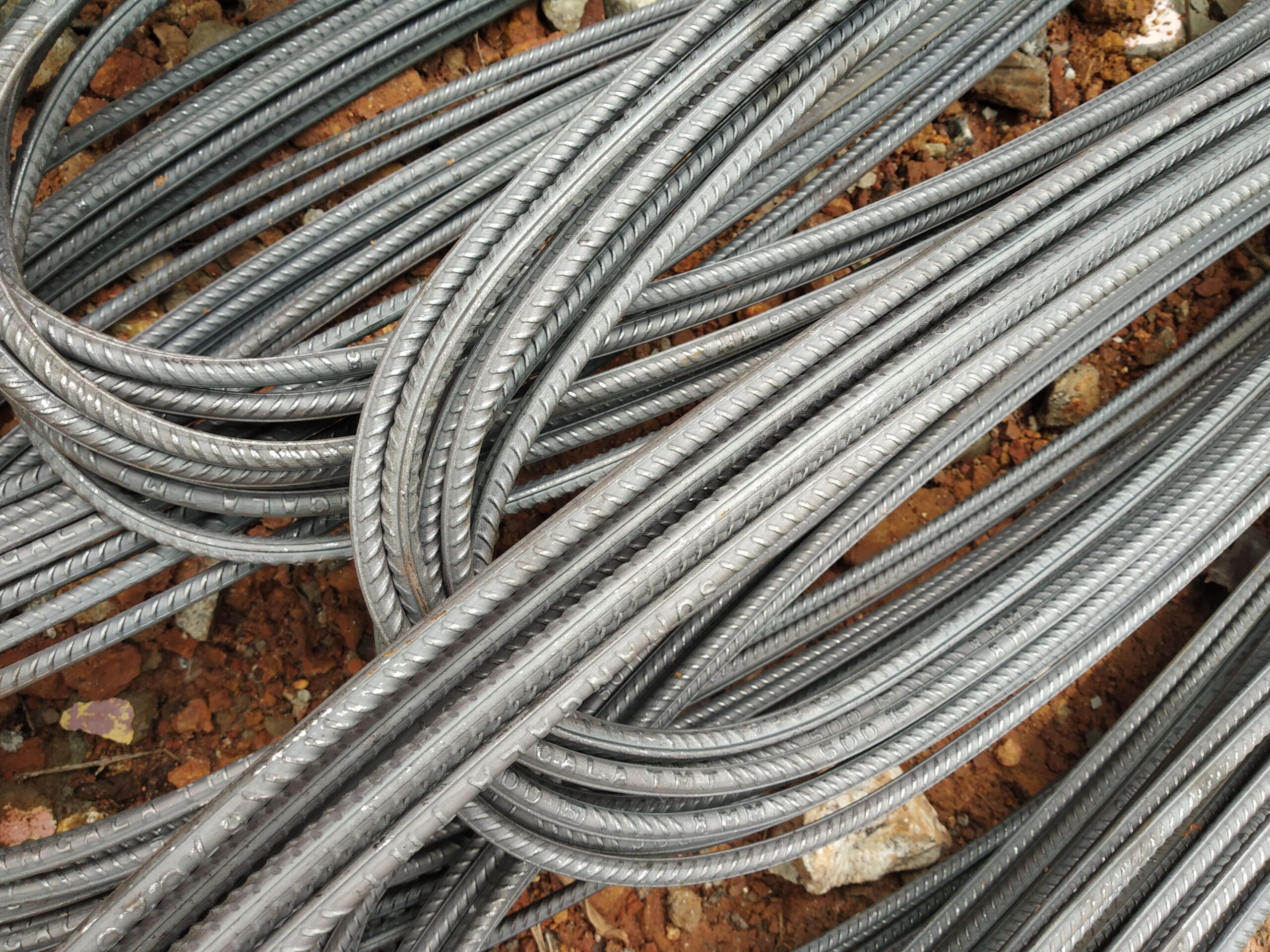
Weldability of Reinforcing Steel: Standards, Grades & Best Practice
Weldability of reinforcing steel is a critical factor in structural connections and continuity splices. This guide explains how carbon equivalent, DIN EN ISO 17660, and grade selection govern whether — and how — rebar can be safely welded.
What Makes Reinforcing Steel Weldable?
Weldability of reinforcing steel is not a single pass/fail attribute — it is governed primarily by the steel’s carbon equivalent (CE), which aggregates the influence of carbon and alloying elements on hardenability. High CE values increase the risk of hydrogen-induced cracking in the heat-affected zone (HAZ), making controlled preheat, interpass temperature, and post-weld cooling essential.
For German and European standard rebar, DIN 488 classifies grades B500A, B500B, and B500C, all of which carry a maximum CE limit that allows welding under defined conditions. The applicable welding standard is DIN EN ISO 17660, which specifies load-bearing and non-load-bearing weld types, process requirements, and welder qualification.
Carbon Equivalent and the CE Formula
The most widely used formula for reinforcing steel is the International Institute of Welding (IIW) carbon equivalent:
CE = C + Mn/6 + (Cr + Mo + V)/5 + (Ni + Cu)/15
DIN 488 limits CE for B500B to ≤ 0.50 % (for diameters ≤ 28 mm) and ≤ 0.52 % for larger bars, ensuring adequate weldability for structural connections. B500A (typically cold-worked coil or mesh wire) has somewhat tighter CE limits due to its cold-deformation microstructure, and welding must account for potential annealing of the cold-work zone adjacent to the weld.
DIN EN ISO 17660: The Governing Welding Standard
DIN EN ISO 17660 divides weld connections into two categories:
- Load-bearing welds (Part 1) — e.g. butt welds and flange welds that transfer tensile or compressive forces. Require full procedure qualification, welder certification, and destructive testing of test pieces.
- Non-load-bearing welds (Part 2) — e.g. cross welds in mesh or tack welds fixing position. Less stringent qualification but still covered by defined consumable and process controls.
Permitted welding processes include MAG (135/136), MMA (111), and submerged arc (121). TIG (141) is used for small diameters where precision is paramount. Flash-butt welding is common for factory coil-joining and mesh cross-wire connections.
Weldability by Grade: B500A, B500B, B500C
| Grade | CE Max (%) | Agt Min (%) | k Min | Weld Notes |
|---|---|---|---|---|
| B500A | ≤ 0.50 | 2.5 | ≥ 1.05 | Cold-worked; preheat zone may soften — limit heat input |
| B500B | ≤ 0.52 (≥ Ø28) | 5.0 | ≥ 1.08 | Hot-rolled; most straightforward to weld under ISO 17660-1 |
| B500C | ≤ 0.52 | 7.5 | 1.15–1.35 | Seismic; weld procedure must preserve ductility; restrict heat |
B500B hot-rolled bar is the most accommodating grade for load-bearing welds on site, provided preheat requirements (typically ≥ 10 °C ambient for Ø ≥ 20 mm) are observed. B500C seismic rebar demands additional care: excessive heat input can reduce the Agt below the 7.5 % minimum, compromising seismic performance.
Practical Guidance for Site Welding
Structural engineers and site supervisors sourcing rebar for welded connections should follow this checklist:
- Obtain the Mill Test Certificate (EN 10204 3.1) and verify CE value for each heat.
- Confirm the applicable welding procedure specification (WPS) is qualified to DIN EN ISO 17660-1.
- Ensure welders hold valid ISO 17660 Part 1 or Part 2 qualification certificates.
- For diameters ≥ 20 mm or CE > 0.42 %, apply preheat to 100–150 °C to reduce HAZ cracking risk.
- Use low-hydrogen consumables (H5 or better) for all structural joints.
- Protect welds from rapid cooling — cover or wrap in cold or windy conditions.
- Never weld B500A or B500C without reviewing the heat input limits in your WPS; these grades are sensitive to over-heating.
When project specifications require welded rebar, request material from Steel Rebar Germany with full EN 10204 3.1 certificates and confirm the CE values with your welding coordinator before commencing work. See our Standards & Certification page for a full overview of how we document conformance, and our B500B product page for available diameters (8–40 mm) and lengths.
Frequently Asked Questions: Weldability of Rebar
Answers to the most common questions from engineers and procurement teams.
Can all rebar grades be welded on site?
What is the carbon equivalent limit for B500B rebar?
Which welding processes are permitted by DIN EN ISO 17660?
Do I need a preheat when welding rebar?
Does welding rebar affect its ductility certification?
Source German-standard rebar with full export documentation
Tell us your specification and destination port — we’ll respond with a detailed quotation.