What Size Rebar for a Box Culvert?
Practical bar-size and spacing guidance for reinforced concrete box culverts — B500B diameters, cover requirements, mat layout and indicative steel estimates to DIN 488 / EN 10080.
What Size Rebar for a Box Culvert — Key Sizes at a Glance
Box culverts are buried reinforced concrete structures used to convey drainage, irrigation or traffic under roads and embankments. They carry combined earth, water and live loads, which places serious demands on the reinforcement. B500B rebar in 12 mm to 20 mm diameter is the most common range for main structural bars in culvert walls, base slabs and roof slabs. Distribution and secondary bars are typically 10–12 mm; stirrups and ties 8–10 mm. Spacing is commonly 150–200 mm centres. These are indicative figures — the exact specification must come from a licensed structural engineer using project-specific load analysis to Eurocode 2 / EN 1992-1-1 or the applicable national standard.
Steel Rebar Germany supplies B500B hot-rolled ribbed bar, welded mesh and cut-and-bend pieces to DIN 488 / EN 10080 standards with full export documentation including EN 10204 3.1 Mill Test Certificates.
Why B500B Is the Grade of Choice for Culvert Structures
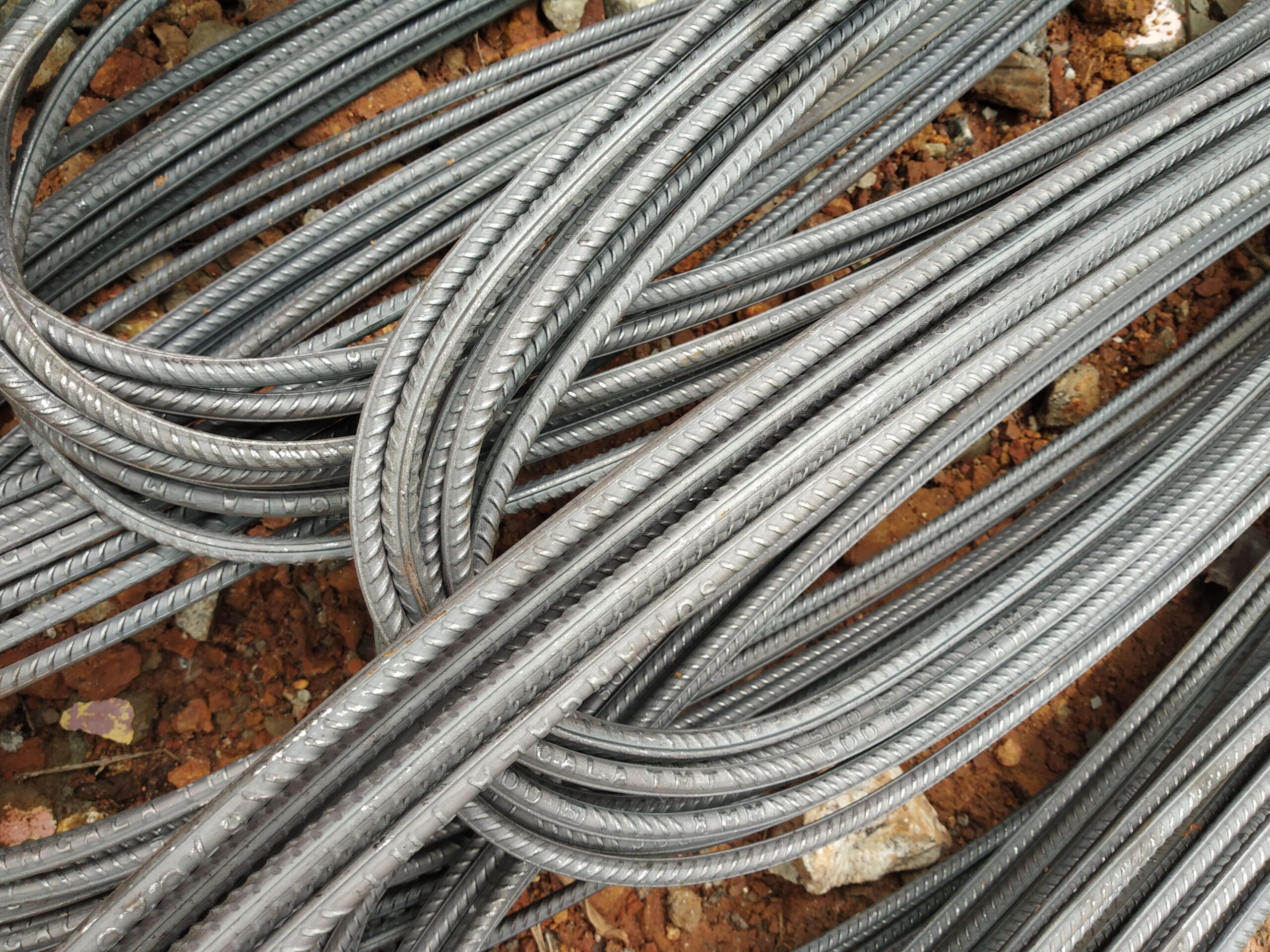
B500B achieves a minimum yield strength of 500 MPa with a characteristic strain at maximum force Agt ≥ 5.0% and k ≥ 1.08. This high-ductility profile is essential in culvert barrel sections where seismic or dynamic traffic loading could cause plastic hinging — the structure must redistribute forces without brittle failure. The ribbed bar profile ensures strong mechanical bond to the surrounding concrete, critical in thin-wall precast culvert units where cover depths are already near minimum. See our B500B rebar page for available diameters and stock lengths.
For long culverts and precast elements, cut-and-bend fabrication to DIN 488 shape codes reduces on-site labour and ensures dimensional consistency across repeated cage units. Mechanical rebar couplers (parallel-thread, 12–40 mm) can replace lap splices at construction joints to simplify assembly.
Typical Rebar Sizes by Culvert Element
| Culvert Element | Typical Bar Dia (mm) | Typical Spacing (mm) | Grade |
|---|---|---|---|
| Base slab — main longitudinal bars | 16–20 | 125–150 | B500B |
| Base slab — transverse distribution | 12–16 | 150–200 | B500B |
| Walls — inner face (tension) | 14–20 | 125–150 | B500B |
| Walls — outer face (compression) | 12–16 | 150–200 | B500B |
| Roof slab — main bars | 14–20 | 125–150 | B500B |
| Roof slab — distribution bars | 10–12 | 150–200 | B500B |
| Stirrups / shear links | 8–10 | 100–200 | B500B |
Bar Weight Reference — Key Diameters
Weight formula: kg/m = d²(mm) × 0.00617. Key sizes for culvert reinforcement:
| Diameter (mm) | Weight (kg/m) | Cross-section (mm²) |
|---|---|---|
| 10 | 0.617 | 78.5 |
| 12 | 0.888 | 113 |
| 16 | 1.58 | 201 |
| 20 | 2.47 | 314 |
| 25 | 3.85 | 491 |
For a single-cell box culvert with internal dimensions 2.0 m × 2.0 m and a 10 m barrel length, indicative rebar content may range from 80–150 kg/m³ of concrete for lightly loaded culverts up to 180–250 kg/m³ for heavily loaded highway culverts under significant fill. A 10 m culvert section might consume approximately 3–8 tonnes of reinforcement. These are indicative figures for budgeting only; the bar-bending schedule derived from the structural drawing is the only accurate source.
Concrete Cover and Exposure Class Guidance
Box culverts are classified under EN 1992-1-1 exposure classes that drive minimum cover. Typical classifications for culverts:
- XC2–XC4: elements permanently or cyclically wet (base slab soffit, inner walls) — cover typically 35–50 mm
- XD2–XD3: exposure to chlorides from de-icing salts (road drainage culverts) — cover typically 40–55 mm
- XF2–XF4: freeze/thaw with or without de-icing agents — may increase minimum cover
- XA1–XA2: chemically aggressive soils or groundwater — cover increase and cement type review required
Use DBV-certified plastic or concrete spacers to maintain cover during casting; see our rebar spacers and accessories range for suitable products.
Supply Options for Box Culvert Rebar
Steel Rebar Germany can supply culvert reinforcement in multiple formats:
- Straight bar (B500B, 8–40 mm, stock lengths 6–12 m) for contractor-bending on site or in local fab yards
- Cut-and-bend to DIN 488 or BS 8666 shape codes — supplied as tagged bundles ready for cage assembly
- Welded reinforcing mesh (DIN 488-4, Q and R types, standard or bespoke panel sizes) for slab elements
- Rebar coils (6–16 mm B500A/B500B) for automated stirrup and link production
- Mechanical couplers (12–40 mm) for construction-joint continuity
All product ships with EN 10204 3.1 Mill Test Certificates and export documentation. See also our guide to rebar sizing for concrete roads — another key infrastructure application.
Frequently Asked Questions
Common questions on rebar sizing for box culvert construction
What rebar diameter is typical for box culvert walls?
Can precast box culvert segments use the same rebar sizes as cast-in-situ?
How much rebar (kg/m³) does a box culvert typically contain?
Does Steel Rebar Germany supply rebar in large quantities for infrastructure projects?
Should I use mechanical couplers or lap splices in a box culvert?
Source German-standard rebar with full export documentation
Tell us your specification and destination port — we’ll respond with a detailed quotation.