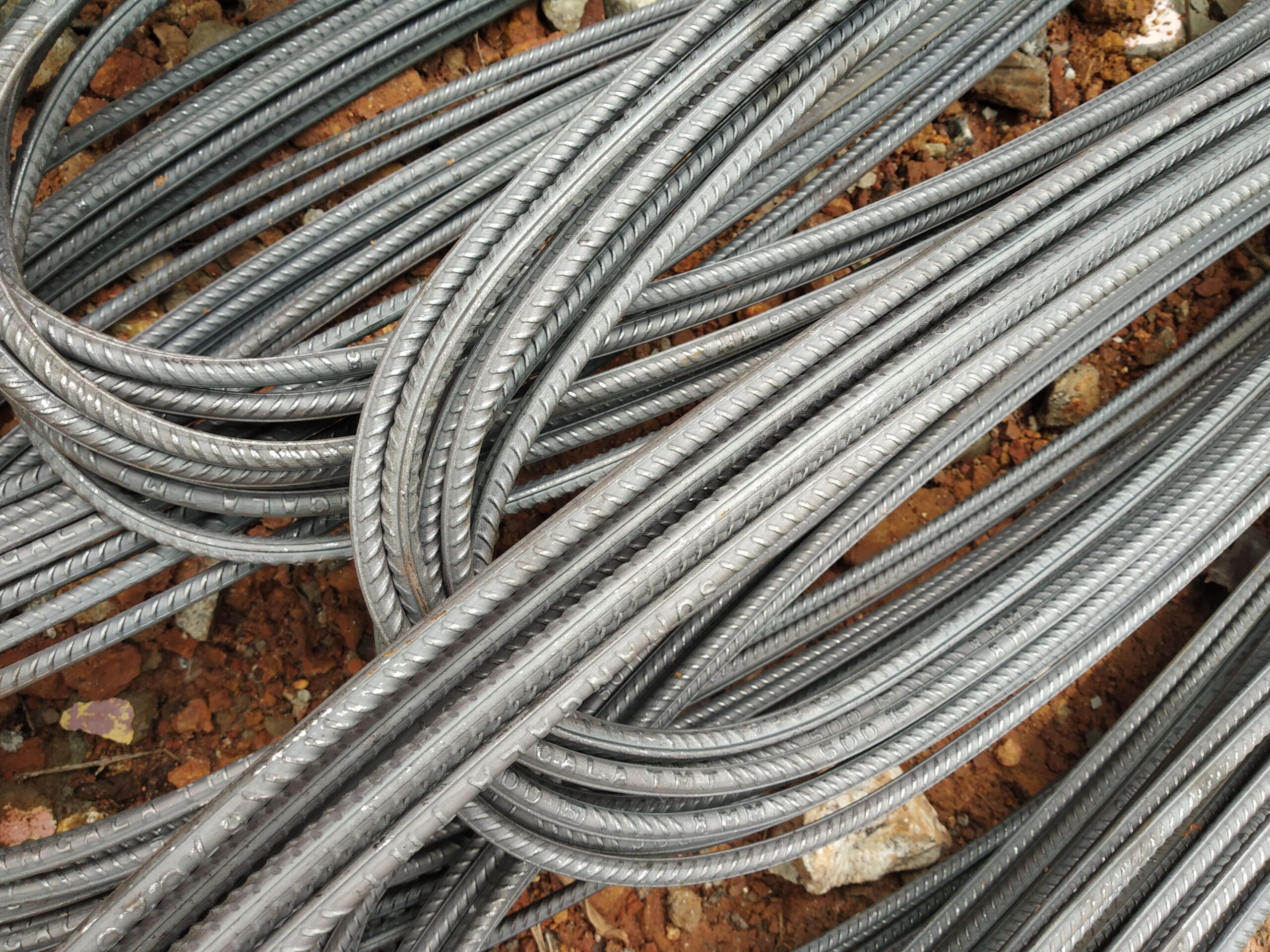
20mm Rebar: Typical Uses and Where It Is Specified
20mm B500B reinforcing bar occupies a critical mid-range position in structural engineering — heavy enough for column main bars, primary beam reinforcement, and heavily loaded slabs, yet still workable without specialist equipment. This guide covers the structural applications where 20mm is the preferred or code-mandated diameter.
Why 20mm is a Structural Workhorse Diameter
The 20mm B500B bar sits at a practical inflection point. At 2.468 kg/m and 314.2 mm² cross-sectional area, it delivers meaningful tensile capacity per bar while remaining small enough to bend on standard bar-bending equipment and to fit within standard rebar cages without excessive congestion.
Under Eurocode 2 (EN 1992-1-1), 20mm is commonly selected when the design axial force or bending moment demands more capacity than 16mm can deliver per bar but the structural geometry does not yet warrant the jump to 25mm or 28mm. It is also widely used because the 20mm lap length (≈ 700–1,000 mm for B500B, depending on bond and cover conditions) is manageable in tight floor-to-floor construction sequences.
Primary Structural Uses of 20mm B500B
Columns and Walls
In reinforced concrete columns, DIN 488 and Eurocode 2 require a minimum of four longitudinal bars with a minimum diameter of 8mm. For medium-duty columns (cross-sections 300×300 mm to 500×500 mm) under moderate combined axial load and bending, 20mm B500B is frequently the longitudinal bar of choice. It provides sufficient area without creating the cage-congestion problems associated with 25mm or 32mm bars in smaller column sections.
Structural concrete walls (shear walls, core walls) also commonly use 20mm vertical bars at spacings of 150–250 mm, particularly in the boundary zones where ductility demand is highest and where B500B’s Agt ≥ 5.0% ductility class is required by EN 1992-1-1.
Beams and Lintels
Reinforced concrete beams with spans of 6–10 m and moderate-to-heavy loading regularly employ 20mm bars as main tensile reinforcement, typically 2–4 bars in the tension zone. The bar’s cross-section (314.2 mm²) offers a useful balance between the number of bars needed (which affects cage assembly time) and the development length required at supports.
Pile Caps and Raft Foundations
Pile caps and raft foundations are among the largest consumers of 20mm B500B. The grid of main reinforcement in both directions — top and bottom — often uses 20mm at 150–200 mm centres. The high concrete cover in below-grade elements (typically 50–75 mm) means 20mm is large enough to contribute meaningfully to flexural capacity while still fitting within standard depth constraints. See our foundations and piling applications page for more on below-grade reinforcement practice.
Infrastructure: Bridges and Retaining Structures
Bridge deck slabs, abutments, and retaining walls specify 20mm at close centres (often 125–150 mm) to meet both flexural and minimum reinforcement ratio requirements in high-durability exposure classes (XS, XD, XF per EN 206). The key advantage here is that a 20mm bar at 150 mm centres delivers a reinforcement ratio that efficiently satisfies crack width limits under EN 1992-2 without excessive congestion. Our infrastructure and bridges page covers these environments in detail.
High-Rise Construction
Tall buildings with high-strength concrete cores routinely mix diameters across a floor plate. Where 25mm or 32mm serve the heavily loaded core and perimeter columns, 20mm B500B is used for transfer slab grid bars, coupling beams, and secondary framing members. The consistent 500 MPa yield grade across the whole diameter range (DIN 488, EN 10080) allows designers to use a single grade specification. See also our high-rise construction applications page.
20mm in Precast Concrete Elements
Precast concrete producers — particularly those manufacturing beams, columns, and staircase flights — rely on 20mm B500B for longitudinal reinforcement. The diameter is compatible with automated rebar cage welding under DIN EN ISO 17660, and the bar’s weight (29.6 kg per 12 m bar) falls within the safe-handling limit for two-person manual cage assembly without mechanical assistance. For precast slab production using lattice girders, 20mm is also used as the chord element in heavier Gitterträger profiles. Visit our precast concrete applications page for technical detail.
Mechanical Couplers for 20mm Bars
Where lap splices are impractical — in high axial-load columns, congested pile caps, or seismic zones — mechanical couplers replace conventional laps. Parallel-thread and taper-thread couplers are available for 20mm B500B, eliminating the 700–1,000 mm lap length and reducing congestion significantly. Coupler connections for 20mm bars are tested under EN 1992-1-1 splice requirements and can be supplied alongside the bar; see our rebar couplers page for specifications.
Sourcing 20mm B500B from Germany
Steel Rebar Germany supplies hot-rolled 20mm B500B per DIN 488 and EN 10080, with full traceability documentation (Mill Test Certificate EN 10204 3.1, Certificate of Origin, CE/Declaration of Performance). Bars are available as straight stock (12 m standard, other lengths to order) or cut-and-bent to your bending schedule. Export shipments are prepared in seaworthy 2-tonne bundles for container or break-bulk loading. Use the quote form to specify diameter, quantity, bar length, and destination port.
Frequently Asked Questions — 20mm Rebar Uses
What structures typically specify 20mm B500B rebar?
Why is 20mm preferred over 16mm or 25mm in some designs?
Is 20mm rebar suitable for seismic reinforcement?
Can 20mm rebar be used with mechanical couplers?
What documentation comes with 20mm B500B from Germany?
Source German-standard rebar with full export documentation
Tell us your specification and destination port — we’ll respond with a detailed quotation.