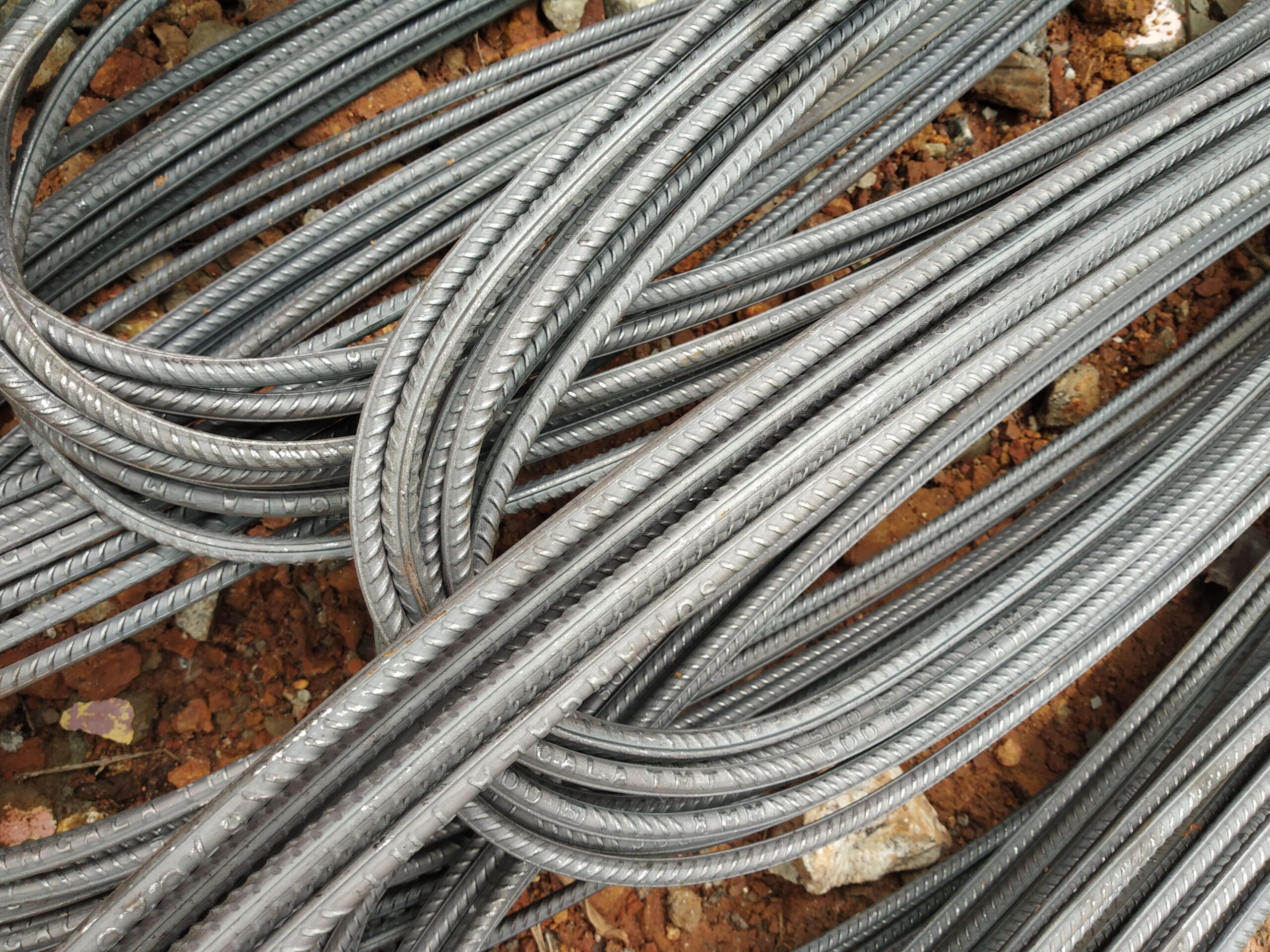
How Many 40mm Rebar Bars in a Tonne?
Exact bar count per tonne for 40 mm B500B rebar — 9.872 kg/m, approximately 118.5 kg per 12 m bar, giving roughly 8 bars and 101 metres per tonne. Quick-reference tables for procurement and site logistics.
40mm Rebar Bars per Tonne — The Direct Answer
At 9.872 kg/m and a 12-metre stock length, each 40 mm B500B bar weighs approximately 118.5 kg. Dividing 1,000 kg by 118.5 kg gives approximately 8 bars per tonne (precisely 8.44), representing about 101 metres of rebar per tonne. These are the critical quantities for estimating, ordering, and loading 40 mm rebar.
| Parameter | Value | Notes |
|---|---|---|
| Nominal diameter | 40 mm | Hot-rolled deformed bar, B500B |
| Weight per metre | 9.872 kg/m | d² × 0.00617 = 40² × 0.00617 |
| Cross-sectional area | 1,256.6 mm² | π/4 × 40² |
| Weight per 12 m bar | ≈ 118.5 kg | 9.872 × 12 |
| Bars per tonne (12 m) | ≈ 8 bars | 1,000 ÷ 118.5 |
| Metres per tonne | ≈ 101 m | 1,000 ÷ 9.872 |
Bar Counts at Different Stock Lengths
40 mm rebar is supplied in multiple stock lengths. The bar count per tonne varies by length, but metres-per-tonne stays constant at ~101 m:
| Bar length | Weight per bar (kg) | Bars per tonne | Metres per tonne |
|---|---|---|---|
| 6 m | 59.2 kg | ≈ 17 bars | ≈ 101 m |
| 9 m | 88.8 kg | ≈ 11 bars | ≈ 101 m |
| 12 m | 118.5 kg | ≈ 8 bars | ≈ 101 m |
| 15 m | 148.1 kg | ≈ 7 bars | ≈ 101 m |
| 18 m | 177.7 kg | ≈ 6 bars | ≈ 101 m |
Why Metres-per-Tonne is the Key Figure
Structural engineers and quantity surveyors work in metres when reading drawings — they count bar lengths, not individual bars. The metres-per-tonne ratio (101 m/t for 40 mm) converts directly from the drawing takeoff to a tonnage purchase order. The bar count per tonne only becomes relevant when planning specific lifts, bundle configurations, and site deliveries.
For example: a heavy column schedule calling for 300 metres of T40 bars requires 300 ÷ 101 = 2.97 tonnes of 40 mm rebar before waste allowance. Adding a 5% cut-and-bend waste factor brings this to approximately 3.12 tonnes.
How 40mm Compares to Adjacent Diameters
The 40 mm bar is the largest diameter in common structural use. Compared to 32 mm — the next most common heavy bar — 40 mm delivers 56% more cross-sectional area but only 64% of the metres per tonne:
| Diameter | kg/m | Section mm² | Bars/tonne (12 m) | Metres/tonne |
|---|---|---|---|---|
| 28 mm | 4.834 kg/m | 616 mm² | ≈ 17 bars | ≈ 207 m |
| 32 mm | 6.318 kg/m | 804 mm² | ≈ 13 bars | ≈ 158 m |
| 40 mm | 9.872 kg/m | 1,257 mm² | ≈ 8 bars | ≈ 101 m |
For a complete reference covering all diameters from 6 mm to 40 mm, see the rebar weight chart. For details on where 40 mm bars are typically specified structurally, see 40mm rebar uses. For the equivalent guide for 32 mm, see bars per tonne for 32mm rebar.
Bundle and Container Planning for 40mm Rebar
Given that each 12 m bar weighs ~118.5 kg, container and bundle planning for 40 mm rebar requires careful attention:
- Export bundles: Standard seaworthy bundles are assembled to approximately 2 tonnes. At ~8 bars/tonne in 12 m lengths, a 2-tonne bundle holds roughly 16 bars.
- 20-ft container: Not suitable for 12 m bars without specialist end-frame loading. 6 m lengths can be stacked in a standard 20-ft box; payload capacity ~22 t allows ~370 bars of 6 m length.
- 40-ft container: Accepts 12 m bars comfortably. Maximum payload approximately 26–28 t, holding roughly 220–236 bars at 12 m.
- Break-bulk: For very large consignments, break-bulk or flat-rack shipment may be preferable, particularly where bars exceed 12 m or where multiple diameter bundles are combined.
Ordering 40mm Rebar from Steel Rebar Germany
Steel Rebar Germany supplies 40 mm B500B to EN 10080 and DIN 488. Standard and custom lengths are available, with full export documentation: EN 10204 3.1 Mill Test Certificate, Certificate of Origin, CE Declaration of Performance, and a commercial packing list. Request a quote with your tonnage, lengths, and destination port for a detailed offer including freight options.
Frequently Asked Questions — 40mm Rebar Bar Counts
How many 40mm rebar bars are in one tonne?
What is the weight per metre of 40mm rebar?
How many metres of 40mm rebar are in a tonne?
How many 40mm bars fit in an export bundle?
Does bar length change the metres per tonne for 40mm rebar?
Source German-standard rebar with full export documentation
Tell us your specification and destination port — we’ll respond with a detailed quotation.