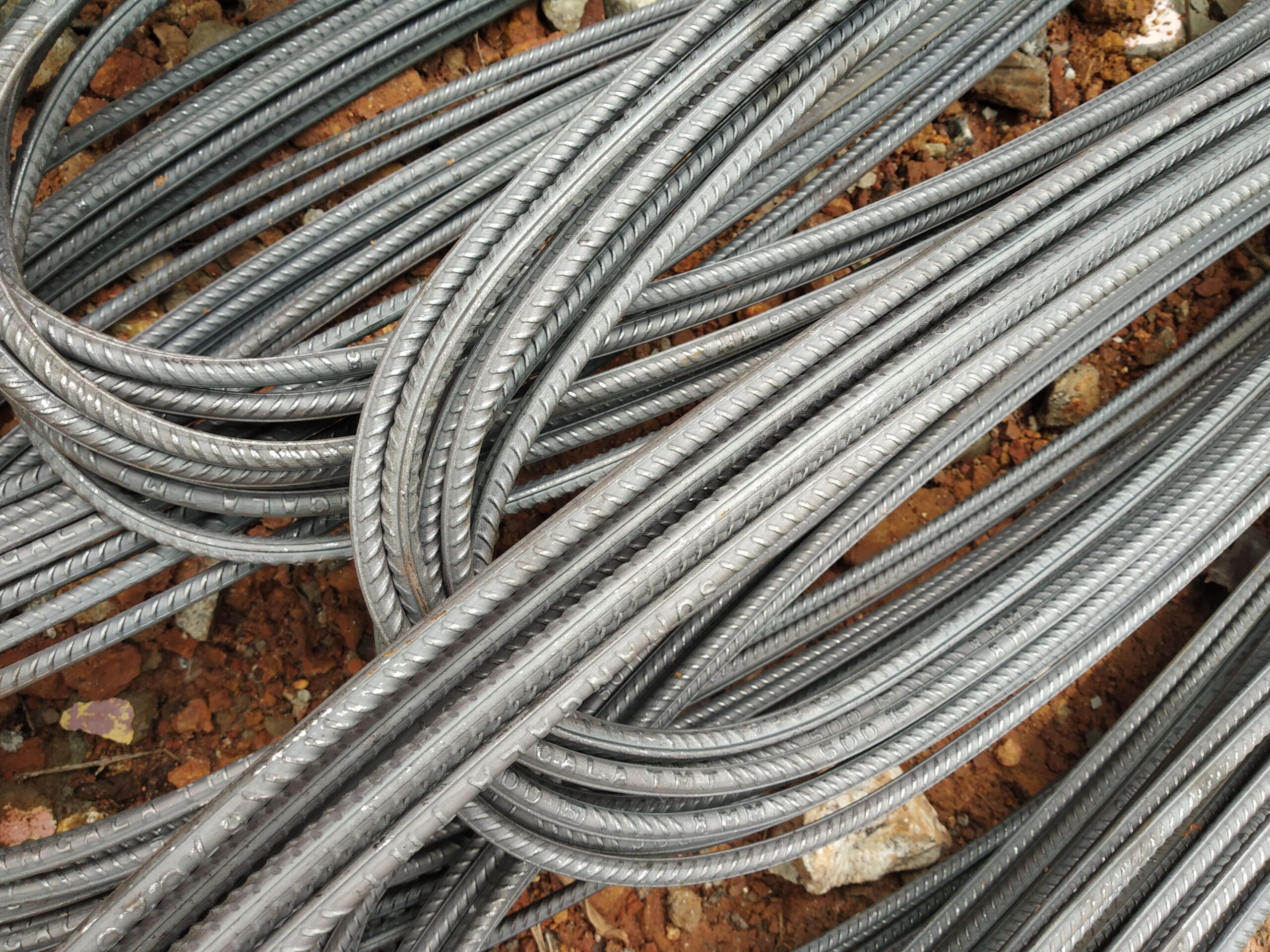
Buying Rebar from Europe: A Complete Procurement Guide
How to source DIN 488 / EN 10080 reinforcing steel from German and EU mills — grades, specifications, incoterms, documentation, and the practical steps from enquiry to delivery.
Why Source Rebar from Europe?
Buying rebar from Europe — and from Germany in particular — offers international construction buyers a combination of quality assurance, documentary traceability, and logistics infrastructure that is difficult to match from other origins. German and EU mills produce reinforcing steel under DIN 488 (the German national standard) and EN 10080 (the harmonised European standard), both of which mandate continuous process control, third-party inspection, and certified mechanical testing. The resulting EN 10204 Type 3.1 Mill Test Certificate is accepted by engineers, specifiers, and customs authorities worldwide as definitive proof of material conformity.
For projects governed by Eurocode 2 (EN 1992-1-1) — increasingly specified in the Middle East, Africa, and South Asia — sourcing from a Eurocode-native mill eliminates the need for grade equivalence calculations and simplifies structural sign-off.
Understanding the Grade You Need
The three standard grades cover the vast majority of applications:
| Grade | Min Yield (MPa) | Ductility Class | k (Rm/ReH) | Agt (%) | Typical Form |
|---|---|---|---|---|---|
| B500A | 500 | Normal | ≥ 1.05 | ≥ 2.5 | Coil, mesh |
| B500B | 500 | High | ≥ 1.08 | ≥ 5.0 | Straight bar (dominant) |
| B500C | 500 | Very high (seismic) | 1.15–1.35 | ≥ 7.5 | Straight bar, seismic zones |
B500B is the workhorse grade for foundations, columns, slabs, and beams in conventional reinforced concrete. B500C is specified for seismic design zones where the structure must absorb significant inelastic deformation. B500A is used primarily in automated mesh and stirrup-welding lines where its cold-rolling origin delivers tighter dimensional tolerances. See our steel grades guide for full mechanical data.
Defining Your Specification: A Buyer’s Checklist
Before requesting a quotation, prepare the following information:
- Grade and standard: B500B to EN 10080 / DIN 488 (or B500A / B500C if applicable).
- Diameters required: one or more of 8, 10, 12, 14, 16, 20, 25, 28, 32, or 40 mm.
- Form: straight bar (state length, e.g. 12 m), cut-and-bend to DIN 488 shape codes, coil, or welded mesh.
- Quantity: total metric tonnes per diameter. Minimum order quantities for export typically start at one full container load (~24–26 t for 20 ft; ~26–28 t for 40 ft, depending on bar length).
- Destination port: required for freight calculation and Incoterm selection.
- Incoterm: EXW, FCA, FOB (Hamburg, Bremen, Rotterdam), CFR, CIF, or DDP. Most buyers outside Europe request CFR or CIF destination port.
- Documentation required: MTC 3.1, Certificate of Origin (EU Form A / standard), CE DoP, packing list, Bill of Lading. Some destinations require a legalised or notarised Certificate of Origin — state this upfront.
- Payment terms: Letter of Credit (LC at sight or usance), TT advance, or open account (for established buyers).
The Procurement Timeline
A typical first-order timeline from enquiry to port of loading:
- Enquiry and quotation (Day 1–3): Submit specification; receive CFR/CIF quotation including freight estimate.
- Order confirmation and proforma invoice (Day 3–7): Agree grade, quantity, incoterm, payment terms; sign purchase contract.
- Payment / LC establishment (Day 7–21): TT advance remitted, or LC opened via buyer’s bank. Mill production begins on payment confirmation.
- Production and quality inspection (Day 21–45): Mill produces and tests the heat. MTCs issued. Pre-shipment inspection arranged if required.
- Packing, loading, and booking (Day 40–55): Bundles prepared, container loaded, freight booking confirmed.
- Bill of Lading issued (Day 55–65): Documents dispatched by courier or via bank for LC transactions.
- Ocean transit (14–35 days depending on destination).
Repeat orders with an established supplier can compress steps 2–3 significantly. See our Rebar Payment Terms & Risk guide for detail on financial instrument selection.
Quality Assurance on Arrival
On receipt of the shipment, a rigorous importer performs the following checks before accepting the cargo:
- Count bundles and verify against the packing list.
- Check each bundle tag for heat number, grade, and diameter.
- Cross-reference heat numbers against the MTC — every heat present in the shipment must appear in the MTC.
- Read the rolled-in EN 10080 bar marking and confirm it matches the ordered grade (A, B, or C suffix).
- If specified, commission an independent third-party mechanical test from a sample bar (particularly for seismic-zone projects).
For more on documentation required at import, see our Importing Rebar: Documentation Checklist.
Frequently Asked Questions
Common questions from first-time European rebar buyers.
What is the minimum order quantity for European rebar export?
Which Incoterm is most common for rebar imports?
Is German rebar compatible with Eurocode 2 design?
Can I request a pre-shipment inspection?
How are rebar prices quoted — per tonne or per piece?
Source German-standard rebar with full export documentation
Tell us your specification and destination port — we’ll respond with a detailed quotation.