Rebar Colour & Tag Codes: How to Read Mill Markings and Bundle Labels on DIN 488 Reinforcing Steel
Rebar colour codes and mill tag markings are the industry’s primary traceability system, linking every bar on site back to its heat number, grade, diameter and standard. Misreading a tag — or accepting unlabelled bars — creates serious quality and structural risk. This guide decodes DIN 488 / EN 10080 marking requirements.
Why Rebar Colour Codes and Tag Markings Matter
On a busy reinforcement yard or construction site, bars of different grades and diameters look almost identical. A 16 mm B500B bar and a 16 mm B500C bar differ by a rib pattern detail invisible to the naked eye at distance; a 20 mm bar and an 18 mm bar can be confused by inexperienced operatives. Colour codes — applied by the mill to bar ends or bundle wrapping — and bundle tags carrying grade, heat number and diameter are the traceability chain that prevents mix-ups causing structural non-compliance.
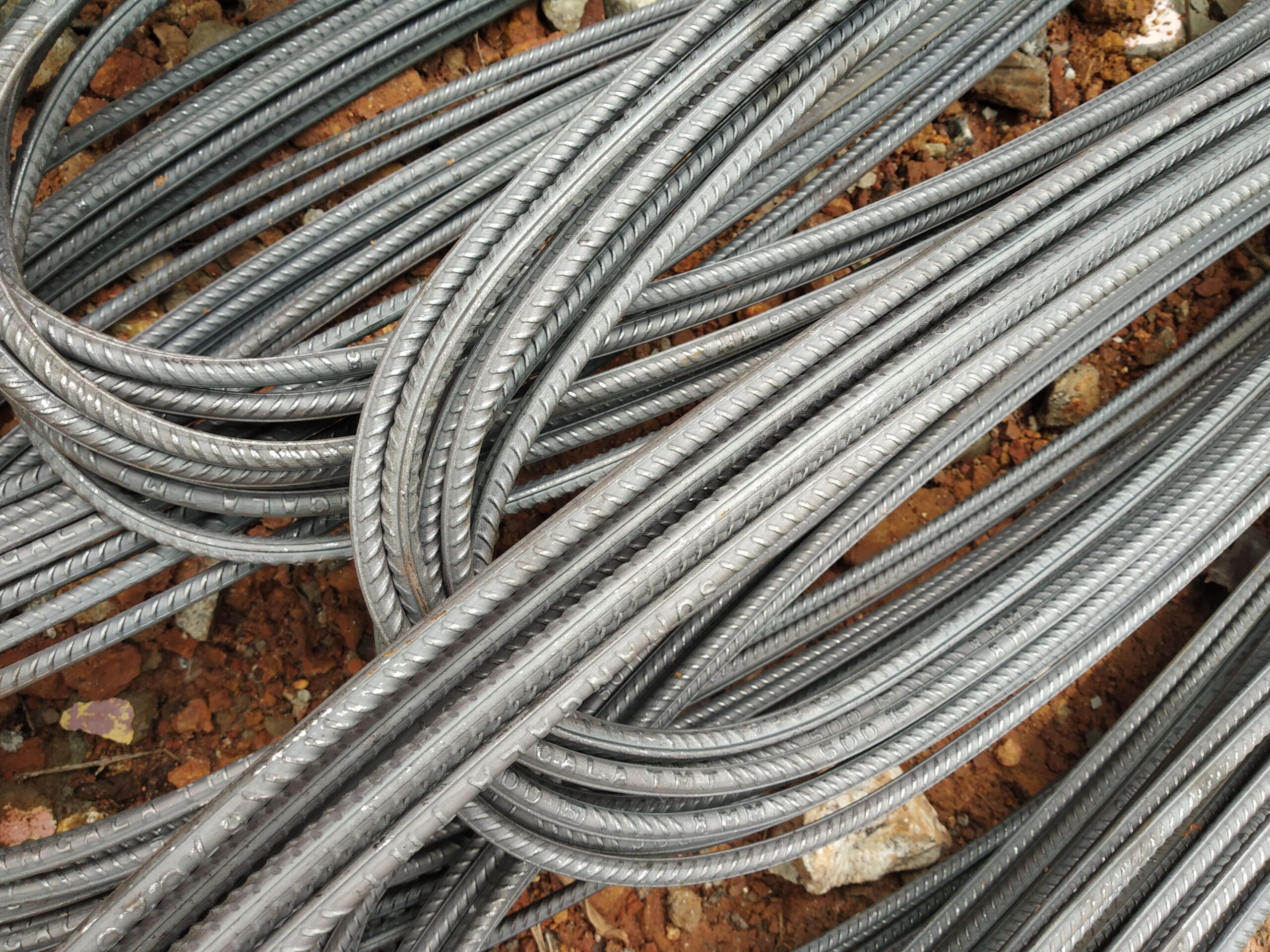
Under DIN 488 (Part 1) and EN 10080, each manufacturer is required to mark bars with a combination of rolled-in rib symbols (mill marks) and external colour or tag identification. The EN 10080 rolled-in marking system uses the rib pattern itself to encode the manufacturer, country of origin and grade — no paint required. Colour marking supplements this with a fast visual check system.
EN 10080 Rolled-In Rib Markings: The Primary System
EN 10080 requires that ribbed reinforcing bars carry the following information in their rolled-in rib pattern, readable without tools:
- Country of origin: Encoded as the number of continuous ribs between the longitudinal ribs (e.g., Germany = 2 ribs).
- Steel manufacturer: Encoded as a specific number of transverse ribs in a defined gap — a registered code unique to each mill. This links every bar to its producer without any label.
- Ductility class: The spacing and height of specific transverse ribs encodes class A, B or C — allowing verification on site with a measuring tape and the EN 10080 marking tables.
The rolled-in marking system is permanent and cannot be removed in service, making it the legally defensible traceability element under EN 13670 (execution of concrete structures) and the basis for forensic investigation in the event of structural failure.
Colour End-Marking System for Rebar Grades
Colour marking — applied to the end of bars in a bundle, or to the bundle wrapping itself — provides rapid visual grade identification in the yard and on site. The European colour system for reinforcing steel grades is as follows:
| Grade | Standard | End colour marking | Typical form |
|---|---|---|---|
| B500A | DIN 488 / EN 10080 | Yellow | Coil, mesh, small-dia bar |
| B500B | DIN 488 / EN 10080 | Yellow + blue (two stripes) | Straight bar 8–40 mm |
| B500C | DIN 488 / EN 10080 | Yellow + green (two stripes) | Straight bar — seismic |
| B420B | EN 10080 | Orange | Lower-yield bar (some markets) |
| Stainless 1.4301 (304) | EN 10088 / BS 6744 | No colour system — tag only | Straight bar |
| Stainless 1.4462 (2205 duplex) | EN 10088 / BS 6744 | No colour system — tag only | Straight bar |
Bundle Tags: What Every Field Engineer Must Check
Every bundle of rebar delivered to site should carry a metal or durable plastic tag (or securely attached label) containing all of the following information:
- Steel grade and ductility class: e.g., B500B (Class B per EN 10080)
- Nominal diameter: e.g., Ø16 mm
- Bundle length: e.g., 12.0 m
- Number of bars and bundle weight: e.g., 78 bars / 1 957 kg
- Heat (melt) number: Unique identifier linking the bars to the EN 10204 3.1 Mill Test Certificate
- Country of origin and mill name: For CE-marked rebar, the four-digit EN standard (1090) notified body number appears on the label
- Standard reference: DIN 488 and/or EN 10080
On export supply from Steel Rebar Germany, bundles are wire-tied at approximately 2-tonne intervals and labelled with all required fields. For ISO seaworthy packing, the outer wrapping also carries the heat number and destination port reference. See our export and delivery page for full packaging and documentation details.
Weight and Diameter Quick-Check: On-Site Verification
When bar colour or tag is damaged or missing, diameter and linear weight can verify the grade assignment. Using the formula kg/m = d²(mm) × 0.00617:
| Nominal dia (mm) | Weight (kg/m) | Cross-section (mm²) | Verify with: |
|---|---|---|---|
| 8 | 0.395 | 50.3 | Vernier caliper + 1 m sample weighing |
| 10 | 0.617 | 78.5 | Vernier caliper + 1 m sample weighing |
| 12 | 0.888 | 113 | Vernier caliper + 1 m sample weighing |
| 16 | 1.578 | 201 | Vernier caliper + 1 m sample weighing |
| 20 | 2.466 | 314 | Vernier caliper + 1 m sample weighing |
| 25 | 3.854 | 491 | Vernier caliper + 1 m sample weighing |
| 32 | 6.313 | 804 | Vernier caliper + 1 m sample weighing |
| 40 | 9.865 | 1257 | Vernier caliper + 1 m sample weighing |
Note that rib height and spacing can be measured against EN 10080 Annex B tables to confirm the ductility class from the rolled-in marking — this is the definitive on-site check when documentation is unavailable. The relevant product pages contain full dimensional data for each bar size.
International Marking Systems: Key Differences
International buyers should note that colour and marking conventions differ by country and standard:
- BS 4449 (UK): Uses a different rib-code system for yield strength classes (B500A, B500B, B500C — same grades, different mark encoding). End colours: B500B = purple; B500C = orange/red.
- ASTM A615 (USA/US export markets): No colour system — relies entirely on rolled-in line marks: one line for Grade 40 (280 MPa), two lines for Grade 60 (420 MPa), three lines for Grade 75 (520 MPa). Completely different from EN/DIN systems.
- IS 1786 (India): Fe 500 and Fe 500D grades use manufacturer-specific marking; no pan-Indian colour standard.
For export supply destined for mixed-standard sites, our delivery documentation clearly states DIN 488 / EN 10080 compliance and recommends that site management be briefed on the difference between EN and ASTM marking systems to prevent accidental misidentification. Contact us via the quote form for project-specific labelling requirements.
Frequently Asked Questions — Rebar Colour & Tag Codes
Can I identify rebar grade from colour alone without checking the bundle tag?
What does the heat number on the bundle tag mean and why is it important?
How do I read the rolled-in EN 10080 rib marking to identify the manufacturer?
What marking is required on rebar exported to non-EU markets?
What if bundles arrive on site with missing or illegible tags?
Source German-standard rebar with full export documentation
Tell us your specification and destination port — we’ll respond with a detailed quotation.