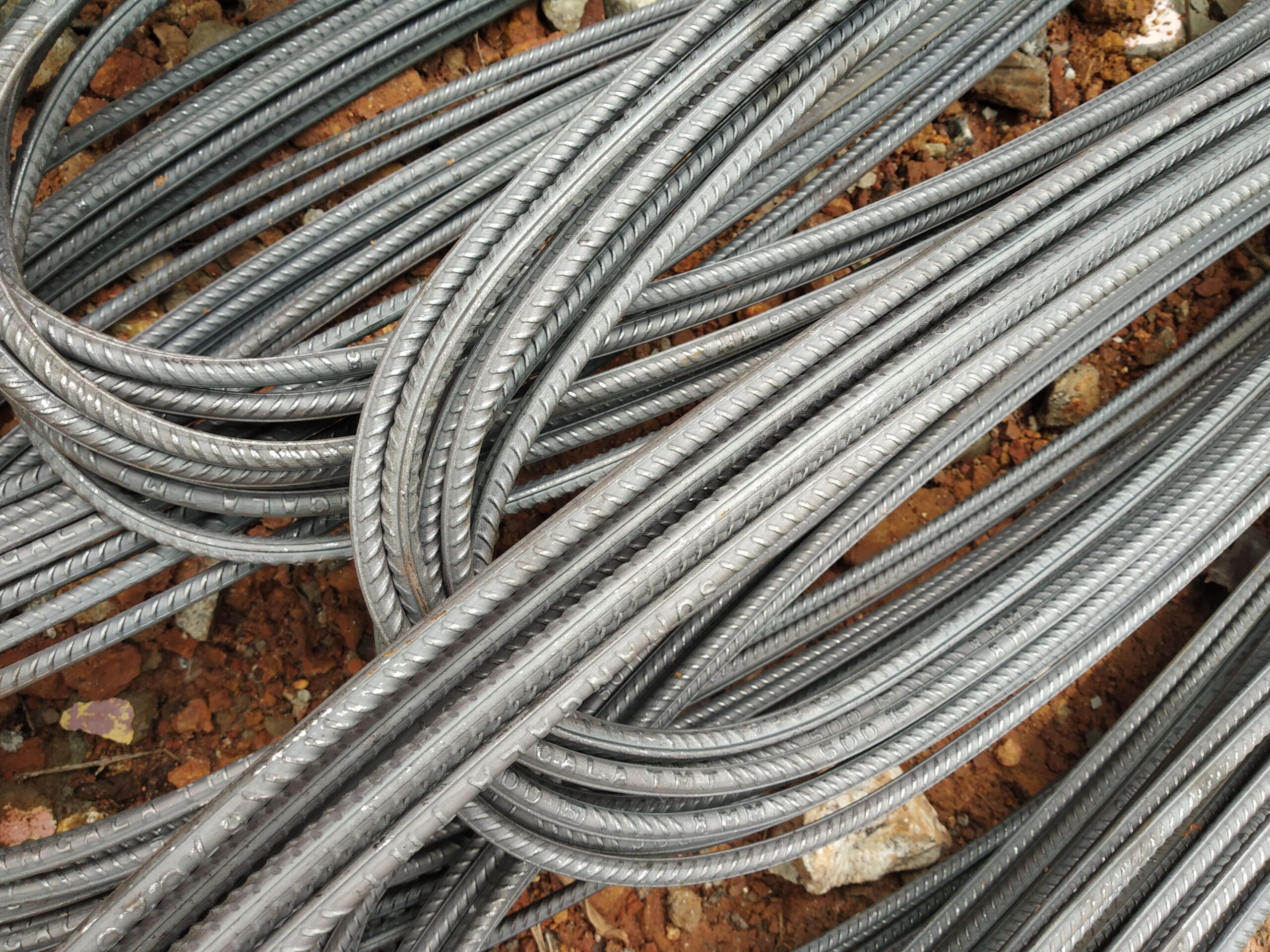
Is Surface Rust on Rebar Acceptable?
Surface rust on reinforcing steel is one of the most misunderstood topics on any construction site. This guide explains exactly when light mill scale and atmospheric rust are acceptable, when they become a structural concern, and how to handle rebar storage to keep your material within DIN 488 and EN 10080 tolerances.
Surface Rust on Rebar: The Industry Standard Position
Every structural engineer and rebar procurement manager eventually faces the same question when opening a delivery: the bars carry a thin reddish-brown film. Is this a defect, or a normal condition of hot-rolled steel?
The short answer is that light, evenly distributed surface rust is acceptable — and in fact common — on hot-rolled B500B and B500C reinforcing steel. Both DIN 488 and EN 10080 address surface condition explicitly. Neither standard prohibits the presence of rust per se; what matters is whether the rust has progressed to the point where it compromises the bar’s cross-sectional area, rib geometry, or bond performance in concrete.
When rebar is rolled at temperatures above 1,000 °C and then air-cooled, a layer of iron oxide (mill scale) forms naturally on the surface. Within days or weeks of outdoor storage, atmospheric moisture converts this scale into the familiar orange-brown patina known as surface rust. This is a cosmetic condition, not a structural one, provided it remains superficial.
Acceptable vs. Unacceptable Rust: A Practical Classification
Industry practice — aligned with guidance from standards bodies and structural concrete design codes — distinguishes three levels of surface oxidation:
| Level | Appearance | Effect on Bond | Acceptability |
|---|---|---|---|
| Mill scale | Dark grey, tight, factory-fresh | Negligible — slight bond reduction vs. lightly rusted bar | Acceptable |
| Light atmospheric rust | Thin orange-brown film, ribs fully visible | Positive — micro-roughness slightly improves mechanical bond | Fully acceptable |
| Moderate rust with pitting | Thicker deposits, minor pitting, ribs still intact | Neutral to slightly reduced; wire-brush and re-measure | Conditional — check cross-section |
| Heavy flaking / laminar rust | Flakes lifting off, measurable diameter loss, pitting depth >0.5 mm | Significantly reduced; potential loss of ductility properties | Reject or downgrade |
The critical test is always cross-sectional area. If wire-brushing a representative sample reveals that the actual diameter falls outside the tolerances specified in DIN 488-2 (±4 % for nominal cross-section on individual bars, ±3.5 % on lot average), the bar should be rejected. For B500B at 16 mm nominal diameter (201 mm² cross-section), that means no more than ~8 mm² of section loss on a single bar.
How Rebar Should Be Stored to Prevent Excessive Corrosion
Proper site and yard storage is the single most effective intervention. The goal is not to prevent all rust — that is impossible without hermetic sealing — but to keep atmospheric oxidation within the light-rust band that causes no structural harm.
- Elevate bars off the ground. Use timber bearers or steel dunnage at maximum 1.5 m spacing. Ground contact causes localised moisture retention and accelerates corrosion dramatically.
- Provide adequate drainage. Store on a sloped, hardstanding surface so rainwater drains freely rather than pooling beneath bundles.
- Avoid dissimilar-metal contact. Direct contact between rebar bundles and galvanised wire or aluminium sheeting can drive galvanic corrosion.
- Use breathable covers, not sealed plastic. Sealed plastic traps condensation; a breathable tarpaulin or open-sided lean-to shelter limits rainfall while allowing air circulation.
- Rotate stock on a first-in, first-out basis. Bars stored for more than 6 months in humid coastal environments may develop moderate rust; FIFO practice keeps exposure times short.
- Tag bundles with delivery date and grade. Traceability back to the Mill Test Certificate (EN 10204 3.1) is essential for QA sign-off on any DIN 488-compliant project.
Removing Surface Rust Before Placing
If bars arrive at the pour with light to moderate rust, wire-brushing by hand or with a mechanical wire-brush attachment is the standard remediation. The procedure is straightforward:
- Select representative samples from each bundle — typically 5 % of bars or 3 bars minimum, whichever is greater.
- Wire-brush a 300 mm section in the mid-span of the bar, removing all loose material.
- Measure the cleaned diameter with calibrated calipers and compare against DIN 488-2 tolerances.
- If the cleaned bar passes dimensional checks, the entire bundle can be accepted, provided no individual bar shows laminar or flaking rust.
- Document results against the original Mill Test Certificate reference number for the project quality file.
Note that lightly rusted bar, once brushed, often shows better bond than freshly descaled bar, because the micro-texture left by oxidation interlocks more effectively with the alkaline concrete matrix. This is recognised in EN 1992-1-1 (Eurocode 2) design guidance.
Rust and the EN 10080 Mill Test Certificate
When Steel Rebar Germany supplies B500B or B500C material, every consignment is accompanied by a Mill Test Certificate to EN 10204 3.1. This document records the heat number, chemical composition, mechanical test results (yield strength, tensile strength, elongation Agt, k-ratio), and surface rib geometry — all measured on the bar as-rolled. Atmospheric surface rust acquired after shipment does not invalidate the MTC, provided the bar still meets dimensional tolerances at point of use.
For procurement officers specifying DIN 488-compliant material: request the MTC for every heat and cross-reference heat numbers to bundle tags on delivery. This chain of custody is your primary defence against disputes over material condition. See our products overview and B500B product page for full supply specifications.
When to Reject Rusty Rebar Outright
Rejection is warranted in any of the following conditions:
- Laminar (layered, peeling) rust that lifts off in flakes when touched — indicates deep oxidation of the bar skin.
- Measurable pitting deeper than approximately 0.5 mm, which may create stress-concentration points under cyclic loading.
- Cross-sectional area loss beyond DIN 488-2 limits after wire-brushing a representative sample.
- Visible longitudinal cracks in the bar surface — these are not rust but manufacturing defects and are always cause for rejection.
- Bars stored in direct contact with chloride-bearing ground (near coast, road-salt contaminated site) for prolonged periods without protection — chloride-induced pitting corrosion is qualitatively different from atmospheric rust and must be treated with far greater caution.
Material rejected for excessive rust should be segregated, tagged “HOLD — QA review”, and returned to the supplier with reference to the MTC. Never cut and use rusted-out sections even in non-structural applications without engineering sign-off.
Frequently Asked Questions: Rebar Rust & Storage
Answers to the questions buyers and site engineers ask most often.
Does surface rust on rebar reduce bond strength in concrete?
How long can rebar be stored outside before rust becomes a problem?
Is there a DIN 488 or EN 10080 specification for acceptable rust on delivery?
Can you supply pre-treated or epoxy-coated rebar to reduce corrosion risk?
What should I do if a rebar delivery arrives heavily rusted?
Related Guides & Resources
Deepen your understanding of rebar specification and site handling with these guides from Steel Rebar Germany:
- Rebar Products Overview — full range of B500B bars, mesh, coils, couplers, and accessories
- B500B Rebar: Grades, Standards & Dimensions — full spec including DIN 488 ductility requirements
- Cut & Bend Rebar — shape-code supply and storage considerations for prefabricated elements
Source German-standard rebar with full export documentation
Tell us your specification and destination port — we’ll respond with a detailed quotation.