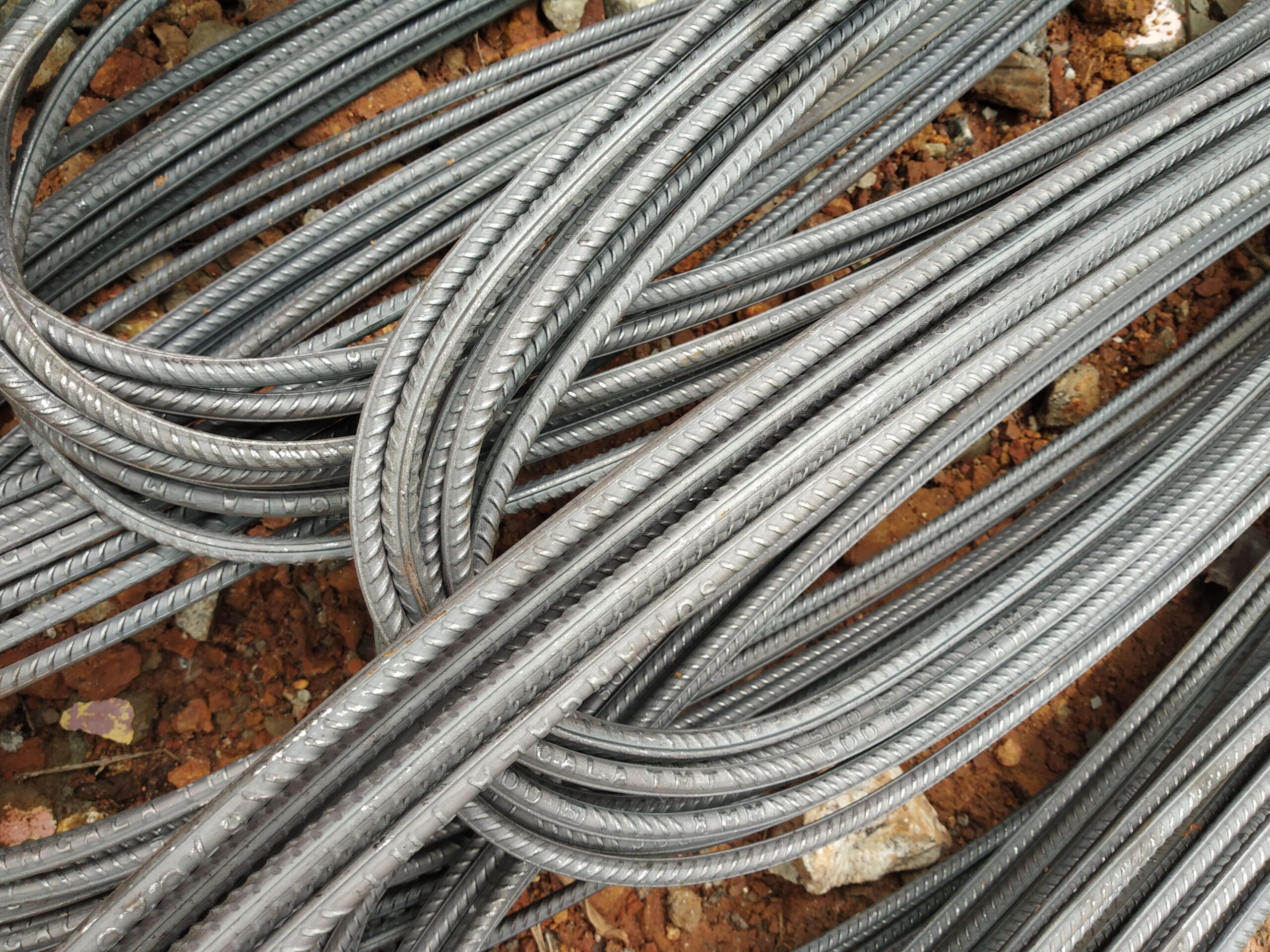
Rebar Shape Codes (BS 8666) Explained
Rebar shape codes under BS 8666 are the universal language between structural engineers, detailers, and fabricators. This guide explains the most common shape codes, how bending dimensions are labelled, minimum bend diameters, and what to expect when ordering cut-and-bent reinforcement from a German-standard mill supply chain.
What Are BS 8666 Rebar Shape Codes?
BS 8666:2020 (Scheduling, dimensioning, bending and cutting of steel reinforcement for concrete) is the British Standard that defines a numbered catalogue of standard bar shapes for reinforced concrete. Each shape code — a two-digit number — represents a unique geometry: the number of bends, their angles, and the dimension labels (A, B, C, D, E) used to specify the exact cut lengths and bent lengths on a Bar Bending Schedule (BBS).
Although BS 8666 originates in the UK, it is widely used across the Middle East, Africa, South and Southeast Asia, and wherever British construction standards have influenced local codes. Structural engineers in these markets frequently specify rebar by BS 8666 shape code, and international traders sourcing from German mills must understand how to translate these shapes into mill-length bar orders and fabrication instructions.
German mills supply straight bars in grades B500B (high ductility, the standard workhorse) and B500C (seismic ductility) to DIN 488 / EN 10080. These bars are then cut and bent to BS 8666 shapes at a downstream fabricator — either in Germany, in the destination country, or on site. The key intersection is that the raw material (grade, diameter, minimum bend diameter) must satisfy both the BS 8666 bending rules and the DIN 488 mechanical property requirements.
Common BS 8666 Shape Codes at a Glance
The table below covers the shape codes encountered most frequently in residential, commercial, and infrastructure projects. Dimensions A, B, C refer to the BS 8666 labelling convention measured to the centreline of the bar.
| Shape Code | Description | Typical Use | Dimensions Used |
|---|---|---|---|
| 00 | Straight bar | Longitudinal column, beam, slab bars | A (total length) |
| 11 | One end bent (L-shape) | Starter bars, column kickers | A, B |
| 12 | Both ends bent same direction (Z/S-shape) | Laps with offset, corbels | A, B, C |
| 13 | Both ends bent opposite directions | Offset continuity bars | A, B, C |
| 21 | U-shape (stirrup one open end) | Beam links, pile cage rings | A, B, C |
| 25 | Closed rectangular link (4-bend) | Column ties, beam stirrups | A, B |
| 26 | Closed circular link | Circular columns, pile cages | A (circumference) |
| 32 | Hook one end (standard anchorage hook) | Slab top bars, wall bars | A, B |
| 33 | Hook both ends | Truss bars, general anchorage | A, B |
| 51 | Trapezoidal stirrup | T-beam and L-beam links | A, B, C, D |
| 98 | Special / non-standard shape | Complex geometry, sketch required | All dimensions + drawing |
Bending Dimensions and the BS 8666 Labelling System
Each shape code uses letter labels (A through E) to specify the lengths of individual legs, measured to the centreline of the bar. The BS 8666 standard defines:
- Cutting length: The total straight length of bar before bending, calculated from the sum of leg dimensions minus deductions for bend set-back (the amount the bar shortens at each bend due to its radius).
- Minimum scheduling radius (r): The minimum inside radius of a bend, expressed as a multiple of bar diameter d. For B500B/B500C bars, BS 8666:2020 specifies r ≥ 3.5d for diameters ≤ 16 mm and r ≥ 4.0d for 20–50 mm. DIN 488 bending requirements align closely; confirm with your fabricator for the exact schedule.
- Bend deduction: For a 90° bend, the standard bend deduction is approximately 2r + d per bend, where r is the inside radius. This means a bar scheduled as A=300, B=200 (shape code 11) has a cut length of 300 + 200 − deduction, not simply 500 mm.
Correctly calculated cutting lengths are essential when ordering straight stock bars from the mill. Over-ordering on cut length wastes material; under-ordering means the bent bar falls short of cover requirements after the bend deduction is applied.
How DIN 488 Bar Properties Map to BS 8666 Bending
German B500B bar (the standard grade we supply) has a minimum characteristic yield strength of 500 MPa, a k-ratio (ft/fy) ≥ 1.08, and a minimum uniform elongation at maximum force (Agt) ≥ 5.0 %. These properties — particularly the high elongation — mean the bar bends cleanly to tight radii without cracking, which is critical for small-diameter stirrups and closed links (shape codes 25, 26, 51).
For seismic projects requiring shape code 25 column ties in B500C (k-ratio 1.15–1.35, Agt ≥ 7.5 %), the higher ductility reserve means even tighter bend diameters are achievable without surface cracking. This matters in earthquake-zone high-rise construction where closely spaced confinement links are specified at very small diameters (8 mm, 10 mm).
See our cut-and-bend rebar page for details on how we handle shape-code supply and our products overview for the full range of bar diameters available (8–40 mm in straight lengths, 6–16 mm as coil for automated bending).
Ordering Cut-and-Bent Rebar by Shape Code
When placing an order for cut-and-bent bars, your Bar Bending Schedule should specify:
- Bar mark — the unique identifier cross-referenced to the structural drawing.
- Shape code — the BS 8666 two-digit code.
- Bar diameter — in mm (e.g., 16 mm B500B).
- All leg dimensions — A, B, C, etc. in mm, measured to centreline.
- Number of bars per mark — quantity.
- Total weight — calculated from the cut length using the formula: kg/m = d²(mm) × 0.00617.
Steel Rebar Germany can supply straight mill-length stock bars with full EN 10204 3.1 Mill Test Certificates for onward fabrication, or we can source and coordinate cut-and-bent supply for large-volume export projects. Include your full BBS in your quote request.
Frequently Asked Questions: BS 8666 Shape Codes
Is BS 8666 the same as DIN 488 for cut-and-bend purposes?
What is the most commonly ordered shape code for beam stirrups?
How do I convert BS 8666 cut lengths to an order of straight mill bars?
Can I order shape code 98 (special/non-standard) bars from you?
Does BS 8666 apply to rebar mesh as well as individual bars?
Further Reading
- Rebar Products Overview — all diameters, grades, and forms available
- Cut & Bend Rebar — shape-code supply and fabrication coordination
- B500B Rebar Spec — DIN 488 mechanical properties and diameter weight table
Source German-standard rebar with full export documentation
Tell us your specification and destination port — we’ll respond with a detailed quotation.