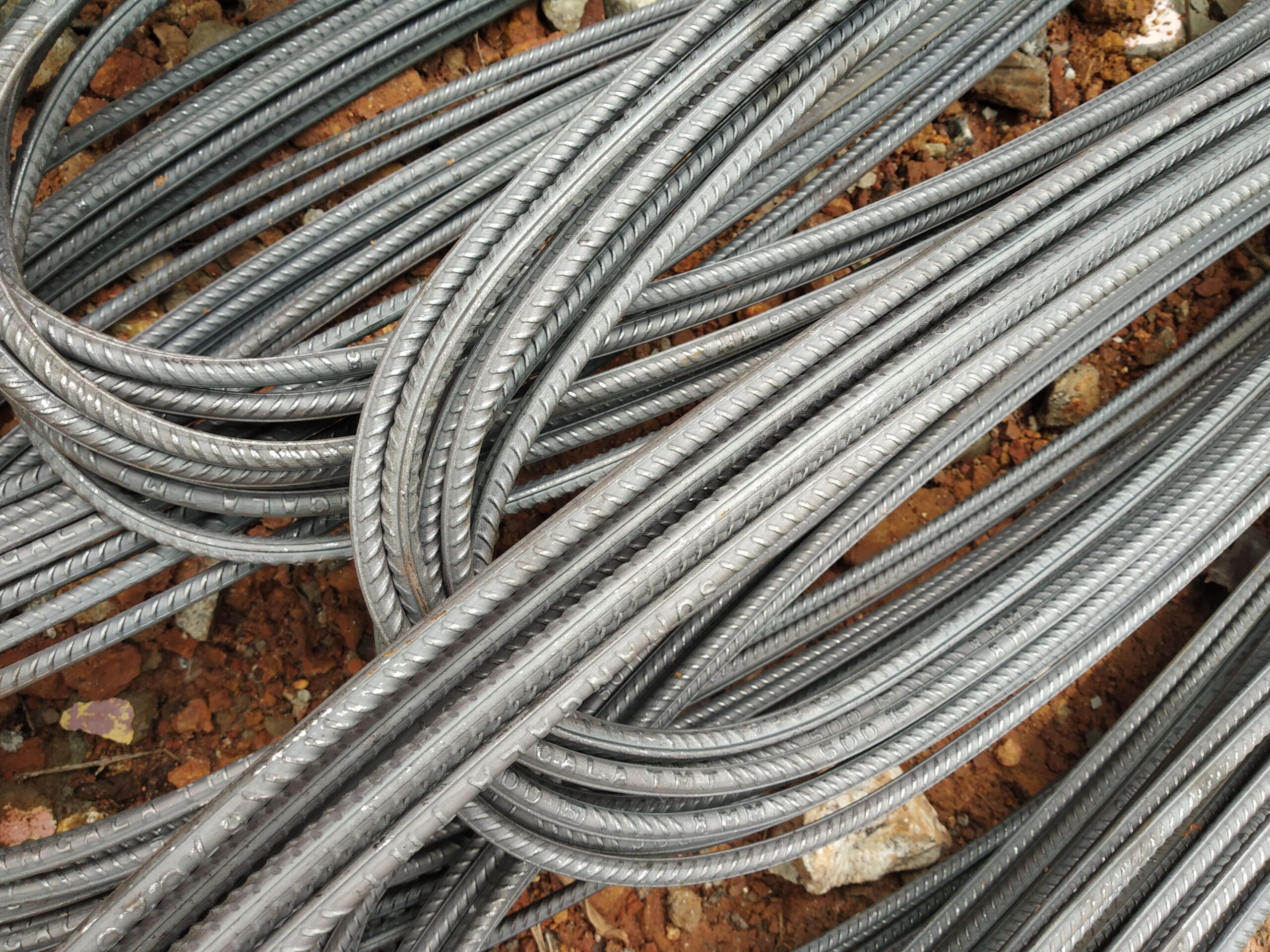
What Size Rebar for a Concrete Septic Tank?
Practical bar-size and spacing guidance for reinforced concrete septic tanks — B500B diameters, cover depths, mat layouts and indicative steel estimates — backed by DIN 488 / EN 10080 supply capability.
What Size Rebar for a Concrete Septic Tank — The Short Answer
For a typical domestic or light-commercial concrete septic tank, B500B rebar in 10 mm or 12 mm diameter is most commonly specified for walls and slabs, with 8 mm used for secondary distribution bars and stirrups. Spacing of 150–200 mm centres is typical for walls under moderate soil and liquid pressure, while the base slab often calls for 12–16 mm bars at 150 mm centres given combined earth bearing and uplift loads. These are indicative figures — always confirm your design with a licensed structural engineer, as loads vary significantly with tank volume, burial depth, groundwater level and local code requirements.
Steel Rebar Germany supplies B500B hot-rolled ribbed bar, cut-and-bend pieces and reinforcing mesh to DIN 488 / EN 10080 standards, available for export worldwide with full Mill Test Certificates (EN 10204 3.1) and export documentation.
Why B500B Is the Standard Choice
B500B (minimum yield 500 MPa, k ≥ 1.08, Agt ≥ 5.0%) is the dominant reinforcing grade across Germany and the EU under DIN 488 Part 1. Its high-ductility classification makes it suitable for monolithic concrete structures subject to settlement and soil pressure — both of which are relevant in buried septic tank construction. The ribbed surface profile provides excellent bond to concrete, critical in thin-wall tank sections where cover depths can be 40–50 mm to the nearest bar face.
For septic tank applications, B500A (often used in mesh and coil form) can be appropriate for lightly loaded secondary reinforcement. We supply both grades; see our B500B bar and reinforcing mesh product pages for full size ranges.
Typical Rebar Sizes and Spacing by Tank Element
The table below gives indicative bar sizes and spacing for common septic tank elements. These figures are based on general engineering practice for small to medium precast or cast-in-situ tanks; they are starting points for design, not a substitute for a project-specific structural calculation.
| Tank Element | Typical Bar Dia (mm) | Typical Spacing (mm) | Grade |
|---|---|---|---|
| Base slab (main bars) | 12–16 | 150 | B500B |
| Base slab (distribution bars) | 10–12 | 150–200 | B500B |
| Walls (horizontal) | 10–12 | 150–200 | B500B |
| Walls (vertical) | 10 | 150–200 | B500B |
| Roof / cover slab | 10–12 | 150–200 | B500B |
| Stirrups / ties | 8 | 150–200 | B500B |
Bar Weight Reference — Key Diameters
Use the formula kg/m = d²(mm) × 0.00617 to estimate weight. Common diameters for septic tank work:
| Diameter (mm) | Weight (kg/m) | Cross-section (mm²) |
|---|---|---|
| 8 | 0.395 | 50.3 |
| 10 | 0.617 | 78.5 |
| 12 | 0.888 | 113 |
| 16 | 1.58 | 201 |
For a rough estimate of a small tank (e.g. 3 m × 2 m × 2 m internal, walls + base + roof): total reinforced concrete surface area is approximately 40–50 m². At a steel ratio of roughly 10–15 kg/m² for moderate loading, a tank of this size may consume 400–750 kg of rebar. This is an indicative figure for budgeting only — actual quantities depend on the approved engineering drawing.
Cover Depths and Detailing Notes
Concrete cover to reinforcement in buried liquid-retaining structures is critical for durability. EN 1992-1-1 / Eurocode 2 and the relevant exposure class (typically XC2–XC4 for buried elements in contact with soil and moisture, or XA1–XA2 for chemically aggressive soils) will determine the minimum cover. Common practice for septic tanks:
- Minimum cover to outer face (external/soil side): 40–50 mm
- Minimum cover to inner face (liquid side): 30–40 mm (confirm with corrosion/crack-width requirements)
- Spacers/chairs: use DBV-certified plastic or concrete spacers; see our rebar spacers and accessories range
- Lap splice lengths: typically 40–50 × bar diameter for B500B in tension; mechanical couplers (see rebar couplers) can reduce cage congestion
Ordering Cut-and-Bend or Straight Bar
For septic tank construction, cut-and-bend service to BS 8666 or DIN 488 shape codes eliminates site labour and reduces waste. Supply options include:
- Straight stock lengths (6–12 m) for self-bending on site
- Pre-cut and bent cages or mats to drawing
- Welded mesh panels (Q/R types, standard or bespoke) for wall and slab reinforcement
- Rebar coils (6–16 mm B500A/B500B) for automated stirrup bending
All product is supplied with EN 10204 3.1 Mill Test Certificates, seaworthy bundled for container or break-bulk export.
Frequently Asked Questions
Common questions on rebar sizing for concrete septic tanks
What is the minimum rebar size for a concrete septic tank?
Can I use reinforcing mesh instead of individual bars for a septic tank?
What concrete cover is needed over rebar in a buried septic tank?
Does Steel Rebar Germany supply rebar to DIN 488 for export?
How do I estimate how much rebar a concrete septic tank needs?
Source German-standard rebar with full export documentation
Tell us your specification and destination port — we’ll respond with a detailed quotation.