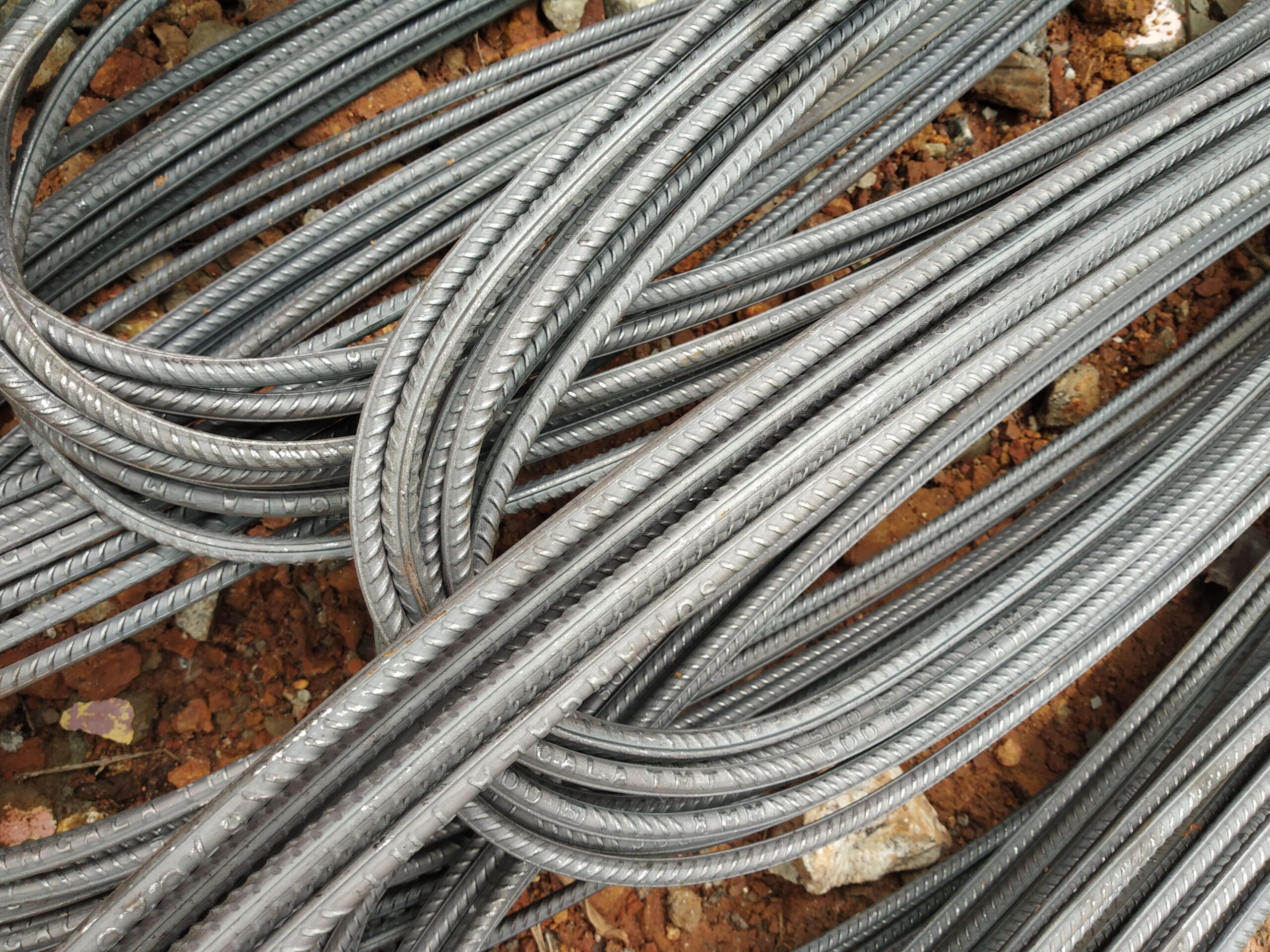
Can Rusty Rebar Be Used in Concrete?
Light surface rust on reinforcing steel is generally acceptable — and can even improve bond with concrete. But loose scale, deep pitting, and flaking corrosion are a different matter. Here is how to distinguish acceptable rust from rejectable deterioration, and what cleaning standards apply.
The Short Answer: Light Rust Is Acceptable — Pitting Is Not
Reinforcing steel freshly cut from a mill is coated with a thin layer of mill scale — iron oxides formed during hot rolling. As the bar is transported and stored, this scale begins to convert to a layer of light surface rust (iron hydroxide / haematite). This is a normal and expected condition for bars stored outdoors or in humid warehouses, and it is explicitly addressed in structural steel standards worldwide.
The consensus position across EN 10080 / DIN 488, BS 8500, and Eurocode 2 guidance documents is:
- Mill scale and light rust: acceptable for use in reinforced concrete. The alkaline environment of the concrete paste (pH ≈ 12.5–13.5) rapidly passivates the steel surface, halting further corrosion.
- Adherent rust without pitting: acceptable. A firmly bonded rust layer can actually increase the coefficient of friction between the bar and concrete, marginally improving bond strength.
- Loose, flaking rust or loose scale: must be removed before placing, as it prevents proper bond development.
- Deep pitting corrosion: indicates section loss; the bar must be assessed for cross-sectional area reduction. If pitting has reduced the effective cross-section beyond permitted tolerances, the bar should be rejected.
How Standards Define Acceptable Rust
Neither EN 10080 nor DIN 488 specify a maximum rust thickness in numerical terms — they require that rust not impair bond or reduce the effective cross-section below the dimensional tolerances permitted for the nominal diameter. The practical guidance most widely applied comes from BS 8500 (complementary to Eurocode 2) and the German DBV (Deutscher Beton- und Bautechnik-Verein) guidance notes, which distinguish between:
| Rust condition | Description | Acceptability |
|---|---|---|
| Mill scale | Blue-grey iron oxide layer from rolling; tight and adherent | Acceptable |
| Light surface rust | Uniform orange-brown film; no pitting, no flaking | Acceptable |
| Moderate rust | Heavier brown layer; rubbing the bar surface transfers rust to hand | Acceptable if no pitting visible after wire brushing |
| Heavy rust with loose scale | Thick, flaking deposits; scale lifts from surface with minimal force | Remove loose material before use |
| Pitting corrosion | Visible craters reducing cross-section; often under lifted scale | Assess section loss — may require rejection |
| Severe pitting / laminar cracking | Deep surface damage; bar cross-section noticeably reduced | Reject |
Cross-Section Loss: The Key Engineering Concern
The primary structural concern with corrosion on reinforcing steel is not the rust itself but the cross-sectional area loss it represents. DIN 488 permits dimensional tolerances on bar cross-section of nominally ±4.5 % on weight per metre (a proxy for cross-sectional area). Pitting that cumulatively reduces the cross-section beyond this tolerance means the bar cannot reliably deliver its rated tensile and compressive capacity.
A practical site assessment method: after wire-brushing a suspect section, measure the bar diameter using vernier callipers at the base of any pits. Compare with the nominal diameter (e.g. 16 mm). Pits that reduce the diameter locally by more than approximately 0.5–1.0 mm warrant closer inspection. For critical structural applications, independent laboratory measurement of actual cross-sectional area (by weighing a measured length and back-calculating) provides a quantitative check.
Cleaning Methods for Bars with Loose Rust
Where loose scale or heavy rust must be removed, the following methods are appropriate for site use:
- Wire brushing (manual or mechanical): the most common method. Removes loose and flaking material without abrading the bar below acceptable tolerances. Rotary wire brushes are efficient for longer sections.
- Shot blasting: used at prefabricating yards; provides a clean Sa 2.5 surface. Appropriate for large quantities of bars requiring a surface free of all scale before application of coatings or shear connectors.
- Acid pickling: sometimes used industrially but rarely on site; requires careful rinsing to avoid hydrogen embrittlement and surface contamination that could affect bond.
After cleaning, bars should be used promptly or stored under cover to prevent re-rusting before concrete placement. Do not coat cleaned bars with oil, grease, or paint — these reduce bond. For bars in aggressive environments (e.g. marine splash zones, de-icing salt exposure), consider specifying epoxy-coated, stainless, or galvanised rebar variants rather than relying on carbon-steel bars with post-delivery cleaning.
Bond Effects of Rust: The Evidence
Laboratory pull-out test programmes referenced in EN 1992-1-1 commentary literature have consistently shown that a thin adherent rust layer on deformed bars produces bond strength equal to or slightly above that of clean (un-rusted) bars of identical rib geometry. The microscopic roughness introduced by uniform surface rust increases mechanical interlock at a micro-scale beyond that provided by the rolled ribs alone. This beneficial effect disappears once scale becomes loose or pitting reduces the effective rib profile — confirming that the rust condition, not the mere presence of rust, is the determining factor.
For further context on the standards that govern rebar quality in export supply, see the standards and certification page and the export documentation overview.
Related Reading
Frequently Asked Questions
Common questions about rust on reinforcing steel and its effect on structural performance.
Does surface rust reduce rebar bond strength in concrete?
How do I tell if pitting corrosion is too severe?
Can rebar that has been stored outdoors for several months still be used?
Should rusty rebar be cleaned before bending?
Does rust affect rebar weldability?
Source German-standard rebar with full export documentation
Tell us your specification and destination port — we’ll respond with a detailed quotation.