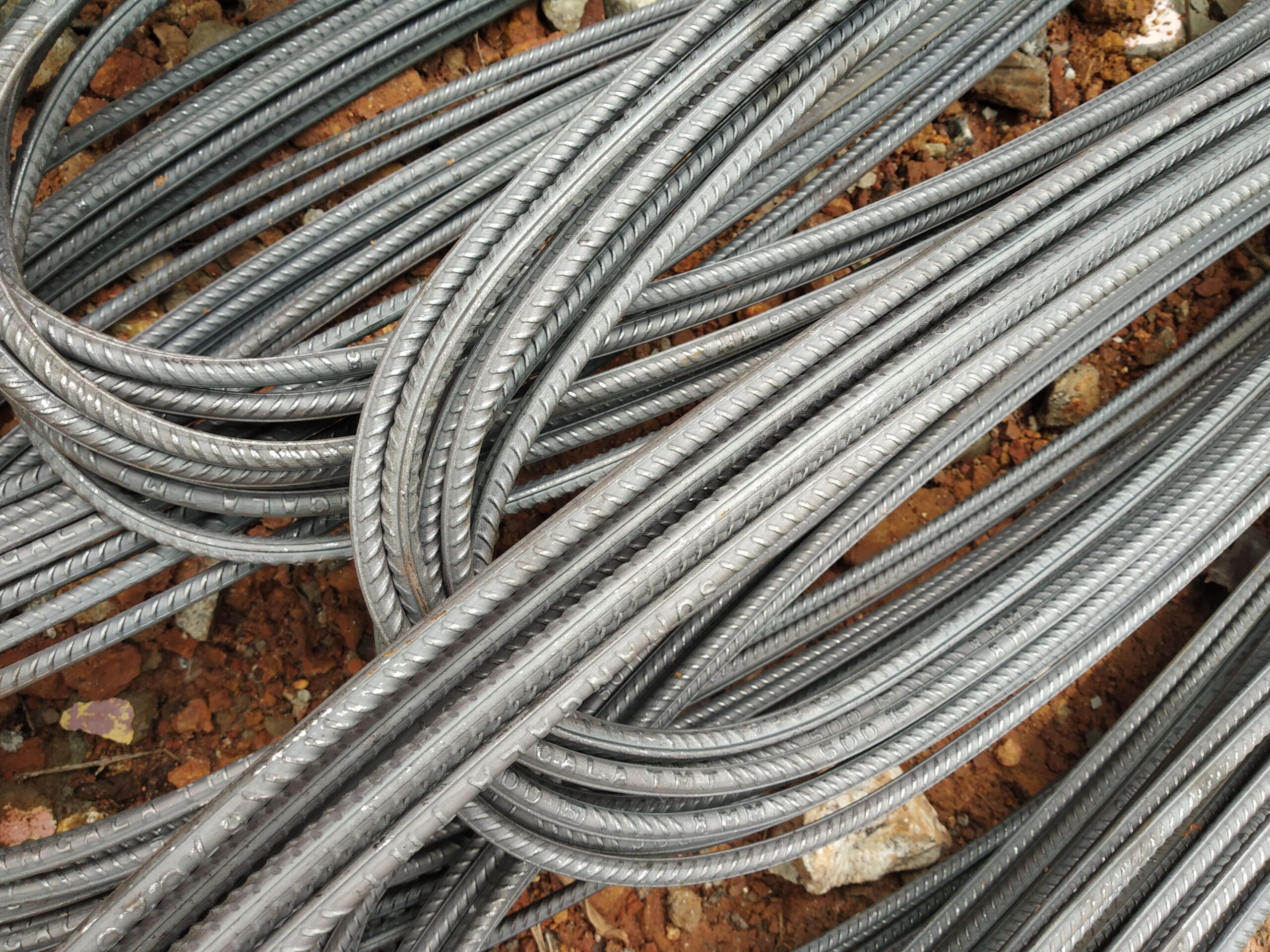
Rebar Bend & Re-Bend Test: EN 10080 / DIN 488 Procedure and Acceptance
The bend and re-bend test is the surface-ductility companion to the tensile test — confirming a rebar can be formed on-site without cracking. This guide covers the test procedure, mandrel diameters by bar size, and acceptance criteria under DIN 488 and EN 10080.
What the Bend Test Actually Checks
The tensile test measures bulk mechanical properties across the cross-section. The bend test is complementary: it evaluates surface ductility — the ability of the bar’s outer fibres to stretch without cracking or fracturing when the bar is cold-bent to a specific radius. In practice, rebar is bent into stirrups, hooks, and crank bars on construction sites or in prefabrication shops, and any cracking on the outer bend surface signals a quality failure that could propagate under cyclic loads.
EN 10080:2005 Clause 5.3 and DIN 488-1 Clause 6.3 together specify two related tests:
- Bend test (Biegeversuch): A straight specimen is bent 180° around a mandrel of prescribed diameter in a single, continuous operation at ambient temperature (≥ 10 °C). The bent surface is then inspected visually at 1× magnification.
- Re-bend test (Rückbiegeversuch): A specimen is bent 90° around a mandrel, aged for at least 30 minutes at 100 °C (to simulate strain-ageing that occurs over months in service), then straightened back by 20°. The outer surface is again visually inspected.
Both tests must show no cracks, ruptures, or flaking on the tension side. Minor surface irregularities due to ribs are disregarded.
Mandrel Diameters by Bar Diameter — the Critical Numbers
The mandrel diameter determines the severity of the bend: a smaller mandrel forces tighter bending and higher outer-fibre strain. DIN 488-1 (Table 2) specifies the following bend-test mandrel diameters (D) for B500B straight bars:
| Bar diameter d (mm) | Bend test mandrel D | Re-bend test mandrel D |
|---|---|---|
| d ≤ 16 | 3d | 4d |
| 16 < d ≤ 25 | 4d | 5d |
| 25 < d ≤ 40 | 5d | 6d |
For B500C (seismic ductility class), mandrel diameters may be one step larger depending on the national annex in force. Always confirm with the MTC which annex version was applied at the mill.
How the Test Is Performed in Practice
At a certified German testing laboratory (accredited to DIN EN ISO/IEC 17025), the procedure runs as follows:
- A test piece of sufficient length (typically ≥ 10d + 150 mm) is cut from the production sample, ensuring no thermal damage from cutting.
- The specimen is placed in a guided-roller bending jig. The mandrel of the specified diameter is positioned between the rollers.
- For the bend test, the bar is pushed around the mandrel at a controlled rate until 180° total angle is achieved. No lubricant is applied.
- For the re-bend test, the specimen is bent to 90°, placed in a drying oven at (100 ± 10) °C for 30 minutes (or longer — the minimum is 30 minutes), then straightened back by 20° after cooling to ambient temperature.
- The test surface is visually inspected. Cracks extending into the metal body = fail. Surface laminations or pre-existing marks at rib roots are noted but distinguished from test-induced cracks.
Reading Bend Test Results on the Mill Test Certificate
On a German-quality EN 10204 3.1 MTC, bend and re-bend results are typically recorded as “OK“, “no cracks“, or the German “bestanden” (passed), along with the mandrel diameter used and the bar diameter tested. Some MTCs report results per diameter group; for large export orders involving multiple diameters, confirm that each diameter group shipped has a passing bend result recorded, not just one representative bar size.
Cross-reference your incoming inspection with the MTC using our rebar acceptance criteria guide. For the tensile parameters on the same certificate, see our tensile test explainer.
Why the Re-Bend Test Matters for Export Buyers
Strain-ageing — a gradual increase in yield strength and reduction in ductility that occurs in carbon steel at ambient temperatures over months — can cause bars that passed the as-delivered bend test to crack when re-bent on a warm construction site in a hot climate. The re-bend test’s 100 °C ageing step deliberately accelerates this phenomenon to a worst-case scenario, giving buyers confidence that the bars will still form safely after transit and storage. For projects in the Middle East, sub-Saharan Africa, or Southeast Asia where summer reinforcement cage temperatures can exceed 50 °C, passing re-bend performance is not a formality — it is a safety-critical indicator. See our export delivery guide for storage and handling recommendations.
Frequently Asked Questions: Rebar Bend & Re-Bend Testing
Common questions from structural engineers and QA managers sourcing DIN 488-certified rebar.
What is the difference between the bend test and the re-bend test?
What does “no cracks” mean on a bend test — are small surface marks acceptable?
Does a passing bend test guarantee the bar won’t crack when bent on-site?
Is the re-bend test mandatory for all B500 grades?
Can I request a specific diameter group’s bend result if my order mixes sizes?
Source German-standard rebar with full export documentation
Tell us your specification and destination port — we’ll respond with a detailed quotation including Mill Test Certificate provision.