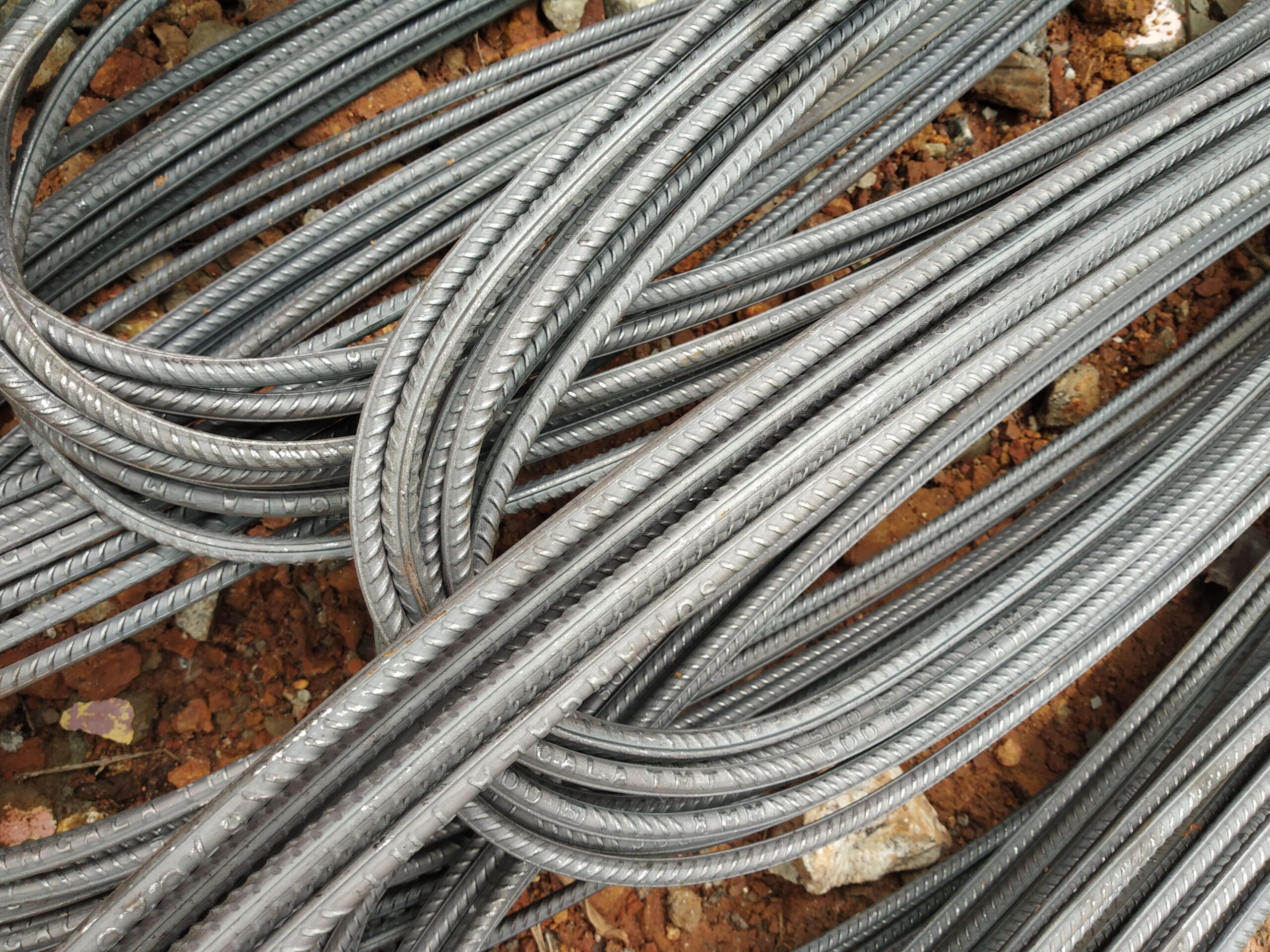
Planning Rebar Delivery Lead Times
A practical guide to understanding and planning rebar delivery lead times — from order confirmation through mill production, export documentation, sea freight, and final customs clearance for DIN 488 / EN 10080 reinforcing steel shipped from Germany.
Rebar delivery lead times are among the most misunderstood variables in construction project scheduling. A buyer who assumes that placing an order on Monday means bars on site within two weeks will quickly find that international export supply chains do not work that way. Lead time is not a single number — it is the sum of several sequential stages, each with its own dependencies and potential hold points.
This guide breaks down each stage of the rebar delivery lead time chain for material sourced from German and EU mills, provides indicative timeframes for typical export scenarios, and highlights the practical steps buyers can take to compress the overall timeline without compromising quality or documentation integrity. For a full picture of how documentation fits in, see our export and delivery page and the related guide on writing a rebar order specification.
1. The Rebar Lead Time Chain — Stage by Stage
A complete export delivery lead time has five main stages. Understanding each one helps buyers identify where delays are most likely and where proactive action makes the biggest difference.
| Stage | What Happens | Indicative Duration | Key Buyer Action |
|---|---|---|---|
| 1. Order & commercial confirmation | Spec agreed, price fixed, contract or PO issued, LC or payment terms confirmed | 2–7 business days | Submit complete specification (grade, dia, qty, docs required) |
| 2. Mill production & rolling | Material rolled or drawn to order; heat treatment if required; quality testing | 2–6 weeks (ex-stock: 0–5 days) | Confirm whether ex-stock or mill order; align with project need date early |
| 3. MTC issue & pre-shipment docs | Mill Test Certificate (EN 10204 3.1) issued; CE DoP raised; Certificate of Origin applied for | 3–7 business days after production | Confirm MTC type (3.1 vs 2.2) at order stage; provide destination country CoO requirements |
| 4. Export loading & sea freight | Material bundled, weighed, loaded to container or break-bulk; vessel booking confirmed; B/L issued | Sea freight: 5–30 days depending on destination | Confirm Incoterms; provide destination port name; advise if project site is inland |
| 5. Import customs & on-site delivery | Customs clearance at destination; duties/VAT paid; delivery to site | 2–14 days depending on country | Appoint local customs broker; confirm import permit requirements for rebar in destination country |
For a project buyer on a fixed programme, the total indicative range from order to site delivery is typically 6–12 weeks for mill-order material shipped by sea to European or Middle Eastern destinations, and potentially 10–16 weeks for more distant markets or where regulatory documentation requirements add processing time. Ex-stock material can compress stages 1–3 significantly.
2. Mill Production: Stock vs Made-to-Order
The single largest variable in rebar lead time is whether the material required is available from mill stock or needs to be rolled to order. The distinction matters enormously for scheduling.
Ex-stock availability
Major German and EU mills maintain rolling stock programmes for the most common diameter and grade combinations — typically B500B in 10, 12, 16, 20, and 25 mm, in 12 m lengths. If your specification matches a stocked item, production lead time effectively becomes zero; the constraint shifts to documentation, bundling, and logistics. Confirm with the supplier whether the required quantity and specification is genuinely in warehouse stock, not merely a nominal “stock” designation that requires transfer from another facility.
Made-to-order rolling
Less common diameters (8 mm, 28 mm, 32 mm, 40 mm), non-standard lengths, B500C grade, or large single-order tonnages typically require a dedicated rolling programme. Mill production lead times are driven by the rolling schedule and furnace availability. Indicative mill order lead times of 2–6 weeks are typical, though periods of high market demand or scheduled maintenance can extend this. Buyers with programmed projects should request a confirmed rolling date rather than an indicative one.
Cut-and-bend
If your order includes cut-and-bend bars per a bar bending schedule (BS 8666 or DIN 488 shape codes), add processing time of typically 3–7 business days in the fabrication facility after the parent stock material is available. Errors in the bending schedule will halt production — ensure the schedule is checked and approved before release.
3. Documentation: The Hidden Lead Time Driver
Documentation is the most frequently underestimated driver of rebar delivery delays. A shipment cannot move until the required papers are in order — and some documents have processing steps that cannot be rushed.
- Mill Test Certificate (EN 10204 3.1): Issued after physical testing is complete and results verified by the mill’s authorised inspector. For large orders covering multiple heats, the MTC package can be substantial. Allow 3–5 business days from end of production to MTC issuance.
- Certificate of Origin: Issued by a Chamber of Commerce in Germany. Applications typically take 2–4 business days; expedited issuance is sometimes available for a fee. For shipments to countries requiring a legalised or apostilled CoO, add 3–7 business days.
- Letter of Credit compliance: If payment is by LC, every document field must exactly match the LC terms. Discrepancies cause bank holds that can delay payment release and freight forwarding by days or weeks. Have your freight forwarder review LC terms before order confirmation, not after the shipment is ready.
- Import licences / permits: Some destination countries require an import permit for steel products. These are applied for by the importer at destination and can take days to weeks. Confirm requirements with your local agent before placing the order.
The practical lesson: documentation should be considered a parallel work stream, not an afterthought. Start the CoO application as soon as the final packing list is confirmed. Provide LC terms to the supplier before order confirmation so discrepancies can be resolved before they cause delays.
4. Sea Freight Transit Times from German Ports
Rebar exported from Germany typically moves through Hamburg (the primary port) or, for southern Germany origins, through Rotterdam or Antwerp. Transit times to key global markets are broadly as follows:
| Destination Region | Typical Load Port | Indicative Sea Transit | Notes |
|---|---|---|---|
| North Africa (e.g. Alexandria) | Hamburg | 8–14 days | Via Mediterranean; generally reliable services |
| West Africa (e.g. Lagos, Tema) | Hamburg | 14–22 days | Multiple feeder hubs; port congestion variable |
| East Africa (e.g. Mombasa, Dar es Salaam) | Hamburg | 20–28 days | Via Suez; Mombasa can add 3–5 days over Dar |
| Middle East (e.g. Jebel Ali, Dammam) | Hamburg | 16–22 days | Via Suez; strong regular services |
| South & Southeast Asia | Hamburg | 22–35 days | Via Suez or Cape depending on vessel; varies widely |
| Intra-Europe (road or short sea) | Varies | 2–8 days | Road for Central/Eastern Europe; short sea for Scandinavia |
These are indicative sailing times only. Actual transit depends on vessel routing, transhipment hubs, port congestion at destination, and vessel capacity. Always obtain a confirmed vessel booking from your freight forwarder before committing a delivery date to your client or programme.
Rebar is typically shipped in 20 ft or 40 ft containers for smaller orders, or as break-bulk / flat-rack cargo for large tonnages where bar lengths exceed standard container internal dimensions. Standard 12 m bars generally require open-top or flat-rack container solutions; confirm with the freight forwarder at enquiry stage.
5. Practical Steps to Compress Rebar Lead Times
Experienced procurement teams use several proven tactics to reduce total rebar delivery lead time without compromising quality or documentation integrity:
- Submit a complete specification at first enquiry. Incomplete specs require clarification rounds that each add 1–3 business days. The more complete the initial enquiry, the faster the supplier can provide a binding offer and begin order processing. See our guide on writing a rebar order specification.
- Confirm ex-stock availability before scheduling. If programme dates are tight, ask explicitly whether the required material is in warehouse stock. Ex-stock orders can be on vessel within 5–10 business days of order confirmation in many cases.
- Start documentation in parallel with production. Apply for the CoO and prepare LC-compliant document templates while the bars are still being rolled. Do not wait for production to complete before beginning documentation.
- Appoint a freight forwarder and customs broker early. Having a confirmed forwarder at origin and a customs broker at destination before the order ships avoids delays in booking vessels and processing import permits.
- Use confirmed vessel bookings, not indicative sailing windows. A confirmed booking means space is reserved; indicative sailing windows can slip by days or weeks if capacity is tight.
Frequently Asked Questions
How long does it typically take to receive rebar from Germany?
What causes rebar delivery delays most often?
Can rebar be shipped in a standard container?
Does a Letter of Credit slow down rebar shipments?
Is it possible to get rebar delivered faster than standard lead times?
Further Reading
Related guides and pages to support your rebar procurement planning.
Writing a Rebar Order Specification
How to write a complete rebar specification covering grade, diameter, length, and documentation requirements.
Read the guide →Export & Delivery
How we package, document, and ship DIN 488 rebar to international buyers.
Learn more →B500B Steel Rebar
Technical data, available diameters, and ordering information for our core B500B product range.
View product →Source German-standard rebar with full export documentation
Tell us your specification and destination port — we’ll respond with a detailed quotation.