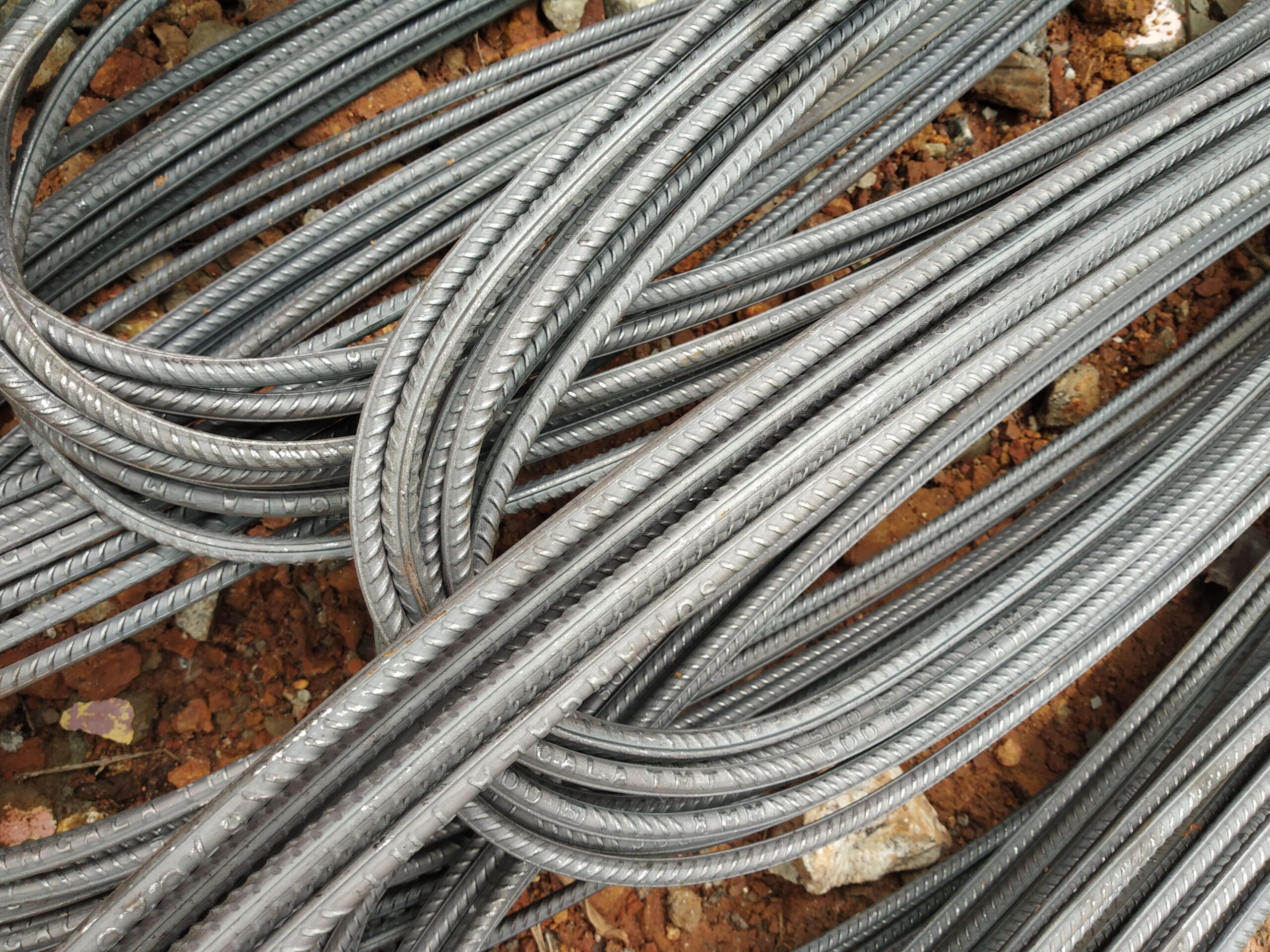
Rebar Corrosion Protection: Cover, Coatings and Stainless Options
Rebar corrosion is the leading cause of reinforced concrete deterioration worldwide. This guide explains the primary corrosion protection strategy — concrete cover — alongside coating options (epoxy, galvanised) and stainless steel rebar for the most aggressive exposure classes.
Why Rebar Corrodes
Reinforcing steel embedded in well-compacted, high-pH concrete is normally in a passive state — a thin oxide layer forms on the bar surface that prevents active corrosion. Two mechanisms break down this passivity:
- Chloride ingress: Chloride ions from seawater, de-icing salts, or marine spray penetrate the concrete over time. When the chloride concentration at the bar surface exceeds a threshold, the passive layer is disrupted and active pitting corrosion begins.
- Carbonation: Carbon dioxide from the atmosphere reacts with calcium hydroxide in the cement paste, reducing the concrete’s pH. If the carbonation front reaches the rebar, the alkaline environment protecting the bar is lost.
Both processes are governed by diffusion through the concrete cover — making cover depth and concrete quality the most important corrosion protection measures in most structures.
Concrete Cover: The Primary Defence
Eurocode 2 (EN 1992-1-1) Clause 4.4 defines minimum concrete cover requirements based on exposure class (from EN 206) and structural class. The exposure classes relevant to corrosion are:
| Exposure Class | Description | Typical Example |
|---|---|---|
| XC1–XC4 | Corrosion induced by carbonation | Interior (XC1), wet/dry cycling (XC4) |
| XD1–XD3 | Chlorides from de-icing salts | Bridge decks, car park slabs |
| XS1–XS3 | Chlorides from seawater | Coastal structures, splash zone (XS3) |
The National Annex in each country maps exposure classes to minimum cover values (cmin,dur). For the most aggressive classes (XS3, XD3), covers of 45–55 mm or more are typical, depending on concrete strength class and structural class adjustments. Always verify against the applicable national annex and project specification.
Epoxy-Coated Rebar
Epoxy-coated rebar is carbon steel bar (typically B500B equivalent grade) with a factory-applied fusion-bonded epoxy (FBE) coating, typically 175–300 µm thick. The coating acts as a barrier to chloride and moisture ingress at the bar surface.
Key characteristics:
- Application: Electrostatic spray application of powder epoxy onto preheated bar; the coating fuses and cures to form a continuous film.
- Durability concern: Damage to the coating during handling, bending, and tying creates uncoated spots (holidays) that can become corrosion initiation points. Careful handling protocols and patching of damaged areas are important.
- Bond reduction: Some studies indicate a modest reduction in bond strength compared to uncoated bar; design standards may apply a modification factor.
- Standards: ASTM A775 and ASTM A934 govern epoxy-coated rebar in North American practice; European use is less common but available on request.
Galvanised (Hot-Dip) Rebar
Hot-dip galvanised rebar is coated with a zinc layer by immersion in a molten zinc bath. The zinc provides both barrier protection and sacrificial (galvanic) protection — if the coating is breached, zinc corrodes preferentially to the underlying steel.
- Typical zinc coating thickness: 45–85 µm (per ISO 1461 or ASTM A767).
- Sacrificial protection continues even at small holidays, unlike epoxy coating which relies entirely on barrier integrity.
- Zinc reacts with fresh concrete during curing — hydrogen evolution can temporarily reduce bond in the early period; this effect is minor and generally considered acceptable in practice.
- Suitable for moderately aggressive environments and splash zones; for fully submerged marine conditions, stainless steel is generally superior.
Stainless Steel Rebar
Austenitic stainless steel rebar (typically grades 1.4301 / 304 or 1.4401 / 316) offers the highest corrosion resistance available in bar form. The chromium oxide passive layer is stable even at low pH and in the presence of chloride ions (particularly for 316-grade with molybdenum content).
- Applications: Bridge decks, marine structures, coastal tunnels, water-treatment facilities, and other structures requiring design service lives of 100+ years in aggressive chloride environments.
- Cost: Stainless rebar carries a significant cost premium over carbon steel B500B. Life-cycle cost analysis is typically used to justify the specification.
- Grade choice: Grade 316 (1.4401) with molybdenum is preferred for chloride-rich environments; 304 (1.4301) suits carbonation-only exposure.
- Mixed construction: Stainless is often used only in the cover zone or critical elements (e.g., top mat of a bridge deck) while the inner structural reinforcement remains conventional B500B.
Comparing the Options
| Option | Mechanism | Typical Application | Relative Cost |
|---|---|---|---|
| Concrete cover (B500B) | Barrier — concrete | All standard structures | Base cost |
| Epoxy-coated | Barrier — coating | Bridge decks, car parks (NA common) | Low premium |
| Galvanised | Barrier + sacrificial | Moderate exposure, splash zones | Moderate premium |
| Stainless 316 | Passive film (stable) | Marine / XS3 / 100-year design life | High premium |
For standard B500B rebar and conformity with DIN 488 / EN 10080, visit our B500B rebar page. For documentation requirements including Mill Test Certificates, see standards and certification.
Frequently Asked Questions
Common questions about rebar corrosion protection, cover, and coating options.
What is the most important corrosion protection measure for standard reinforced concrete?
What exposure class governs marine splash zone structures?
Is galvanised rebar compatible with standard concrete?
Can epoxy-coated and uncoated bars be used in the same pour?
What grade of stainless steel rebar is best for seawater environments?
Source German-standard rebar with full export documentation
Tell us your specification and destination port — we’ll respond with a detailed quotation.