Welded Mesh vs Loose Bars for Slabs: Pros and Cons
Welded mesh vs loose bars is a common procurement decision for slab reinforcement. Both options can deliver compliant DIN 488 / EN 10080 reinforcement — the right choice depends on slab geometry, design requirements, programme, and supply logistics.
What Is Welded Reinforcing Mesh?
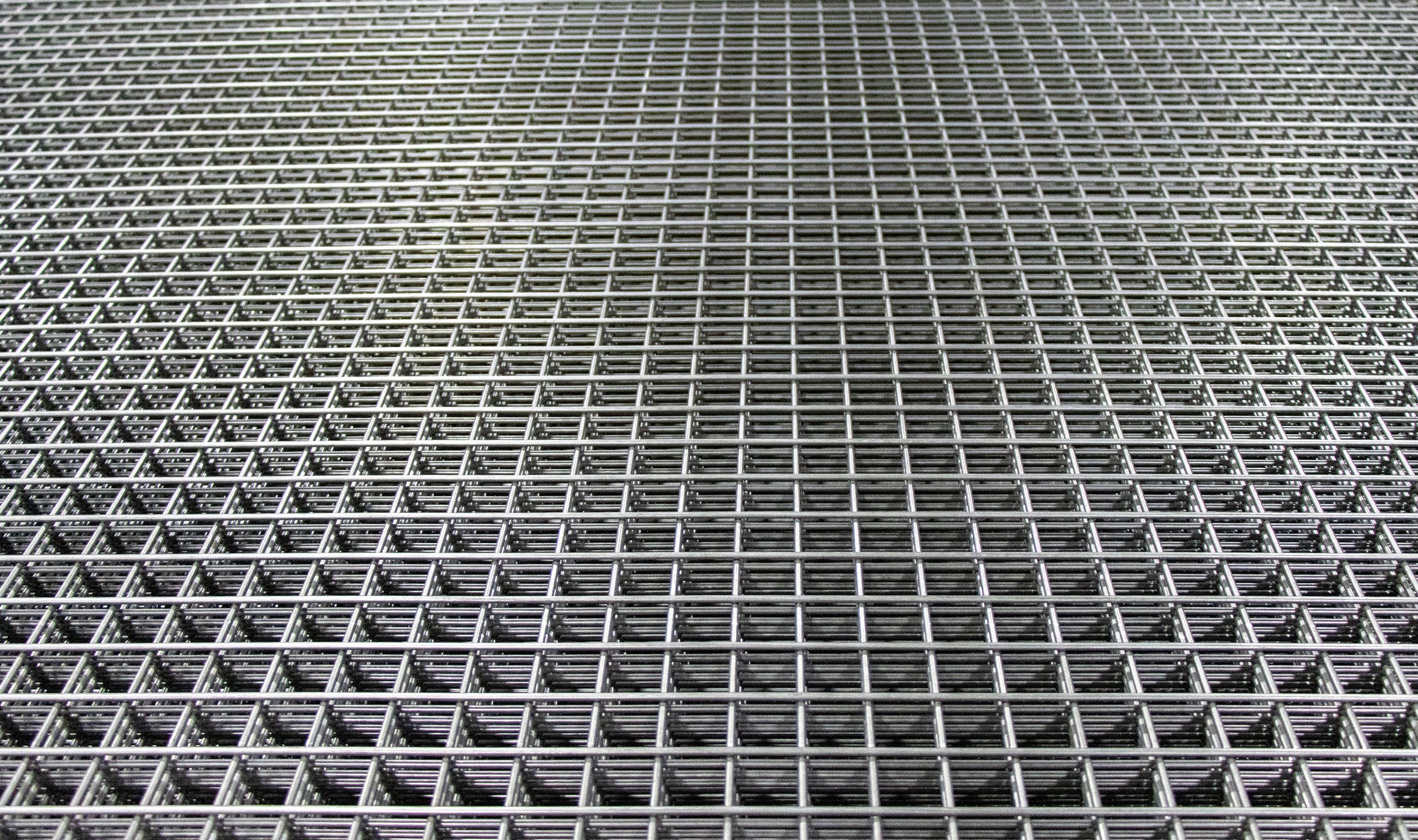
Welded reinforcing mesh (also called fabric reinforcement or wire mesh) is a factory-produced grid of longitudinal and transverse wires or bars welded at each intersection. Panels are manufactured to standard dimensions — a common European panel size is 6.0 × 2.3 m — or cut to bespoke sizes. The welded intersections are formed by electrical resistance welding, producing a joint with defined strength.
In Germany and Europe, mesh is classified under DIN 488-4 (part of the DIN 488 standard family) and is typically produced from B500A wire (normal ductility, cold-rolled from coil) for standard Q/R types. The material conforms to EN 10080.
What Are Loose Bars?
Loose bars are individual straight reinforcing bars — typically B500B (hot-rolled, high ductility) in diameters from 8 to 40 mm, supplied in stock lengths of 6–18 m (most commonly 12 m). For slab work, bars are cut to required lengths on site or as factory cut-and-bend supply, then placed and tied (or clipped) by hand to form the required two-way grid.
Head-to-Head Comparison
| Factor | Welded Mesh | Loose Bars |
|---|---|---|
| Typical grade | B500A (normal ductility) | B500B (high ductility) |
| Fixing speed on site | Fast — panels lifted and positioned | Slower — individual bars placed and tied |
| Geometric flexibility | Limited — standard panel sizes; offcuts as waste | High — any diameter, spacing, or shape |
| Waste | Offcuts at edges and irregular shapes | Low if cut-and-bend supply used |
| Structural ductility | B500A: Agt ≥ 2.5%, k ≥ 1.05 | B500B: Agt ≥ 5.0%, k ≥ 1.08 |
| Seismic suitability | Generally not for DCM/DCH seismic design | B500B (or B500C) suitable per Eurocode 8 |
| Logistics | Large, flat panels — efficient for regular slabs | Bundles of bars — flexible in tight spaces |
| Cost (material) | Generally competitive for regular slabs | Varies with diameter and quantity |
| Documentation | EN 10204 3.1 MTC per mesh type | EN 10204 3.1 MTC per bar grade/heat |
When to Choose Welded Mesh
Welded mesh is typically the preferred option for:
- Ground-bearing slabs on grade — regular geometry, high coverage area, where speed of placement is critical.
- Industrial floor slabs — large, repetitive areas with standard reinforcement density.
- Suspended slabs with regular bay sizes — where standard mesh panel dimensions align well with slab geometry.
- Projects where labour cost is high — the speed advantage of mesh panels can reduce fixing time and overall programme significantly.
When to Choose Loose Bars
Loose bars (particularly factory cut-and-bend B500B) are generally preferred for:
- Irregularly shaped slabs — curved edges, penetrations, or complex geometry that would produce excessive mesh waste.
- Heavily reinforced suspended slabs — where high ductility (B500B/B500C) is required by the structural design or seismic specification.
- Thick slabs with large bar diameters — mesh is generally limited to smaller wire sizes; heavy reinforcement requires individual bars.
- Seismically designed structures — Eurocode 8 requires Class B or C ductility (B500B or B500C) for primary seismic elements; standard mesh (B500A) is often insufficient.
Combined Approaches
Many projects use both: standard mesh panels in the main body of a slab, with loose bar trimmings and additional bars at openings, edges, column heads, and where extra reinforcement is required. This hybrid approach can optimise both speed and flexibility.
For detailed mesh specifications see our reinforcing steel mesh page. For loose B500B bars see our B500B rebar product page. Both options are available with full EN 10204 3.1 Mill Test Certificates and export documentation.
Frequently Asked Questions
Common questions about welded mesh versus loose bars for slab reinforcement.
Is welded mesh the same as loose bar reinforcement in terms of structural performance?
What is the standard mesh panel size in Germany?
Can welded mesh be used for suspended (elevated) slabs?
How do I calculate the weight of a welded mesh panel for a tonnage estimate?
Source German-standard rebar with full export documentation
Tell us your specification and destination port — we’ll respond with a detailed quotation.