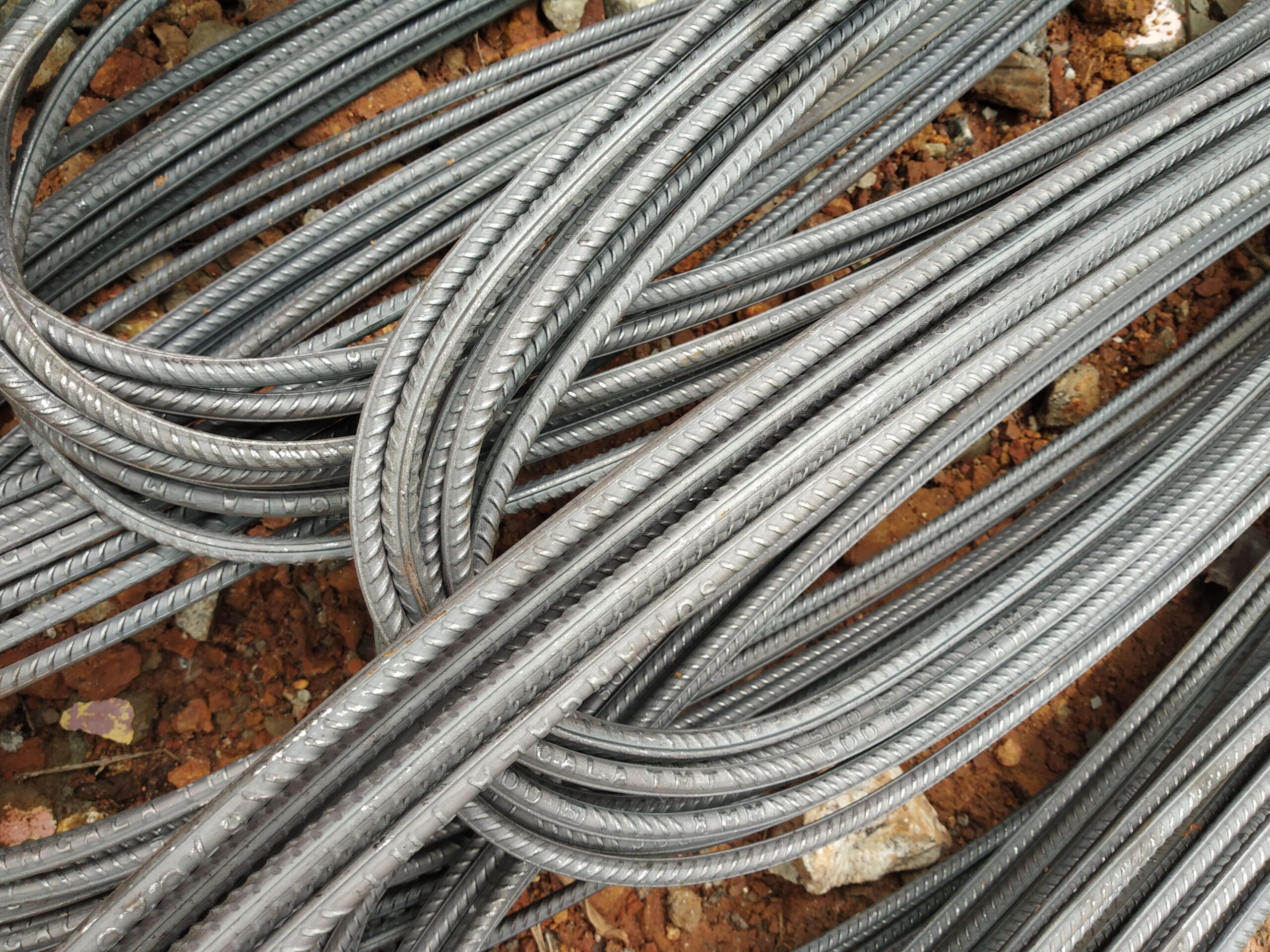
How Strong Is B500B Rebar? Yield, Tensile, Ductility, and Load Capacity by Size
B500B is Europe’s standard high-ductility reinforcing steel — 500 MPa minimum yield, mandatory tensile-to-yield ratio, and ductility requirements that make it the default grade for structural concrete under Eurocode 2. Here is what the numbers actually mean in structural terms.
The question “how strong is B500B rebar?” has a precise technical answer — and also a structural context answer that is more useful for project planning. The precise answer lies in the EN 10080 and DIN 488 characteristic values. The context answer depends on bar diameter, bar arrangement, and how strength is combined with the ductility that makes reinforced concrete behave reliably under overload.
The Core Mechanical Properties of B500B
Under EN 10080 and DIN 488, B500B must meet the following minimum characteristic values:
- Characteristic yield strength (fyk): 500 MPa (N/mm²) — the stress at which the bar begins to deform plastically.
- Tensile-to-yield ratio (k = ft/fy): ≥ 1.08 — meaning the ultimate tensile strength must be at least 8% above the yield strength. This reserve prevents brittle failure and gives the structure warning before collapse.
- Uniform elongation at maximum force (Agt): ≥ 5.0% — the minimum ductility, ensuring bars can deform significantly before fracture.
- Bend test: Must pass the rebend test specified in EN 10080 (bent 90°, aged, rebent 20° in reverse) without cracking.
These are characteristic (minimum guaranteed) values. Mill test certificates on actual production heats typically show yield strengths of 520–560 MPa and tensile strengths of 600–650 MPa — comfortably above the minimums. The design value used in Eurocode 2 calculations is fyd = fyk / γs, where γs = 1.15 (the partial safety factor for steel), giving a design yield of approximately 435 MPa for most structural calculations.
Tensile Force Capacity by Bar Diameter (Indicative)
The characteristic tensile yield force of a single bar is simply: F = fyk × A, where A is the cross-sectional area. The following table gives indicative values at the characteristic 500 MPa yield — these are material capacities, not structural member capacities, which require design factors and configuration analysis.
| Dia (mm) | Area (mm²) | Weight (kg/m) | Char. yield force (kN) | Indicative tensile force at k=1.08 (kN) |
|---|---|---|---|---|
| 10 | 78.5 | 0.617 | 39.3 | ≥42.4 |
| 12 | 113 | 0.888 | 56.5 | ≥61.0 |
| 16 | 201 | 1.58 | 100.5 | ≥108.5 |
| 20 | 314 | 2.47 | 157.0 | ≥169.6 |
| 25 | 491 | 3.85 | 245.5 | ≥265.1 |
| 32 | 804 | 6.31 | 402.0 | ≥434.2 |
| 40 | 1257 | 9.86 | 628.5 | ≥678.8 |
Why the k-Ratio and Agt Matter as Much as Yield Strength
The 500 MPa yield strength is the entry point, but the k-ratio (≥1.08) and ductility (Agt ≥ 5.0%) are what make B500B suitable for structural design under Eurocode 2’s ductility class B requirements. The k-ratio ensures that after yielding begins, the bar continues to carry increasing load rather than fracturing immediately at yield — this is the mechanism that allows moment redistribution in frames and gives structures their characteristic warning behaviour before failure.
Contrast this with B500A (k ≥ 1.05, Agt ≥ 2.5%): the reduced ductility means B500A should only be used in Ductility Class A applications — mesh, stirrups, and light reinforcement where redistribution under overload is not required. Specifying B500A where B500B is required is a design non-conformance regardless of the identical yield strength.
How B500B Compares to Other Common Grades
- B500C (seismic): 500 MPa yield, k between 1.15 and 1.35, Agt ≥ 7.5%. Required in seismic design categories DCM and DCH under EN 1998. Stronger ductility reserve for earthquake-resistance.
- ASTM Grade 60 (US): 60 ksi (~414 MPa) yield — lower than B500B. Different design approach (ACI 318 vs Eurocode 2).
- BS 500B (UK): Equivalent to B500B; the BS 4449:2005 designation. Effectively the same grade, directly comparable for projects using both UK and German supply chains.
For export projects requiring compliance with both European and local standards, our standards and certification page covers the technical overlap and documentation requirements in detail.
Strength at Temperature: What Happens in Fire?
B500B rebar retains its full design strength at normal service temperatures. At elevated temperatures relevant to fire design (EN 1992-1-2), the yield strength reduces: at 400°C, approximately 70–80% of the ambient yield is retained; by 600°C, the reduction factor drops to around 30–40%. This is why concrete cover requirements in fire design are set to limit the temperature the bar reaches during a fire event, rather than relying on the bar’s inherent fire resistance.
Welding B500B: Does Welding Reduce Strength?
B500B is weldable in accordance with DIN EN ISO 17660, but welding at, or immediately adjacent to, the cross-section under maximum design stress is not recommended without engineering review. In the heat-affected zone, the microstructure of the bar can change, potentially reducing local ductility. For welded connections (e.g., welded reinforcement cages or couplers), the weld procedure specification must comply with DIN EN ISO 17660 and be included in the project quality plan.
For an alternative to welded splices, mechanical rebar couplers maintain full bar capacity at the connection without heat-affected zone concerns.
Related Resources
Dig deeper into B500B specifications and compatible product range.
B500B Rebar — Product Page
Full specification, available diameters, stock lengths, and export documentation details.
View product →Rebar Couplers
Mechanical splices for 12–40 mm B500B bar — full tensile capacity, no weld, no heat-affected zone.
Learn more →Steel Grades Comparison
B500A vs B500B vs B500C — mechanical properties, ductility classes, and application guidance.
Learn more →Frequently Asked Questions: B500B Strength
What is the yield strength of B500B rebar?
What is the tensile strength of B500B?
Can B500A be used instead of B500B?
How does temperature affect B500B strength?
Is B500B the same as Grade 500E or BS 500B?
Source German-standard rebar with full export documentation
Tell us your specification and destination port — we’ll respond with a detailed quotation.