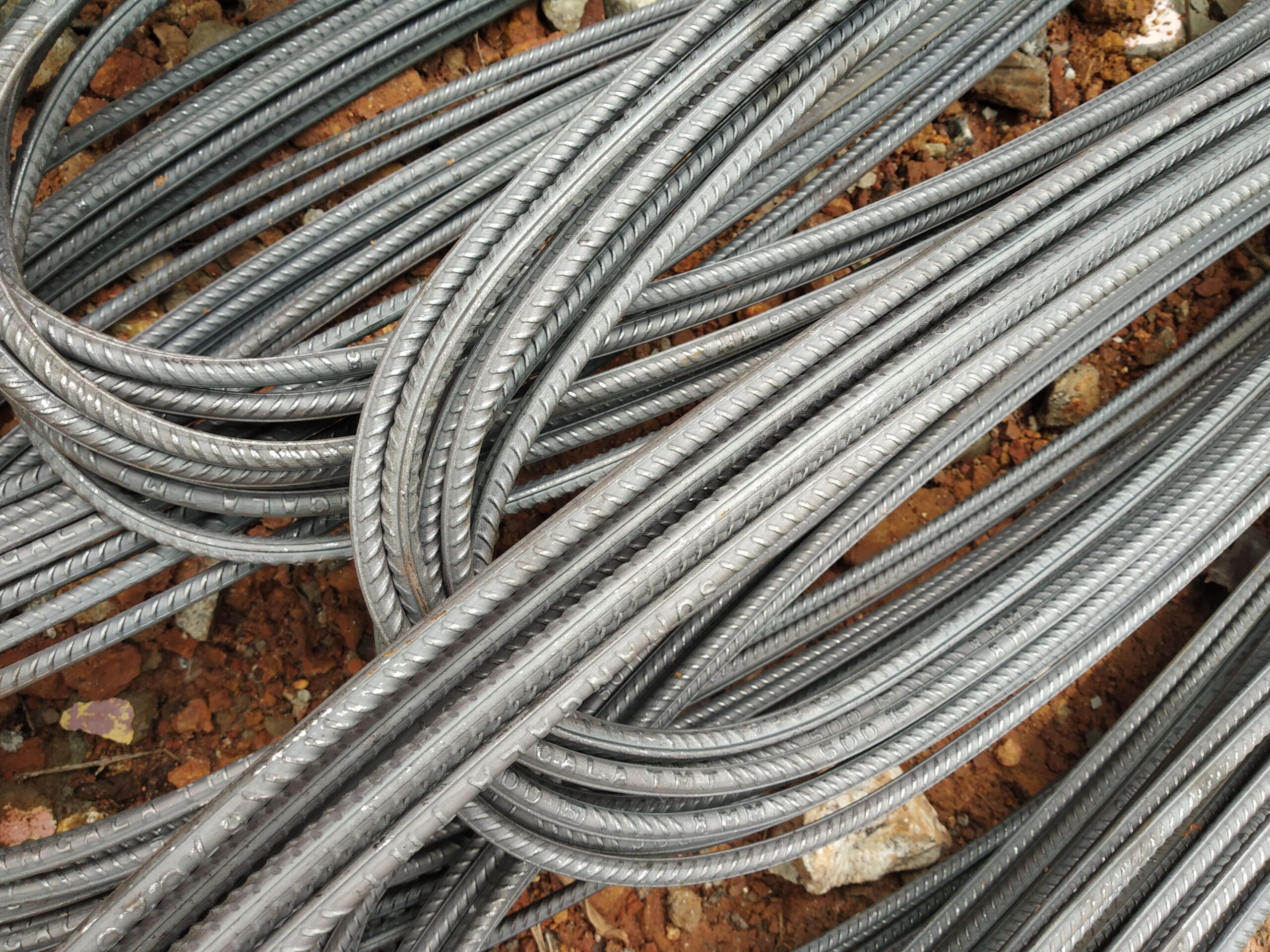
Reinforcing Steel for Road Barriers: DIN 488 B500B Supply for Highway Safety Structures
Precast concrete road barriers — from median dividers to bridge parapets — require precisely specified B500B reinforcement. Steel Rebar Germany supplies bar, mesh and cut-and-bend elements to DIN 488 / EN 10080 for road infrastructure projects worldwide.
Why Road Barrier Reinforcement Demands German-Standard Steel
Concrete road barriers — Jersey barriers, F-shape parapets, bridge edge beams and median dividers — are safety-critical structures. Their primary function is vehicle containment and redirection, which means the reinforcement must deliver reliable ductility under impact loading rather than brittle fracture. For international road authorities and infrastructure contractors specifying to Eurocode or recognising German DIN standards, B500B rebar to DIN 488 / EN 10080 is the appropriate benchmark.
The demand for documented, traceable reinforcement is particularly high on public highway contracts, where inspectors require Mill Test Certificates, CE Declarations of Performance and full heat-level traceability. Steel Rebar Germany supplies all three as standard on every shipment.
Typical Bar Sizes and Arrangement in Road Barriers
The structural detailing of road barriers is governed by the relevant design standard (e.g. EN 1317 for crash testing performance levels, national bridge parapet codes) and the project structural engineer. Figures below are indicative only.
| Barrier Type / Zone | Typical Bar Dia (mm) | Typical Spacing (mm) | Function |
|---|---|---|---|
| Main longitudinal (Jersey / F-shape) | 10–16 | 100–200 | Flexural resistance under impact |
| Transverse / hoop bars | 8–12 | 150–200 | Section integrity, crack control |
| Bridge parapet upright | 12–20 | Per design | Cantilever moment resistance |
| Base slab connection bars | 12–16 | 100–150 | Fixed-base anchorage |
| Lifting hooks / insert reinforcement | 12–16 U-bars | Per unit | Precast handling and installation |
B500B Grade Properties for Impact-Resistant Structures
Reinforcement in vehicle-containment structures must absorb significant energy during an impact event. Grade B500B’s Class B ductility (to EN 1992-1-1) ensures the steel can undergo significant plastic deformation without fracture — the characteristic that distinguishes it from cold-worked B500A in this application. Key properties:
- Characteristic yield strength (fyk): 500 MPa minimum
- Tensile-to-yield ratio (k): ≥ 1.08 (Class B)
- Uniform elongation at maximum force (Agt): ≥ 5.0%
- Surface geometry: Ribbed (high bond), improving anchorage in concrete
| Dia (mm) | Weight (kg/m) | Cross-section (mm²) |
|---|---|---|
| 8 | 0.395 | 50.3 |
| 10 | 0.617 | 78.5 |
| 12 | 0.888 | 113 |
| 14 | 1.21 | 154 |
| 16 | 1.58 | 201 |
| 20 | 2.47 | 314 |
Precast Production: Mesh and Cut-and-Bend Options
Road barriers are predominantly precast in high-volume production lines, making standardised reinforcement units highly efficient. Steel Rebar Germany offers:
- Welded mesh (DIN 488-4): B500A wire mesh in standard or custom panel sizes, cut to profile where required. Suitable for flat-section barriers with regular cage geometry.
- Cut-and-bend bar sets: Supplied to DIN 488 or BS 8666 shape codes. Each set is bundled per unit and tagged for traceability. Reduces fixing time on the precast line.
- Straight bar in stock lengths: 6–18 m in diameters 8–40 mm for in-house cage fabrication at the precast plant.
All reinforcement is supplied with EN 10204 Type 3.1 Mill Test Certificates, CE Declaration of Performance and Certificate of Origin, as standard.
Concrete Cover for Road Barrier Environments
Road barriers face chloride exposure (de-icing salt on motorways, marine spray in coastal regions). EN 1992-1-1 Exposure Class XD3 (frequently wet by chlorides) or XS3 (tidal/splash zone) typically governs, requiring a nominal cover of 40–50 mm depending on the intended service life (50 or 100 years). DBV-certified plastic spacers from Steel Rebar Germany’s accessories range are used to achieve consistent cover in the mould.
Export Supply for Road Infrastructure Projects
Large highway contracts in export markets often require substantial volumes of barrier reinforcement delivered to tight programme timescales. Steel Rebar Germany’s export logistics covers container-load and break-bulk shipment, seaworthy bundling and full documentation for customs clearance. We serve project buyers in the Middle East, Africa, Southeast Asia and across Europe — contact us with your bar schedule and destination for a competitive quotation.
Frequently Asked Questions — Rebar for Road Barriers
What rebar grade is used for precast concrete road barriers?
Can you supply prefabricated bar sets for road barrier precast production?
What concrete cover should be specified for road barriers exposed to de-icing salts?
Do you supply rebar to EN 1317 crash test performance levels?
What is the minimum order quantity for road barrier rebar export?
Related Guides and Products
Infrastructure & Bridges
Reinforcement for bridge decks, parapets, piers and highway infrastructure structures to DIN 488 / EN 10080.
Learn more →Precast Concrete Rebar
B500B bar, mesh and cut-and-bend for precast production lines: barriers, culverts, wall panels and structural elements.
Learn more →Cut & Bend Service
Precision cut-and-bend to BS 8666 or DIN 488 shape codes — delivered ready to fix, labelled per bar schedule.
Learn more →Source German-standard rebar with full export documentation
Tell us your road barrier bar schedule and destination port — we’ll respond with a detailed quotation including Mill Test Certificates and logistics options.