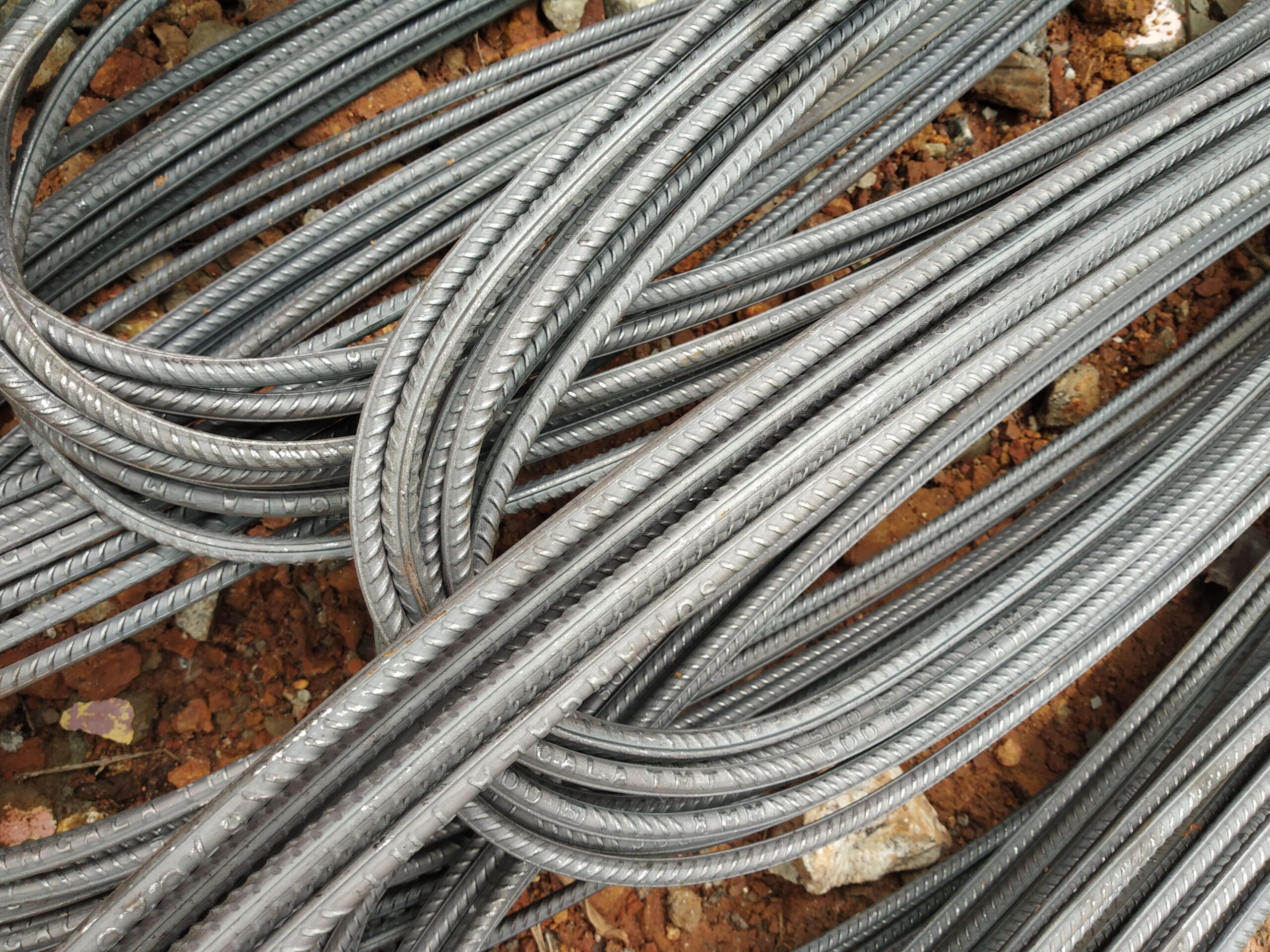
Seismic Rebar and Ductility: Why B500C Matters
Seismic rebar grade B500C delivers the high ductility and strain-hardening ratio that earthquake-resistant structures demand. This guide explains the mechanical properties, Eurocode requirements, and procurement considerations for B500C reinforcing steel.
What Is Seismic Rebar and Why Does Ductility Matter?
In seismic design, the reinforcing steel must do more than carry static loads — it must absorb and dissipate energy through plastic deformation without fracturing. This is the essence of ductility in structural engineering. When an earthquake strikes, the concrete frame is designed to yield in controlled regions called plastic hinges, where the rebar stretches significantly before the structure fails. If the steel is too brittle, it fractures prematurely and the building collapses without warning.
Seismic rebar grade B500C (defined in EN 10080 and DIN 488) is specifically engineered to meet these demands. The “C” ductility class is the highest available in the European standard system, and it is mandatory or strongly recommended in seismic design according to EN 1992-1-1 (Eurocode 2) and the seismic-specific standard EN 1998-1 (Eurocode 8).
B500C Mechanical Properties: The Three Critical Parameters
Three mechanical properties define B500C and distinguish it from standard B500B or B500A grades:
| Property | B500A | B500B | B500C |
|---|---|---|---|
| Characteristic yield strength fyk | 500 MPa | 500 MPa | 500 MPa |
| Strain-hardening ratio k = ft/fy | ≥ 1.05 | ≥ 1.08 | 1.15 ≤ k < 1.35 |
| Uniform elongation Agt | ≥ 2.5 % | ≥ 5.0 % | ≥ 7.5 % |
| Ductility class | A (low) | B (normal) | C (high) |
The strain-hardening ratio (k = ft/fy) measures how much stronger the steel becomes after yielding — a critical indicator of energy absorption capacity. B500C’s minimum k of 1.15, combined with a maximum of 1.35, means it hardens meaningfully but not excessively, ensuring predictable plastic hinge behaviour. The 7.5% minimum uniform elongation Agt guarantees substantial deformation capacity before rupture.
Eurocode 8 and the Seismic Design Requirement
EN 1998-1 (Eurocode 8) — the European standard for earthquake-resistant design — sets out explicit rules for reinforcing steel in seismic structures. For buildings in medium and high ductility classes (DCM and DCH), Eurocode 8 requires the use of Class B or Class C ductility rebar. In DCH structures, which are designed to absorb the most seismic energy, Class C (B500C) is typically the only practical choice.
Key Eurocode 8 provisions affecting rebar specification include:
- The actual yield strength must not exceed the nominal value by more than a defined overstrength factor — B500C’s upper k limit of 1.35 directly supports this requirement.
- Lap splices and couplers in plastic hinge zones must be assessed for the overstrength seismic demand.
- Weld quality in seismic zones must comply with DIN EN ISO 17660, and welded connections in critical zones are generally avoided.
Hot-Rolling and Surface Geometry for Seismic Applications
B500C is exclusively a hot-rolled product. The hot-rolling process produces a microstructure — predominantly ferritic-pearlitic with well-controlled martensite levels — that achieves the high ductility class C properties. Cold-worked steels such as those used for B500A coils cannot reliably attain Agt ≥ 7.5% and are not suitable for seismic applications.
The transverse rib geometry (rib height, spacing, and relative rib area fR) of B500C bars is identical to B500B: the ribbed surface pattern ensures composite bond with concrete under cyclic loading. Available diameters for B500C run from 8 mm through 40 mm, with 12 m stock lengths standard; cut-and-bend to DIN 488 shape codes is available for prefabricated cages destined for seismic columns and walls.
Procurement and Export Documentation for B500C
Sourcing B500C for international projects requires careful documentation to satisfy design engineers, third-party inspectors, and local building authorities. The standard export documentation package from Steel Rebar Germany includes:
- Mill Test Certificate EN 10204 3.1 — with heat number, ladle analysis, mechanical test results (Re, Rm, Agt, k), and bend test confirmation.
- CE Marking / Declaration of Performance (DoP) — confirming compliance with EN 10080 and the harmonised standard.
- Certificate of Origin — for customs and preferential tariff purposes.
- Seaworthy packing list — bundles typically ~2 t, suitable for container or break-bulk shipment.
For projects in seismic zones under strict third-party inspection regimes, we can advise on additional testing (Charpy impact, fatigue) where the project specification demands it. View our standards and certification page for full documentation details.
Related Resources
Steel Grades Overview
Compare B500A, B500B, and B500C properties side-by-side with full spec tables.
Explore grades →B500B Rebar — The Workhorse Grade
Detailed guide to B500B hot-rolled reinforcing bar: weights, sections, and applications.
View B500B →Standards & Certification
DIN 488, EN 10080, Eurocode 2 — full documentation and mill certificate guidance.
View standards →Frequently Asked Questions: Seismic Rebar and B500C
Key questions from structural engineers and procurement teams specifying seismic-grade reinforcing steel.
What is the difference between B500B and B500C in seismic design?
Can cold-rolled rebar be used in seismic zones?
Does B500C require special mill test certificates?
Which diameters of B500C are typically available for export?
Is the upper bound on k in B500C (k < 1.35) important?
Source German-standard rebar with full export documentation
Tell us your specification and destination port — we’ll respond with a detailed quotation.