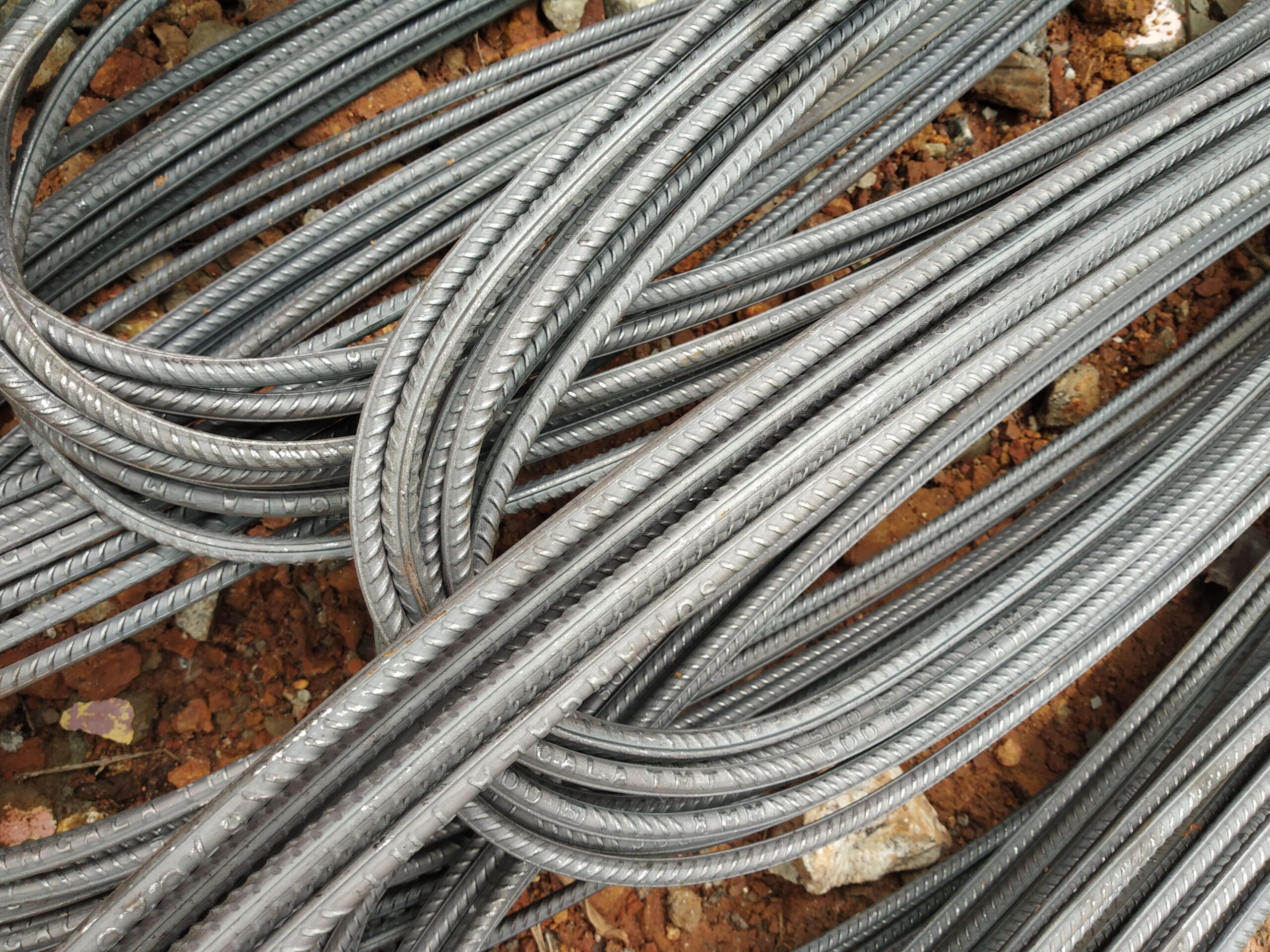
Rebar for Bridge Decks: Sizes, Detailing & Quantities
Practical reinforcement guidance for bridge decks — typical bar sizes, spacing, concrete cover, and quantity estimating for international procurement teams sourcing DIN 488 / EN 10080 compliant rebar.
Bridge deck reinforcement is among the most demanding structural applications for steel rebar. Decks must resist wheel loads, thermal movement, and — in coastal or de-iced environments — chloride attack for design lives typically exceeding 100 years. Getting bar sizes, spacing, and cover right from the outset saves costly remediation later. This guide provides general, indicative guidance; all final reinforcement layouts must be confirmed by a licensed structural engineer to the applicable national code.
Rebar for Bridge Decks: Why Specification Matters
A bridge deck slab is a continuous orthotropic plate spanning between girders or cross-beams. It carries direct wheel loads (concentrated) and global longitudinal bending. The reinforcement design addresses:
- Flexural steel — top and bottom mats resisting hogging over supports and sagging at mid-span.
- Distribution steel — transverse bars spreading concentrated loads and controlling shrinkage cracking.
- Shear reinforcement — links or stirrups in thicker deck sections and edge beams.
- Bursting / anchorage reinforcement — at tendon anchorage zones in post-tensioned decks.
Grade B500B (DIN 488, EN 10080) — 500 MPa characteristic yield, high ductility (k ≥ 1.08, Agt ≥ 5.0%) — is the standard workhorse for bridge deck reinforcement across Germany and the broader EU. Its higher ductility class compared with B500A provides the rotation capacity demanded by continuity effects and seismic-adjacent design situations.
Typical Bar Sizes for Bridge Deck Reinforcement
Indicative diameters used in practice (always verify with project-specific design):
| Element | Typical Dia (mm) | Typical Spacing (mm) | Weight kg/m | Section mm² |
|---|---|---|---|---|
| Primary flexural mat (bottom) | 16–20 | 125–150 | 1.58–2.47 | 201–314 |
| Primary flexural mat (top, over support) | 16–20 | 100–150 | 1.58–2.47 | 201–314 |
| Distribution / transverse steel | 12–16 | 150–200 | 0.888–1.58 | 113–201 |
| Edge beam longitudinal | 20–25 | varies | 2.47–3.85 | 314–491 |
| Stirrups / links (edge beam) | 10–12 | 150–200 | 0.617–0.888 | 78.5–113 |
| Anti-burst / confinement bars | 12–16 | 100–150 | 0.888–1.58 | 113–201 |
Indicative values only. Actual design to EN 1992-2 / Eurocode 2 Part 2 (Bridges) by a qualified engineer.
Concrete Cover Requirements
Eurocode 2 (EN 1992-1-1) and EN 1992-2 specify minimum concrete cover cmin based on exposure class. Bridge decks typically fall into:
- XD3 / XS3 (cyclic wet/dry with chlorides — road salts or marine splash): cmin,dur = 40–45 mm, nominal cover cnom = 45–55 mm after adding Δcdev = 10 mm.
- XF4 (freeze-thaw with de-icing salt): often governs simultaneously with XD3.
- Soffit of deck (XC3/XC4, carbonation): cnom = 35–40 mm typically.
Rebar spacers (DBV-certified plastic or concrete chairs) maintain cover precisely. We supply a full range of rebar spacers and accessories suited to bridge deck placement conditions.
Estimating Rebar Quantities for a Bridge Deck
A practical approach for preliminary procurement estimates:
- Calculate deck area: span length × width (carriageway + footways + edge beams).
- Determine bar spacing and layers: typically 4 layers (top and bottom in both directions).
- Compute bars per layer: deck dimension ÷ spacing, rounded up, add splice/lap allowance (~10%).
- Apply weight formula: kg/m = d²(mm) × 0.00617. Multiply by total bar length per layer.
- Apply wastage factor: typically 3–5% for off-cuts plus 10–15% for laps and anchorage lengths.
Rule of thumb: Cast-in-place concrete bridge decks (medium reinforcement density) consume approximately 120–180 kg of rebar per m³ of deck concrete. Heavily reinforced sections near supports may reach 200–250 kg/m³.
Bar Lengths, Laps, and Mechanical Couplers
Standard mill lengths of 6–12 m (up to 18 m available) need to be joined within the deck. Options include:
- Lap splices: per EN 1992-1-1 clause 8.7; lap length typically 40–60 × diameter (e.g., 800–1200 mm for T16). Stagger laps to avoid concentrating splices at one cross-section.
- Mechanical couplers (parallel- or taper-thread): eliminate lap length, reduce congestion, and offer full tension/compression continuity. Preferred at construction joints and in areas of dense reinforcement (anchorage zones).
Cut-and-bend scheduling to DIN 488 shape codes minimises site waste and speeds placement. We supply cut-and-bend rebar to project schedules.
Sourcing DIN 488 Rebar for Bridge Projects
International bridge projects specifying EN 10080 / DIN 488 B500B require full traceability documentation: EN 10204 3.1 Mill Test Certificate, CE Declaration of Performance, Certificate of Origin, and seaworthy packing. We supply rebar in standard bundles (~2 t) suitable for container or break-bulk shipment to any port. Our export and delivery capability covers Europe, the Middle East, Africa, and beyond.
See also: Infrastructure & Bridges for a broader overview of rebar applications in bridge construction.
Frequently Asked Questions
What rebar grade is specified for bridge decks in Germany and the EU?
What concrete cover is required for bridge deck reinforcement?
How much rebar is typically needed per m² of bridge deck?
Can mechanical couplers be used in bridge deck construction?
What documentation is needed when importing rebar for a bridge project?
Source German-standard rebar with full export documentation
Tell us your bridge deck specification and destination port — we’ll respond with a detailed quotation.