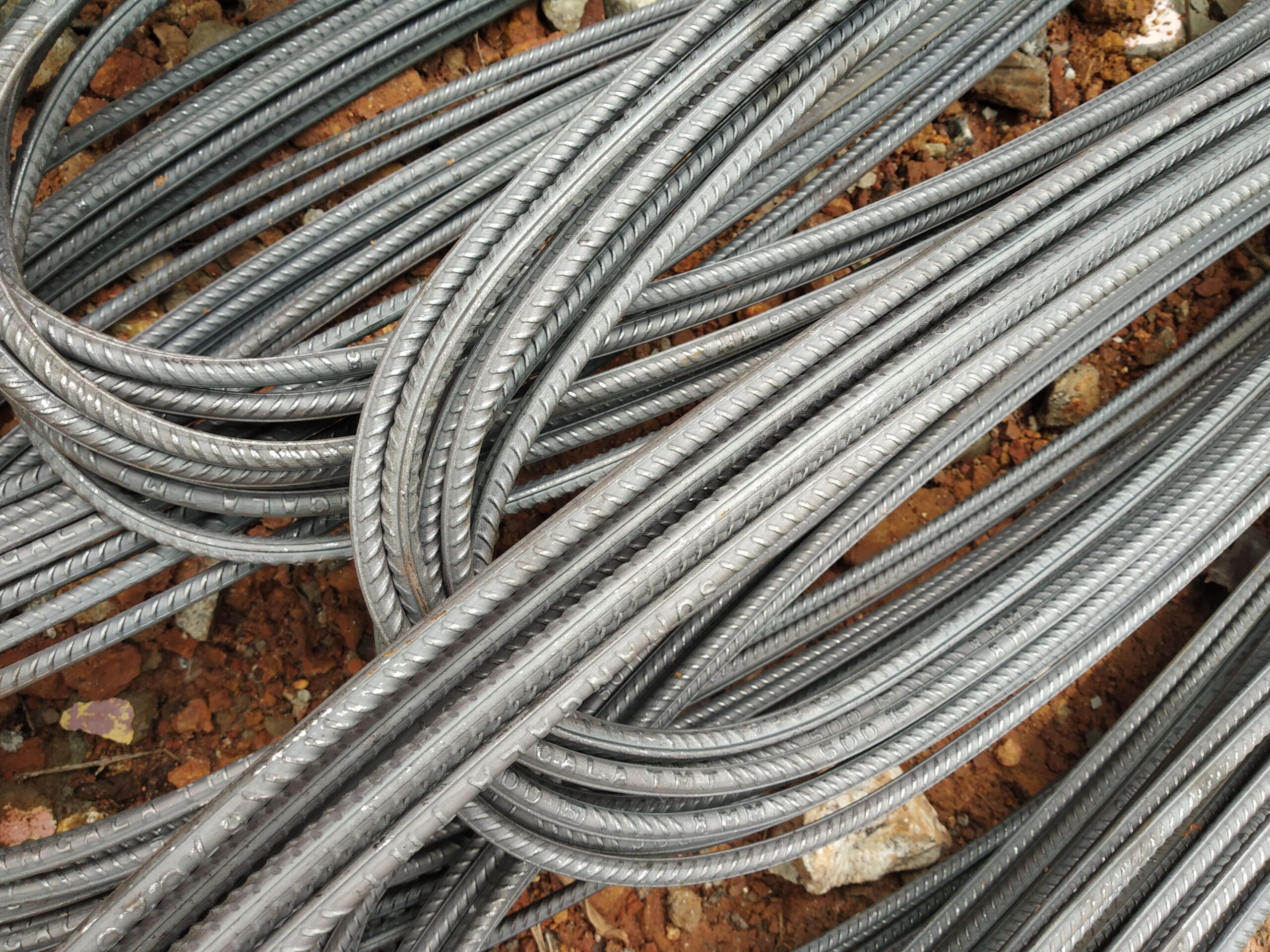
What Size Rebar for a Bridge Deck?
Practical bar-size and spacing guidance for reinforced concrete bridge decks — B500B diameters, top and bottom mat layouts, cover depths and indicative steel estimates to DIN 488 / EN 10080.
What Size Rebar for a Bridge Deck — The Key Diameters
Bridge decks are among the most demanding reinforced concrete applications. They carry dynamic traffic loads, thermal cycles, de-icing salt exposure and sometimes seismic forces — all demanding high-ductility steel with reliable bond characteristics. B500B rebar in 12 mm to 20 mm diameter forms the structural backbone of most bridge deck designs, with 16 mm being particularly common for primary longitudinal and transverse bars. Shear reinforcement (stirrups, links, U-bars) typically uses 10–12 mm. These are indicative figures — bridge decks are designed to national standards (e.g. EN 1992-2 / Eurocode 2 Part 2 for bridges, or DIN-Fachbericht 102) and every deck requires a formal structural design by a qualified bridge engineer.
Steel Rebar Germany supplies B500B hot-rolled ribbed bar, welded mesh and cut-and-bend pieces to DIN 488 / EN 10080 for bridge contractors worldwide, complete with EN 10204 3.1 Mill Test Certificates and full export documentation. See our infrastructure and bridges applications page for the broader picture.
Bridge Deck Reinforcement Layout: Top and Bottom Mats
A reinforced concrete bridge deck typically uses a two-mat system — a bottom mat carrying positive bending moment (sagging) between supports, and a top mat carrying negative bending moment (hogging) over supports and at cantilever edges. Key characteristics:
- Bottom mat (positive moment region): Larger bars at closer spacing — typically 16–20 mm at 100–150 mm longitudinally, 12–16 mm at 150–200 mm transversely
- Top mat (negative moment / hogging zone): Similar or slightly lighter than bottom mat — 14–20 mm at 125–175 mm longitudinally
- Transverse distribution bars: 12–16 mm at 150–200 mm centres
- Shear links / stirrups in edge beams and box girder webs: 10–12 mm, spacing governed by shear demand (typically 100–200 mm)
- Skin reinforcement on deep web faces: 10–12 mm at 150–300 mm
Typical Bridge Deck Rebar Sizes by Element
| Deck Element | Typical Bar Dia (mm) | Typical Spacing (mm) | Grade |
|---|---|---|---|
| Bottom mat — longitudinal (primary) | 16–20 | 100–150 | B500B |
| Bottom mat — transverse | 12–16 | 150–200 | B500B |
| Top mat — longitudinal (hogging) | 14–20 | 100–175 | B500B |
| Top mat — transverse | 12–16 | 150–200 | B500B |
| Shear links / stirrups | 10–12 | 100–200 | B500B |
| Edge beam / parapet bar | 12–20 | 100–150 | B500B |
| Skin reinforcement (webs) | 10–12 | 150–300 | B500B |
Bar Weight Reference — Bridge Deck Diameters
Weight formula: kg/m = d²(mm) × 0.00617. Key sizes for bridge deck work:
| Diameter (mm) | Weight (kg/m) | Cross-section (mm²) |
|---|---|---|
| 10 | 0.617 | 78.5 |
| 12 | 0.888 | 113 |
| 16 | 1.58 | 201 |
| 20 | 2.47 | 314 |
| 25 | 3.85 | 491 |
| 32 | 6.31 | 804 |
A typical highway bridge deck slab (250–300 mm thick, two-mat system) may contain 120–200 kg/m³ of reinforcement. For a deck 15 m wide and 50 m long at 160 kg/m³ and 275 mm thick, indicative steel content is approximately 33 tonnes. These are indicative figures for budgeting only; the bar schedule from the approved bridge design is the definitive source.
Cover Depths and Durability for Bridge Decks
Bridge decks are exposed to harsh environments — often XD3 (frequently wet, chloride from road salts) or XS1–XS3 (marine). Minimum concrete cover per EN 1992-1-1 / EN 1992-2 for bridge decks:
- Top (trafficked) surface with waterproofing membrane: nominally 45–60 mm cover under the membrane, though the membrane provides additional protection
- Top (trafficked) without membrane, exposed to de-icing salts (XD3): minimum cnom 50–60 mm
- Bottom face / soffit (XC3–XC4 exposure): minimum cnom 35–45 mm
- A Δcdev allowance of +10 mm is typically added to the minimum for structural design
DBV-certified plastic bar chairs and spacers are used to hold both mats at correct depth; see our rebar spacers and accessories range. For construction joints, mechanical rebar couplers (12–40 mm) eliminate the congestion of lapping large bars.
Supply Formats for Bridge Deck Reinforcement
Bridge contracts specify tightly controlled bar dimensions and traceability. Steel Rebar Germany supplies:
- B500B hot-rolled ribbed bar, 8–40 mm, in 6–12 m stock lengths — heat-traceable to EN 10204 3.1 MTCs
- Cut-and-bend to DIN 488 or BS 8666 shape codes — pre-tagged bar bundles matching the bar schedule, reducing on-site labour
- Mechanical couplers (parallel-thread, 12–40 mm) for construction joint splices
- Welded mesh (DIN 488-4) for lightweight deck overlays or secondary reinforcement zones
All shipments are seaworthy-bundled (~2 t lifts) for container or break-bulk export. Full documentation: EN 10204 3.1 MTC, Certificate of Origin, CE/DoP, packing lists. See also our related guides: rebar for box culverts and rebar for concrete roads.
Frequently Asked Questions
Common questions on rebar sizing for concrete bridge decks
What is the typical rebar diameter for a concrete bridge deck?
Why is B500B used rather than B500A for bridge decks?
What concrete cover is required over rebar in a bridge deck?
How much rebar does a bridge deck typically require per square metre?
Does Steel Rebar Germany supply rebar for bridge projects with full traceability documentation?
Source German-standard rebar with full export documentation
Tell us your specification and destination port — we’ll respond with a detailed quotation.