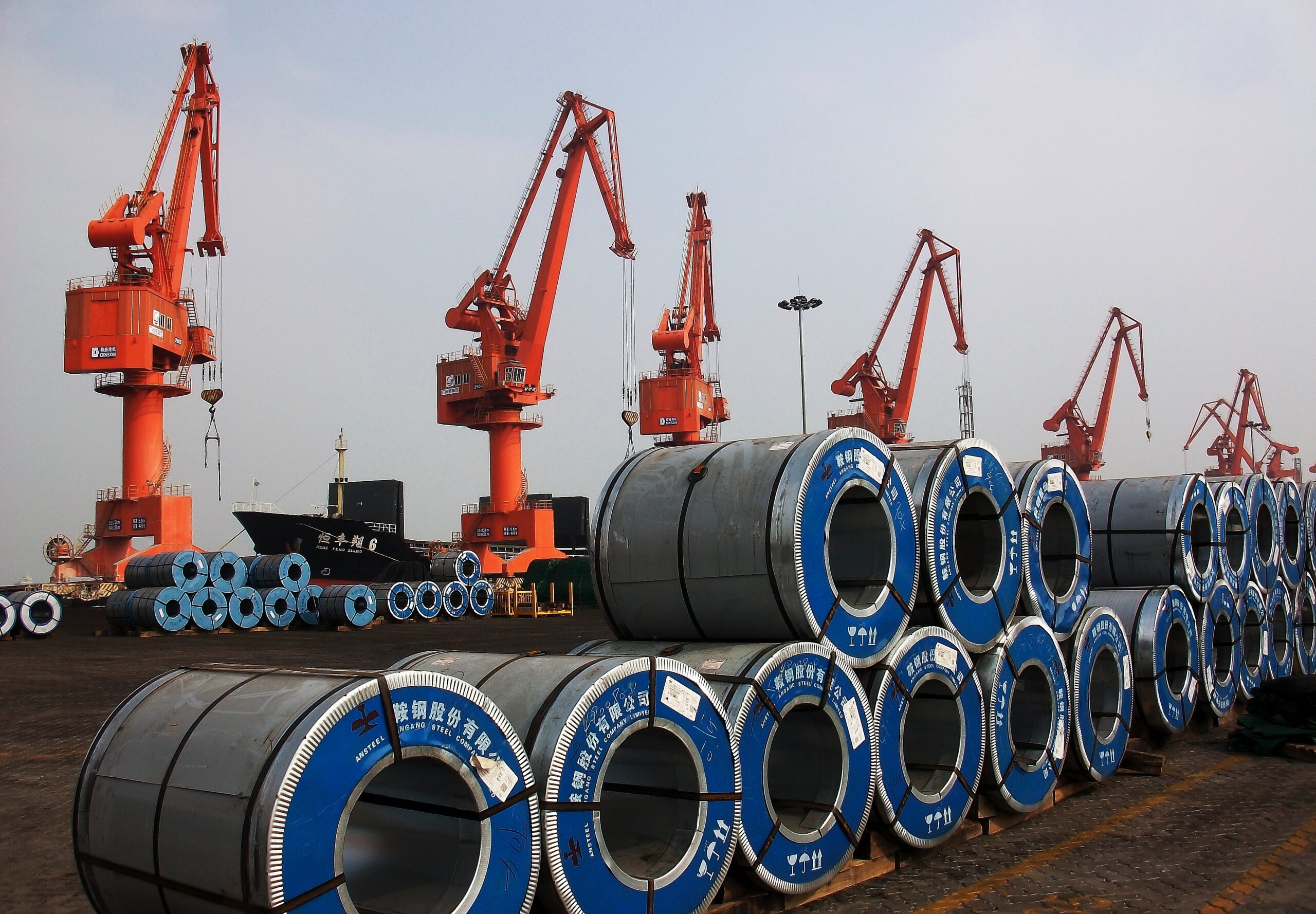
Steel Import Statistics Morocco
Morocco imports a large share of the long and flat steel its construction sector consumes. Here is how to read the country’s official import statistics — and how to buy bulk rebar directly from a German wholesale supplier and exporter at export prices.
Why Morocco’s steel imports matter to buyers
Morocco is one of North Africa’s most active construction markets, with sustained demand from housing programmes, motorway and rail expansion, port and industrial-zone development around Tanger Med and Jorf Lasfar, and a growing automotive and renewable-energy base. Domestic mills cover a meaningful portion of rebar demand from scrap-based production, but the country still relies on imported steel — particularly for sized rebar, welded mesh, structural sections and flat products where EN-certified material and tight tolerances are specified.
That import dependence is exactly why import statistics are followed so closely. For a contractor, distributor or project buyer, the trade numbers signal where supply is tightening, which origin countries are gaining share, and how landed costs are trending. For a wholesale rebar supplier and exporter like Steel Rebar Germany, the same data confirms Morocco as a priority destination for bulk orders.
How to read Moroccan steel import statistics
Official Moroccan trade statistics are organised by HS (Harmonised System) code. For rebar and long products the codes to watch sit under Chapter 72 (iron and steel) — concrete reinforcing bar typically falls in heading 7214, wire rod in 7213, welded mesh and fabricated reinforcement in 7308/7314, and flat products across 7208–7212. When you pull import volumes, always separate quantity (tonnes) from value (MAD or USD): a rising value with flat tonnage usually means price inflation, not real demand growth.
Three cross-checks make the numbers useful for procurement:
- Origin mix — which exporting countries supply Morocco. EU origins (Spain, France, Italy, Germany) and Turkey dominate, with the share shifting by product and price.
- Product split — long vs flat, and within long, rebar vs wire rod. This shows where domestic mills fall short and imports fill the gap.
- Gateway — Casablanca handles general cargo and construction materials; Tanger Med and Nador anchor container and bulk steel flows.
For grade and size context while reading the figures, our TMT steel rebar page and full rebar products range explain the B500B/Gr60 specifications most commonly imported into Morocco.
What the statistics say about price
Import statistics show value as well as volume, so they double as a price barometer. Moroccan landed costs for imported steel are driven by international scrap and billet costs, energy prices feeding electric-arc-furnace output, the dirham against the euro and US dollar, customs duties applied by ADII, and sea-freight rates. Because most regional long-product output is scrap-based, ferrous scrap and billet movements tend to lead local rebar pricing.
Rather than rely on month-old customs averages alone, pair the official trade data with live benchmarks. Useful market sources include SteelOrbis, Fastmarkets and worldsteel for output and demand context. The number that matters most for a buyer is the delivered landed cost — mill price plus freight, insurance, duty and clearance — not the headline ex-works figure. We build a full delivered quotation for every Moroccan enquiry.
| Statistic | What it tells a steel buyer |
|---|---|
| Import tonnage (HS 7214) | Real rebar demand filled by imports |
| Import value / tonne | Average landed price trend |
| Origin share | Where competitive, certified supply sits |
| Gateway split | Best port for your delivery |
Bulk rebar supply to Morocco — direct from the exporter
Steel Rebar Germany is a direct wholesale rebar supplier and exporter to Morocco. We ship bulk B500B / Grade 60 rebar, welded mesh, coils and cut-and-bend reinforcement at export prices — mill-to-site, with no distributor markup. Every consignment is backed by a full mill test certificate (MTC) and certified to BS 4449 / ASTM A615, so the material lines up with the EN tolerances Moroccan import specifications usually demand.
Bulk orders
Container and break-bulk consignments to Casablanca, Tanger Med and Nador, MTC on every shipment.
Export prices
Direct mill-to-site pricing on bulk rebar, mesh and coils — no middlemen.
Same-day quote
Send tonnage, grade and discharge port and we return a full delivered quotation.
Buyers comparing destinations across the region can review our steel by country directory and neighbouring desks for Egypt, Algeria and Tunisia alongside the main Morocco steel hub.
Where to verify Moroccan import statistics
Always verify duties, standards and trade volumes against Morocco’s own authorities. These are the primary references for steel importers and project teams:
- Customs Administration — ADII (Administration des Douanes et Impôts Indirects) — official import statistics, duties, tariffs and clearance.
- Ministry of Industry & Trade — industrial and trade policy.
- High Commission for Planning — HCP (Haut Commissariat au Plan) — national statistics and external-trade data.
- IMANOR (Institut Marocain de Normalisation) — Moroccan standards (NM) and conformity certification.
- Ministry of Economy & Finance — fiscal framework overseeing customs.
Bulk import FAQ
What is the minimum order quantity for bulk rebar to Morocco?+
What is the lead time to a main Moroccan port?+
How is bulk pricing calculated for export?+
Bulk rebar to Morocco at export prices
Tell us your tonnage, grade and discharge port. We return a full delivered quotation with MTC-certified B500B/Gr60.