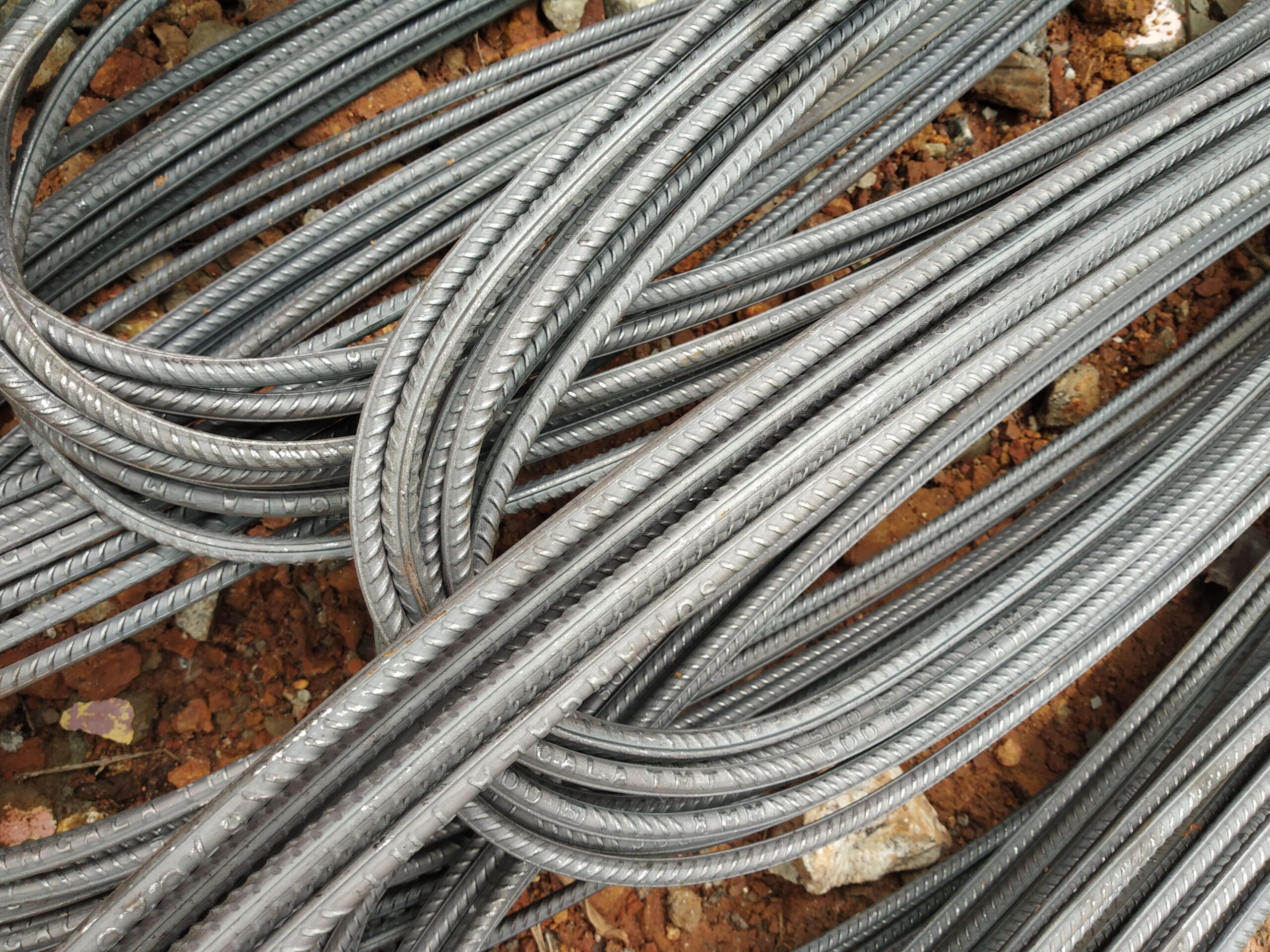
32mm Rebar: Typical Uses & Where It Is Specified
A practical guide to where 32 mm B500B deformed rebar is called for in structural design — from heavy columns and transfer beams to large pile caps and bridge substructures.
Why 32mm Rebar Occupies a Distinct Position in the Range
The standard rebar diameter range runs from 6 mm to 40 mm. The 32 mm bar sits near the top — large enough to carry very high tensile forces in a single bar, but still manageable on site without specialist handling equipment. That combination makes it the dominant heavy bar diameter in commercial and infrastructure construction worldwide.
The cross-sectional area of a 32 mm bar is 804 mm², and its unit weight is 6.318 kg/m. A 12-metre bar weighs approximately 75.8 kg — within the range that two workers can position, which matters for heavily reinforced zones where bar congestion is already a challenge.
Primary Structural Applications
Heavily Loaded Columns
In high-rise reinforced concrete construction, vertical column reinforcement must resist substantial combined axial load and bending moment. Specifying fewer, larger-diameter bars rather than many small bars reduces congestion, eases concrete placement, and simplifies lap-splice or coupler design. The 32 mm diameter is routinely specified in columns carrying loads from 10+ storeys above, particularly in the lower levels of a building where cumulative loads are highest. B500B grade provides both the 500 MPa minimum yield strength and the high-ductility ductility class (k ≥ 1.08, Agt ≥ 5.0%) that Eurocode 2 requires for ductility class DCM and DCH seismic design.
Transfer Beams and Transfer Slabs
Transfer structures redirect column or wall loads around an open storey — a common feature in mixed-use podium buildings. The tension zones of transfer beams can require very high steel areas in a confined depth. 32 mm bars at close centres, or combined with mechanical couplers to avoid lap-splice lengths, are a standard solution. Coupler connections for 32 mm bars using parallel-thread or taper-thread systems eliminate laps entirely, saving up to 1.3 metres of bar length per splice in some configurations.
Large Pile Caps and Raft Foundations
Pile caps for bored or driven piles transfer loads from a column into the pile group. In large caps (four or more piles), the tension tie forces can be substantial. The bottom reinforcement in both orthogonal directions is commonly 32 mm at 150–200 mm centres, providing the section area required by the strut-and-tie or bending model without excessive layer count. Raft foundations for high-rise towers show a similar pattern — the structural engineer sets target steel ratios that naturally resolve to 32 mm or 40 mm bars at reasonable spacings.
Bridge Substructures and Abutments
Piers, abutments, and wing walls in highway and rail bridge construction are often detailed with 32 mm main bars. The combination of large cover requirements (for durability in aggressive environments) and high force demand makes large-diameter bars efficient. EN 1992-1-1 (Eurocode 2) and national annexes set minimum cover for exposed elements; using 32 mm rather than 20 mm bars reduces the bar count and simplifies placing schedules.
Retaining Walls and Basement Walls
Cantilever retaining walls and deep basement walls subject to high lateral earth pressures are another common home for 32 mm bars. The main vertical reinforcement on the tension face, combined with horizontal distribution steel, may be T32 at 150 mm centres in walls of 400–600 mm thickness serving heavy surcharge conditions.
Specification Standards for 32mm B500B Rebar
| Property | B500B requirement | 32mm bar value |
|---|---|---|
| Nominal diameter | — | 32 mm |
| Cross-section area | — | 804 mm² |
| Characteristic yield strength (fyk) | ≥ 500 MPa | 500 MPa |
| Tensile/yield ratio (k) | ≥ 1.08 | ≥ 1.08 |
| Uniform elongation (Agt) | ≥ 5.0% | ≥ 5.0% |
| Governing standard | EN 10080 / DIN 488 | Hot-rolled deformed |
| Ductility class (Eurocode 2) | Class B | Class B |
Comparing 32mm to 28mm and 40mm
Structural engineers often choose between the 28 mm, 32 mm, and 40 mm diameters for heavy reinforcement. The decision depends on target steel area, bar spacing constraints, and coupler availability:
- 28 mm (616 mm²): Preferred when moderate section areas are needed and bar congestion is already a concern. Easier to handle; more bars per tonne (≈17 at 12 m).
- 32 mm (804 mm²): The workhorse for heavy structures. Balances section area, handleability, and coupler product availability. ~13 bars/tonne at 12 m.
- 40 mm (1,257 mm²): Reserved for the most heavily loaded elements — very large columns, major transfer beams, and marine/offshore structures. ~8 bars/tonne at 12 m; requires mechanical handling on site. See our guide on 40mm rebar uses.
For weight and quantity data, see the full rebar weight chart, and for the full B500B product specification and how to order, visit our B500B rebar product page.
Supplying 32mm Rebar for Export Projects
Steel Rebar Germany supplies 32 mm B500B deformed rebar in standard 12 m stock lengths, alternative lengths, and as cut-and-bend to DIN 488 and BS 8666 shape codes. Each consignment is accompanied by an EN 10204 3.1 Mill Test Certificate, Certificate of Origin, and CE Declaration of Performance — the documentation package required by importers in most markets. Export packaging uses seaworthy strapped bundles weighing approximately 2 tonnes, optimised for container or break-bulk shipment.
Request a quote with your tonnage, required lengths, destination port, and any coupler or bar-schedule requirements.
Frequently Asked Questions — 32mm Rebar Uses
What structures typically use 32mm rebar?
What grade is 32mm rebar typically supplied in?
Can 32mm rebar be connected with mechanical couplers?
What is the minimum bend radius for 32mm B500B rebar?
How does 32mm compare to 40mm rebar in structural use?
Source German-standard rebar with full export documentation
Tell us your specification and destination port — we’ll respond with a detailed quotation.