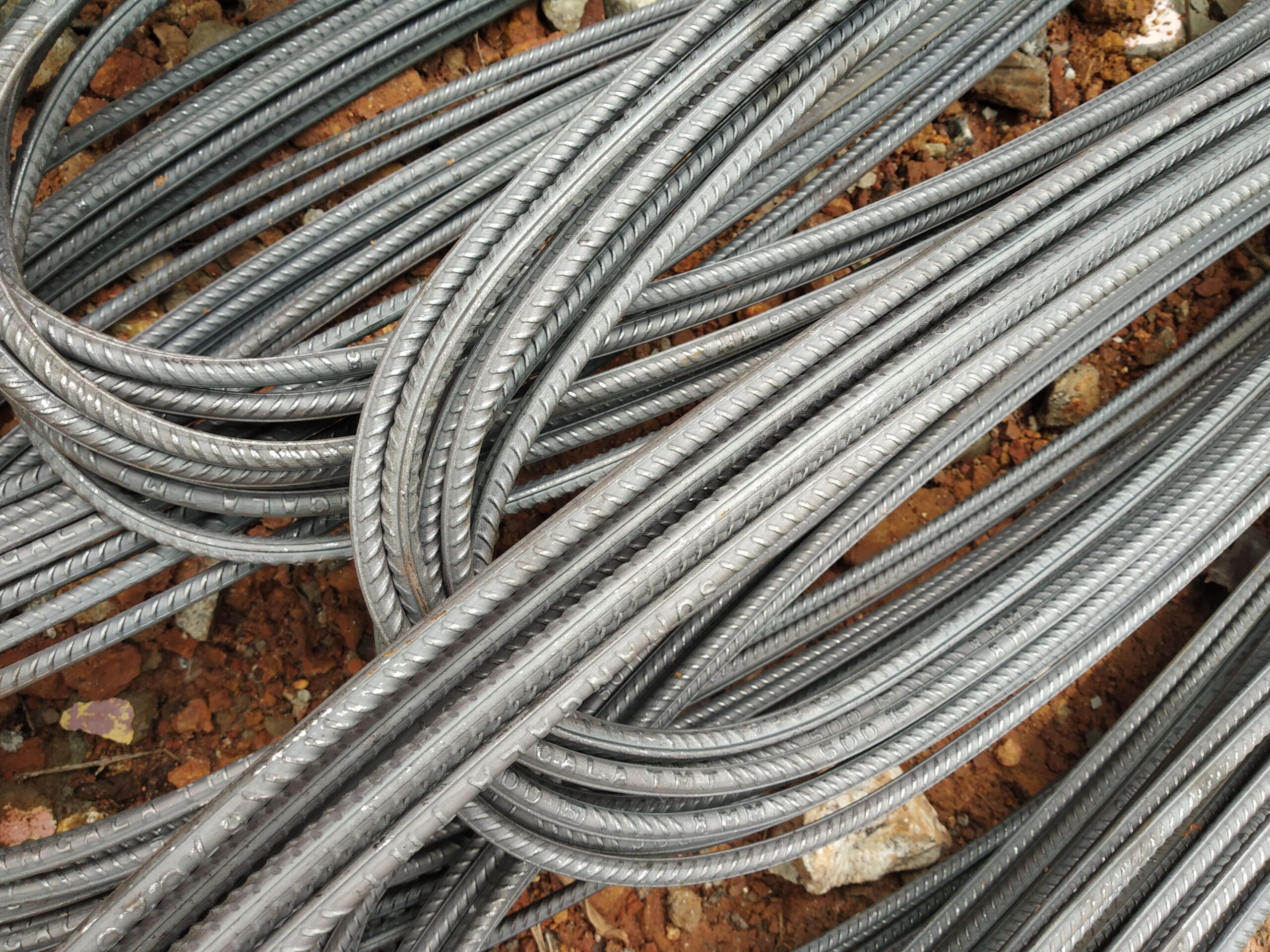
How Many 12mm Rebar Bars in a Tonne?
The quick answer: approximately 94 bars of 12 mm rebar per tonne at the standard 12 m stock length. That equates to roughly 1,126 linear metres per tonne. This article explains the calculation in full, covers tolerance effects, and shows how to apply the figure in reinforcement scheduling and export procurement for DIN 488 / EN 10080 B500B bar.
The Step-by-Step Calculation
Everything flows from one number: the unit weight of 12 mm rebar is 0.888 kg/m, derived from the formula weight (kg/m) = d²(mm) × 0.00617 = 144 × 0.00617.
Step 1 — weight of one 12 m bar:
0.888 kg/m × 12 m = 10.656 kg (≈ 10.66 kg)
Step 2 — bars per tonne:
1,000 kg ÷ 10.656 kg/bar = 93.84 bars → rounded to 94 bars per tonne
Step 3 — linear metres per tonne:
94 bars × 12 m = 1,128 m (or more precisely: 1,000 ÷ 0.888 = 1,126.1 m/tonne)
The 94-bar figure is the standard planning number used by quantity surveyors, procurement teams and logistics managers for 12 m stock bars. For other bar lengths the calculation is the same — just substitute the actual length.
Bars per Tonne at Different Standard Lengths
| Bar length (m) | kg per bar | Bars per tonne | Linear m/tonne |
|---|---|---|---|
| 6 m | 5.33 | ≈ 188 | ≈ 1,126 |
| 9 m | 7.99 | ≈ 125 | ≈ 1,126 |
| 12 m (standard) | 10.66 | ≈ 94 | ≈ 1,126 |
| 15 m | 13.32 | ≈ 75 | ≈ 1,126 |
| 18 m | 15.98 | ≈ 63 | ≈ 1,126 |
Note that the linear metres per tonne (≈ 1,126 m) is constant regardless of bar length — it is determined purely by the unit weight of the 12 mm bar. Bar count per tonne varies with length because longer bars are heavier each.
Tolerance Considerations: Why the Real Number May Vary Slightly
DIN 488-1 and EN 10080 permit a nominal weight tolerance of ±4.5 % on deformed bars (for diameters ≥ 8 mm). This means a 12 mm bar nominally weighing 0.888 kg/m could in practice run between approximately 0.848 and 0.928 kg/m without being non-conforming.
- At +4.5 % (heavy side): bar weight ≈ 11.14 kg → ≈ 90 bars/tonne
- At nominal: bar weight ≈ 10.66 kg → ≈ 94 bars/tonne
- At −4.5 % (light side): bar weight ≈ 10.18 kg → ≈ 98 bars/tonne
In practice, reputable mills aim to ship near nominal weight — but when ordering by count rather than by weight, a small buffer (±5 bars/tonne) is prudent. For export procurement, ordering by tonne and weight-verified at dispatch is the standard approach, with bar count serving as a secondary planning figure.
How This Feeds into Reinforcement Scheduling
A typical take-off workflow for 12 mm B500B on an export project:
- Extract total linear metres of 12 mm required from bar bending schedule.
- Divide by 1,126 m/tonne to get net tonnes required.
- Add lapping allowance: for 12 mm B500B in C25/30 concrete, lap length ≈ 480 mm (40d); add 10–15 % overall wastage.
- Round up to whole tonnes for the purchase order — mills typically supply in full-tonne increments for export.
- Verify bar count against delivery note: 94 bars × number of tonnes, ±5 %.
For large export orders, a pre-shipment Mill Test Certificate (EN 10204 type 3.1) confirms actual weight per metre measured on production samples, providing the legal weight basis for the consignment. See export documentation and logistics for full details.
Related: 12 mm rebar weight per metre — full data table | 12 mm rebar typical uses and specification guide
Frequently Asked Questions: 12 mm Rebar Bars per Tonne
Precise answers for quantity surveyors, site managers and import procurement teams
How many 12 mm rebar bars (12 m long) are in one tonne?
How many linear metres of 12 mm rebar are in a tonne?
Does the 94 bars/tonne figure change if bars are cut to non-standard lengths?
What tolerance should I allow when ordering 12 mm rebar by bar count?
Can I order 12 mm rebar in part-tonne quantities for export?
Source German-standard rebar with full export documentation
Tell us your specification and destination port — we’ll respond with a detailed quotation.