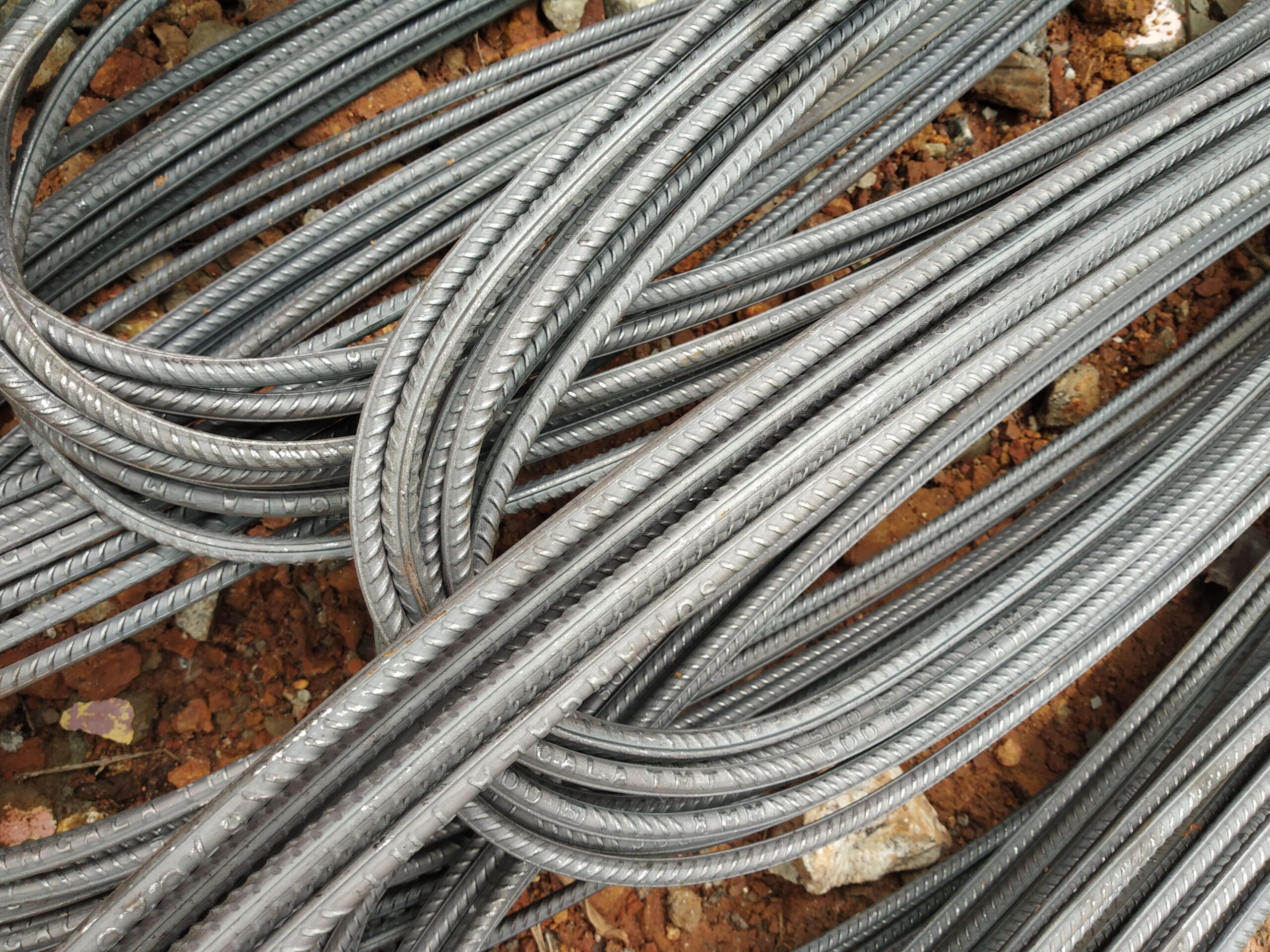
How Many 28mm Rebar Bars in a Tonne?
For 12 m bars, one metric tonne of 28 mm B500B reinforcing steel contains approximately 17 bars — or more precisely 17.2 bars, covering around 207 linear metres. This page shows the calculation, provides bars-per-tonne for every standard length, and explains how to use these figures in project procurement.
The Calculation: Bars per Tonne for 28 mm Rebar
The unit weight of 28 mm B500B rebar is 4.837 kg/m (formula: d² × 0.00617 = 28² × 0.00617 = 4.837 kg/m; cross-section 615.8 mm²). For the standard 12 m export length:
- Weight per bar = 4.837 × 12 = 58.04 kg
- Bars per tonne = 1,000 ÷ 58.04 = ≈ 17.2 bars (order as 17 full bars)
- Linear metres per tonne = 17.2 × 12 = ≈ 207 m
For quantity ordering purposes, always round down to whole bars. A tonne order of 28 mm × 12 m bars will therefore be quoted as 17 bars, with the small shortfall (~2.4 kg) absorbed in the tonne weigh-bridge tolerance or invoiced at the actual weight shipped.
Bars per Tonne by Length — Complete Reference Table
| Length | kg per bar | Bars per tonne | Linear m per tonne |
|---|---|---|---|
| 6 m | 29.0 kg | ≈ 34.5 | ≈ 207 m |
| 9 m | 43.5 kg | ≈ 23.0 | ≈ 207 m |
| 12 m | 58.0 kg | ≈ 17 | ≈ 207 m |
| 18 m | 87.1 kg | ≈ 11.5 | ≈ 207 m |
Note that the linear metres per tonne (~207 m) is the same regardless of bar length — it is simply 1,000 kg ÷ 4.837 kg/m = 206.7 m/t. The bar count changes, but the mass of steel per running metre does not.
Why This Matters for Export and Site Logistics
Understanding bars-per-tonne matters at several points in a project supply chain:
- Bar schedule take-off to tonnage: sum all running metres of 28 mm in your schedule, divide by 206.7, and you have the tonne requirement. Add a waste factor (typically 3–5 % for cut-and-bend) for your order quantity.
- Container loading: a 20 ft container typically carries 22–24 tonnes net, which equals approximately 374–413 bars of 28 mm × 12 m. A 40 ft container roughly doubles this. For export delivery planning, these figures help size container bookings against the order quantity.
- Bundle count for crane lifts: site bundles are typically packed to ~1–2 tonnes. A 1-tonne lift of 28 mm × 12 m bar = 17 bars; a 2-tonne lift = 34 bars. Knowing this lets the site engineer plan crane scheduling accurately.
- Invoice verification: rebar is sold and invoiced by weight (metric tonnes). Cross-checking bar count × weight per bar against the invoice weight is a standard quality step during goods-in.
Comparing 28 mm with Adjacent Diameters
| Diameter | kg/m | kg per 12 m bar | Bars/tonne (12 m) | m/tonne |
|---|---|---|---|---|
| 25 mm | 3.854 | 46.2 kg | ≈ 21.6 | ≈ 259 m |
| 28 mm | 4.837 | 58.0 kg | ≈ 17 | ≈ 207 m |
| 32 mm | 6.318 | 75.8 kg | ≈ 13 | ≈ 158 m |
The step from 25 mm to 28 mm increases the per-bar weight by 25 % (46.2 kg to 58.0 kg) and reduces the bar count per tonne from ~22 to ~17. This is relevant when comparing bar schedules or substituting diameters — consult the structural engineer before any substitution, as cross-sectional area and ductility class must be maintained.
Ordering 28mm B500B from Steel Rebar Germany
Steel Rebar Germany supplies 28 mm B500B in all standard lengths, seaworthy-bundled for export. Full Mill Test Certificate (EN 10204 3.1), CE/DoP, and Certificate of Origin documentation is supplied with every shipment. For a quote based on bar schedule or tonnage, use our request-a-quote form. For complete weight data across all diameters, see our rebar weight chart reference page.
Frequently Asked Questions — 28mm Bars per Tonne
How many 28mm rebar bars are in a tonne (12 m length)?
How many linear metres of 28 mm rebar are in a tonne?
What is the weight of a single 12 m bar of 28 mm rebar?
How many 28 mm bars fit in a 20 ft container?
Does bar length affect the linear metres per tonne?
Source German-standard rebar with full export documentation
Tell us your specification and destination port — we’ll respond with a detailed quotation.