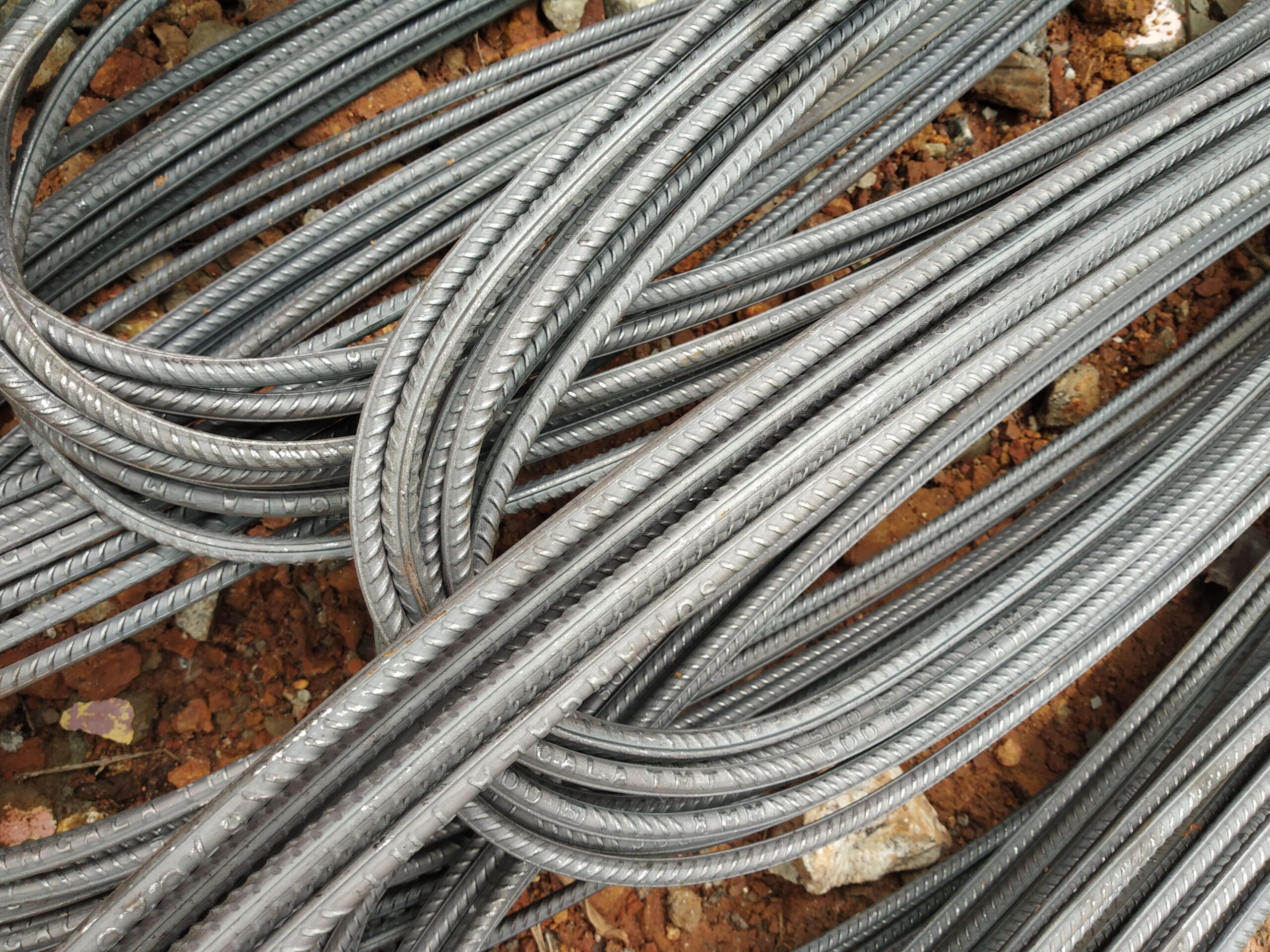
Factory Production Control for Rebar: How FPC Underpins CE Marking and Quality Assurance
Factory Production Control (FPC) is the continuous quality management system that rebar manufacturers must operate to maintain CE marking under EN 10080. Understanding FPC helps buyers assess supplier reliability before placing a purchase order.
What Is Factory Production Control?
Factory Production Control (FPC) is a documented, permanent, internal quality management system through which a manufacturer controls and assesses the production of a construction product against a defined standard. For reinforcing steel, the obligation to operate FPC arises from the EU Construction Products Regulation (CPR) and is specified within the harmonised standard EN 10080.
FPC is not a one-off audit or a paper exercise — it is an ongoing system that operates every day in the mill. It covers raw material inputs (scrap selection, alloying additions), in-process checks at the rolling mill, final product testing, labelling and traceability, and corrective action procedures. Without a functioning FPC, a manufacturer cannot legally affix the CE mark to rebar destined for the EU market.
FPC Requirements Under EN 10080 and the CPR
Under AVCP System 2+ (the conformity assessment level for reinforcing steel), the FPC system must cover all of the following elements:
- Personnel and responsibilities: Designated quality personnel with defined authority to stop production or reject non-conforming material
- Equipment calibration: Regular calibration and maintenance records for testing equipment (tensile testing machines, vernier gauges, weighing scales)
- Raw material control: Documented incoming inspection of scrap or billet, including chemical composition checks and heat records
- In-process control: Rolling mill checks on diameter tolerance, rib geometry, and surface condition at defined frequencies
- Final product testing: Tensile testing (yield strength Re, tensile strength Rm, elongation Agt) and bend/rebend tests per EN ISO 15630-1, at frequencies defined in EN 10080
- Traceability: Heat numbers linked from the ladle to bundles to Mill Test Certificates
- Non-conforming product procedure: Written procedures for quarantining, investigating, and disposing of out-of-spec material
- Corrective actions: Documented root-cause analysis and corrective measures when test results fall outside specification
- Records: Retention of FPC records (typically ≥5 years) for notified body review
The Role of the Notified Body
Under System 2+, an accredited notified body (NB) must audit and certify the manufacturer’s FPC system. The NB issues a Factory Production Control Certificate after an initial audit demonstrating that the FPC system meets EN 10080 and CPR requirements. Thereafter, the NB conducts regular surveillance audits — typically annually — to verify ongoing compliance.
The NB certificate number appears in the manufacturer’s Declaration of Performance (DoP), allowing buyers to trace which body certified the FPC. If the NB withdraws the FPC certificate (e.g. following a failed surveillance audit), the manufacturer must cease CE marking until compliance is restored.
Buyers conducting supplier qualification should request a copy of the current FPC certificate, check its issue date, and verify the issuing NB on the EU NANDO register.
Testing Frequencies Required by EN 10080
EN 10080 Annex B specifies minimum testing frequencies for FPC. The following gives a representative picture of the lot-based requirements for B500B bars:
| Test | Standard reference | Minimum frequency (indicative) |
|---|---|---|
| Tensile test (Re, Rm, Agt) | EN ISO 15630-1 | Per heat / per rolling campaign |
| Bend and rebend test | EN ISO 15630-1 | Per heat or lot |
| Geometry check (diameter, rib height) | EN 10080 Annex C | Each shift / coil change |
| Weight per metre check | EN 10080 | Each shift |
| Chemical analysis | EN ISO 14284 / OES | Per heat (ladle sample) |
| Weldability (Ceq calculation) | EN 10080 formula | Per heat (from chemistry) |
These test results form the basis of the EN 10204 Type 3.1 Mill Test Certificate issued for each specific heat or lot supplied. The MTC is the customer-facing output of the FPC system’s per-heat testing.
What Buyers Should Ask About a Supplier’s FPC
When qualifying a new rebar supplier — especially for international export sourcing — the following FPC-related checks are prudent:
- Request the current FPC certificate (not just a copy from two years ago)
- Confirm the NB name and number match the DoP and are listed as active on NANDO
- Ask for a sample MTC from a recent production run to assess completeness and format
- Clarify what non-conforming product procedure is in place — how quickly is an out-of-spec heat quarantined?
- For critical projects, consider specifying third-party witness testing (EN 10204 Type 3.2) at the mill
Steel Rebar Germany sources from mills operating full EN 10080 FPC systems with current NB certification. Documentation is available on request. For further detail on the full documentation package, see our Export & Delivery page, or request a quote to discuss your project.
Frequently Asked Questions — Factory Production Control for Rebar
Is FPC the same as ISO 9001 certification?
How often does the notified body audit the mill’s FPC?
What happens if a heat fails the tensile test during FPC?
Can I request FPC records for a specific heat that was supplied to my project?
Does FPC apply to rebar coils as well as straight bars?
Source German-standard rebar with full export documentation
Tell us your specification and destination port — we’ll respond with a detailed quotation including FPC-backed EN 10204 3.1 MTC, CE Declaration of Performance, and Certificate of Origin.