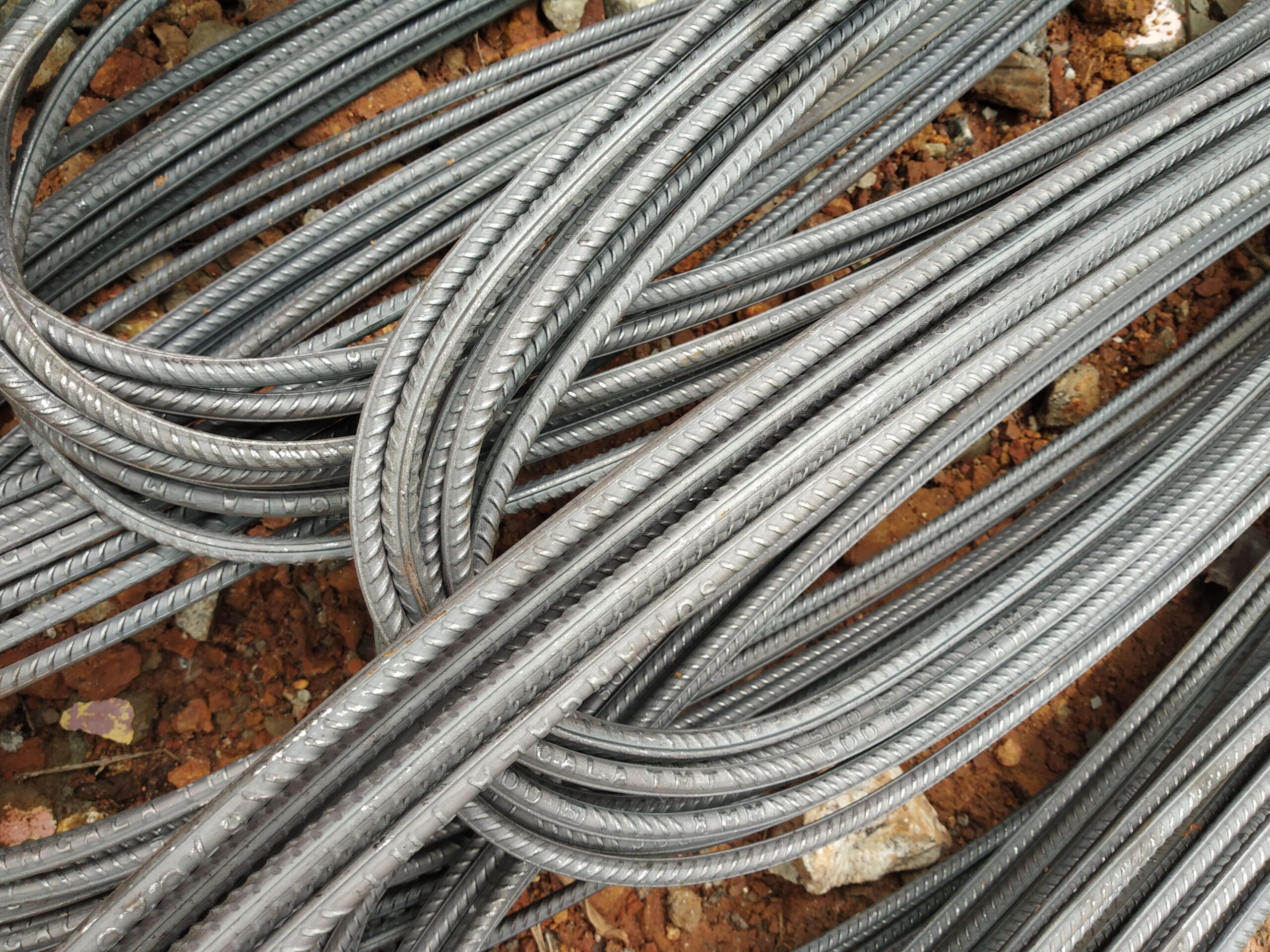
Rebar Weight Chart: Kg per Metre for 6–40 mm (EN 10080 / DIN 488)
This rebar weight chart gives the kg per metre and cross-sectional area for every standard diameter from 6 mm to 40 mm, calculated to EN 10080 and DIN 488. Use it to convert lengths to tonnes for quotations, shipping and bar-bending schedules.
A rebar weight chart is the fastest way to turn a length of reinforcing steel into a weight in kilograms or tonnes. Because every batch of deformed reinforcing bar is priced and shipped by mass, knowing the exact kg per metre for each diameter is essential for buyers, estimators and importers. The values below follow the nominal masses set out in EN 10080 and DIN 488 and apply to all 500 MPa grades — B500A, B500B and B500C — because nominal mass depends only on diameter, not grade.
Rebar weight chart: kg per metre and cross-section (6–40 mm)
The following table lists the nominal unit mass and cross-sectional area for each standard bar diameter. These figures are the industry reference for converting bar schedules into shipping weights.
| Diameter (mm) | Weight (kg/m) | Cross-section (mm²) |
|---|---|---|
| 6 | 0.222 | 28.3 |
| 8 | 0.395 | 50.3 |
| 10 | 0.617 | 78.5 |
| 12 | 0.888 | 113 |
| 14 | 1.21 | 154 |
| 16 | 1.58 | 201 |
| 20 | 2.47 | 314 |
| 25 | 3.85 | 491 |
| 28 | 4.83 | 616 |
| 32 | 6.31 | 804 |
| 40 | 9.86 | 1257 |
Values are nominal masses per EN 10080 / DIN 488. Standards permit a small mass tolerance (typically ±4.5% on individual bars of larger diameter and ±6% on small diameters), so delivered weight can vary slightly from the theoretical figure.
The kg/m formula: where the numbers come from
Every value in the rebar weight chart comes from one simple formula. The mass per metre of a steel bar equals its cross-sectional area multiplied by the density of steel. For round reinforcing steel this reduces to:
Weight (kg/m) = d² × 0.00617
where d is the nominal diameter in millimetres. The constant 0.00617 already includes steel’s density of 7,850 kg/m³ and the conversion of units. For example, a 16 mm bar: 16² × 0.00617 = 256 × 0.00617 ≈ 1.58 kg/m, which matches the chart. The cross-sectional area used in design comes from a related expression, A = (π/4) × d², giving 201 mm² for a 16 mm bar.
Knowing the formula means you can verify any value or check an unusual diameter in seconds. It is also why the chart is grade-independent: B500A, B500B and B500C share the same nominal diameters and therefore the same kg per metre.
How to convert a bar schedule to tonnes
To turn a reinforcement schedule into a shipping weight, multiply the total length of each diameter by its kg/m value, then sum and divide by 1,000 for tonnes:
- Step 1 — Total the metres of each diameter from the bending schedule.
- Step 2 — Multiply each length by the kg/m from the chart above.
- Step 3 — Add the results and divide by 1,000 to get tonnes.
Worked example: 500 m of 12 mm + 800 m of 16 mm = (500 × 0.888) + (800 × 1.58) = 444 + 1,264 = 1,708 kg ≈ 1.71 t. Add an allowance for offcuts and laps when ordering. For a deeper look at how diameters are chosen, see our guide to rebar sizes and diameters, and to understand the grades behind the steel read B500A vs B500B vs B500C.
Standard lengths and packing
Straight reinforcing bar is produced in diameters of 8–40 mm and stocked in lengths of 6–18 m, with 12 m the most common export length. Bars are bundled into seaworthy packs of roughly 2 tonnes for container or break-bulk shipment, and each consignment ships with a Mill Test Certificate to EN 10204 3.1. Smaller diameters (6–16 mm) are also available in coil for automated stirrup and mesh production. Our pillar page on B500B reinforcing steel covers the full product range and documentation.
Frequently asked questions
Common questions about rebar weight and the kg-per-metre chart.
How do you calculate the weight of rebar per metre?
How much does a 12 m length of 16 mm rebar weigh?
Does the weight differ between B500A, B500B and B500C?
Why is delivered weight sometimes different from the chart?
How do I convert metres of rebar to tonnes for a quote?
Source German-standard rebar with full export documentation
Tell us your specification and destination port — we’ll respond with a detailed quotation.