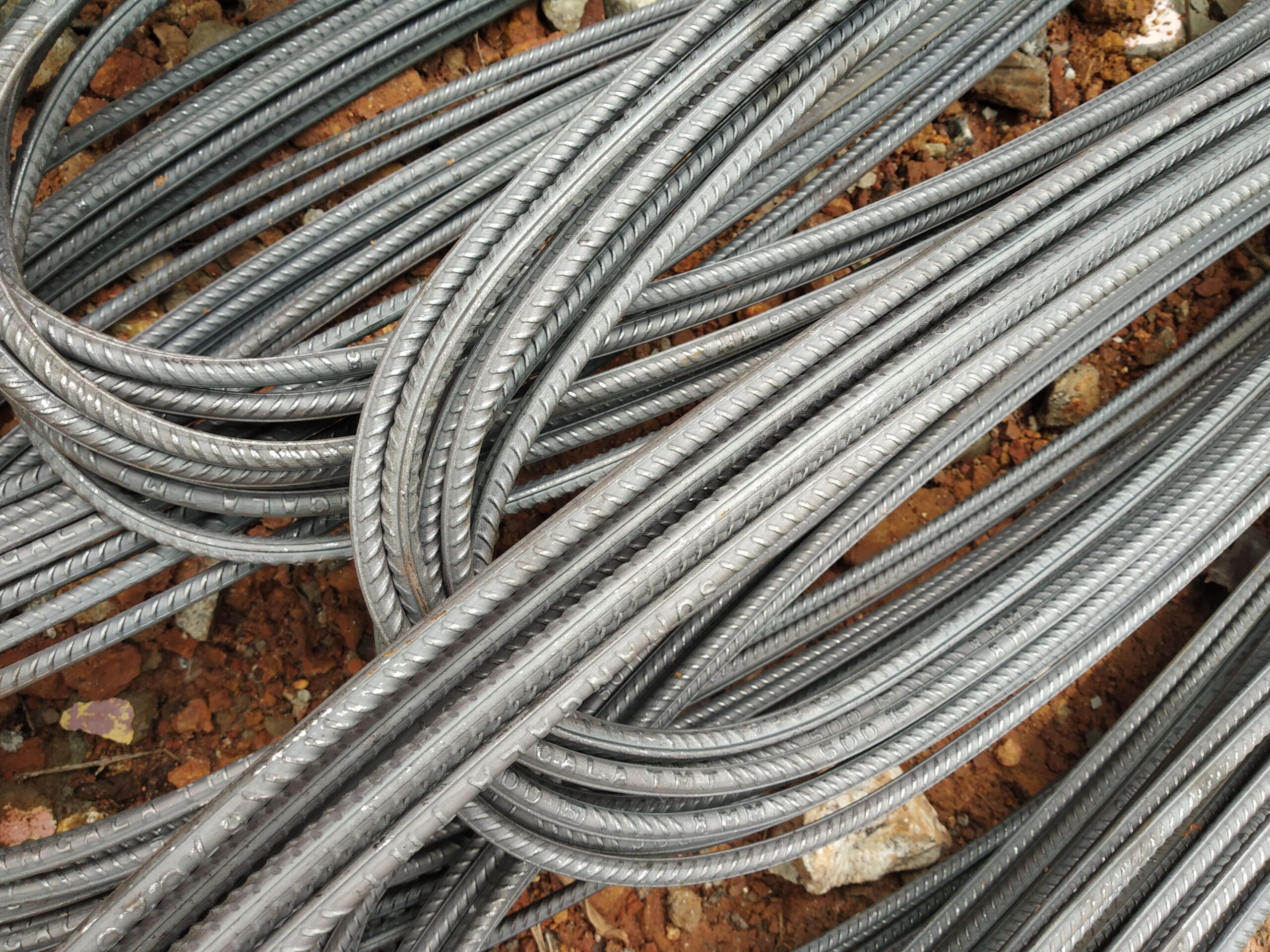
How to Order Steel Rebar from Germany: A Buyer’s Guide
To order steel rebar from Germany the right way, you confirm the specification, prepare a bar bending schedule, agree tonnage and packing, name your destination port and Incoterm, and lock the export documentation before production. This guide walks through each step.
Ordering steel rebar from Germany is straightforward once you understand what a German or EU-standard supplier needs from you, and what you should expect back. International contractors and importers choose German-standard reinforcing steel because it is produced to DIN 488 and EN 10080, designed under Eurocode 2 (EN 1992-1-1), and shipped with a full export documentation pack including a Mill Test Certificate. This buyer’s guide breaks the procurement process into clear stages so your first enquiry becomes a clean, well-priced order.
Step 1 — Define your rebar specification
Every order starts with the specification. The more precisely you describe what you need, the faster and more accurately we can quote. The core items to confirm are:
- Grade and ductility class — typically B500B hot-rolled bar for most structural work, B500A for cold-rolled/coil and mesh applications, or B500C where seismic high-ductility is specified. See our steel grades overview.
- Diameter range — bars are commonly supplied 8–40 mm. Use our rebar weight chart to convert lengths to tonnage.
- Standard and surface — DIN 488 / EN 10080 ribbed bar, plain, or coated where required.
- Length — stock lengths run 6–18 m, with 12 m the common default, or cut-and-bend to a schedule.
Step 2 — Prepare a bar bending schedule (BBS)
If you need shaped reinforcement rather than straight stock, supply a bar bending schedule. A BBS lists each bar mark, diameter, shape code (to BS 8666 or DIN 488), cut length, bend dimensions and quantity. With a complete schedule we can quote cut-and-bend production accurately and minimise on-site labour and offcut waste. If you only need straight bar, you can skip this step and simply state lengths and quantities.
Step 3 — Confirm tonnage, packing and lengths
Convert your drawings into tonnage so we can plan production and freight. Rebar weight is calculated as kg/m = d²(mm) × 0.00617. Bundles for export are typically banded into seaworthy units of roughly 2 tonnes, then loaded into containers or shipped break-bulk for larger volumes. Tell us whether you prefer container or break-bulk so we can optimise packing.
| What to send us | Why it matters |
|---|---|
| Grade + ductility class | Determines mill route and certification |
| Diameters + quantities | Drives tonnage and production planning |
| Bar bending schedule (if shaped) | Enables accurate cut-and-bend pricing |
| Destination port + country | Sets freight, Incoterm and documents |
| Required standards/docs | Confirms MTC, CoO, CE/DoP needs |
Step 4 — Choose port and Incoterm
Name your destination port and the Incoterm you want to trade on. Common terms for rebar exports include EXW, FOB (loaded at a German or European port), CFR and CIF to your discharge port. The Incoterm defines where risk and cost transfer between seller and buyer, so it directly affects the quoted price. If you are unsure which term suits your logistics setup, our export and delivery team can advise based on your destination.
Step 5 — Agree documentation before production
Lock the export documentation pack up front. For German and EU-standard rebar this typically includes a Mill Test Certificate (EN 10204 3.1), a Certificate of Origin, a CE marking / Declaration of Performance where applicable, plus a commercial invoice and packing list. If your country requires pre-shipment inspection or a specific conformity scheme, confirm it now so it can be scheduled rather than rushed at the end.
Step 6 — Place the order and track production
Once specification, tonnage, Incoterm and documents are agreed, you confirm the order against a proforma invoice or contract. From there we plan production, packing and booking, and keep you updated through to loading and shipment. A clear enquiry at the start almost always means fewer revisions later.
Frequently asked questions
Common questions from buyers ordering rebar from Germany.
What is the minimum information needed to get a quote?
Do I need a bar bending schedule to order rebar?
Which Incoterms can I order on?
What documents come with a German rebar shipment?
Can you supply both straight bar and coils?
Source German-standard rebar with full export documentation
Tell us your specification and destination port — we’ll respond with a detailed quotation.