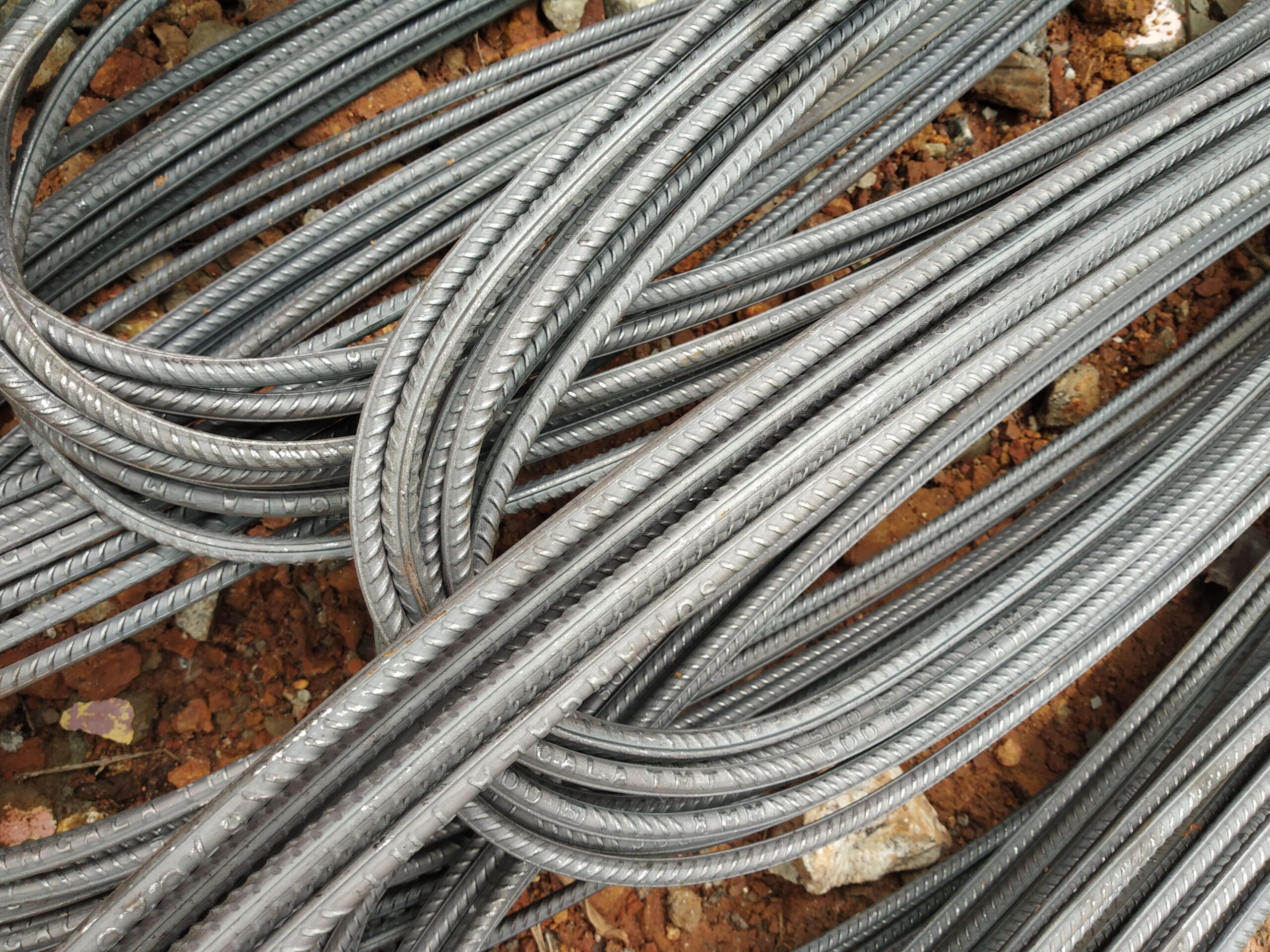
How to Store Rebar on Site: A Practical Guide for Construction Teams
Proper on-site rebar storage protects your steel investment, preserves DIN 488 / EN 10080 compliance, and prevents costly re-orders caused by corrosion or mix-ups. Follow these proven protocols before the first bundle is lifted.
Reinforcing steel is a significant line item in any structural project budget. Whether you are handling B500B straight bars, coiled rod, or prefabricated stirrups, the way material is stored between delivery and placement has a direct bearing on structural performance, inspection outcomes, and cost control. This guide sets out the key principles for storing rebar on site, aligned with common best practice and the quality expectations of EN 10080-compliant supply chains.
Why On-Site Rebar Storage Matters
Rebar that corrodes beyond surface rust, that is mislabelled, or that absorbs ground contamination before casting can trigger non-conformances during inspection. Engineers reviewing mill test certificates and conformity declarations expect the steel placed in the concrete to match the supplied grade — and site storage is the last link in that chain.
The three main risks are: corrosion that reduces bond strength or cross-section, contamination from oil, mud, or chlorides that weakens the steel–concrete interface, and grade mix-ups that put the wrong diameter or ductility class into the structure. A simple storage system eliminates all three.
Rule 1: Keep Rebar Off the Ground
Direct contact with soil introduces moisture, chlorides, and sulfates — all accelerators of corrosion. Use timber bearers, steel stillages, or purpose-built rebar racks to elevate bundles at least 150–200 mm above ground level. On waterlogged sites, increase this clearance or lay a granular sub-base beneath the storage area.
- Space bearers at intervals no greater than 1.5 m to prevent bar sagging and permanent deformation.
- For coils, use purpose-built A-frame cradles or horizontal mandrel stands; do not stack coils flat on the ground.
- Prefabricated cages and cut-and-bend items should be stored on flat, stable supports to avoid distortion.
Rule 2: Manage Drainage and Cover
Store rebar on a well-drained, compacted surface. Standing water beneath a bundle maintains a humid microclimate that accelerates corrosion even when the steel itself is not submerged. Where permanent shelter is unavailable, a breathable tarpaulin provides a low-cost solution — avoid non-breathable polythene sheeting that traps condensation and worsens surface rust.
In coastal or high-humidity environments (relevant for projects in the Gulf or tropical regions), covered rebar stores with forced ventilation are recommended, particularly for B500A coil destined for automated mesh or stirrup machines where surface condition affects machine feed reliability.
Rule 3: Tagging and Grade Segregation
Every bundle, coil, or prefabricated set must retain its identification tag throughout site storage. Under EN 10080, rebar is marked during rolling (diameter, grade, and manufacturer’s mark visible on the bar itself), but bundle tags carry heat/cast numbers that link back to the mill test certificate — essential for traceability inspections.
| What to Tag | Minimum Information | Why It Matters |
|---|---|---|
| Each bundle | Diameter, grade (e.g. B500B), heat number, delivery date | Links to Mill Test Certificate (EN 10204 3.1) |
| Cut-and-bend sets | Bar mark, shape code, drawing reference | Prevents mis-placement in formwork |
| Mesh panels | Panel type (e.g. Q335), quantity, project ref | Ensures correct panel goes to correct pour |
| Coil batches | Diameter, grade, coil weight, heat number | Supports machine calibration traceability |
Segregate different diameters and grades into clearly marked bays. A common site error is mixing 12 mm and 16 mm B500B — visually similar but with significantly different cross-sections (113 mm² vs 201 mm²) and weight per metre (0.888 kg/m vs 1.58 kg/m).
Rule 4: Rust Control — What Is Acceptable?
Light surface rust (a thin, even, reddish-brown layer) is not a structural concern and does not reduce bond strength — it may even marginally improve mechanical bond. However, the following conditions are not acceptable at placement:
- Loose, flaking rust (pitting rust) that reduces the bar’s nominal diameter.
- Rust contaminated with chlorides — check if the storage area is exposed to de-icing salts or marine aerosols.
- Mill scale combined with rust that has detached in sheets, exposing bare metal with active corrosion.
Where there is doubt, wire-brush a test length and measure the remaining diameter with calipers. If diameter loss exceeds the tolerance in DIN 488 (typically ±4–6% on cross-section depending on size), the bar should be rejected. For export supply, our mill test certificates document original cross-sections, providing a baseline for site inspection.
Handling and Lifting Best Practice
Bundles of rebar — particularly 12 m lengths of 32 mm or 40 mm bar — can weigh well over two tonnes. Lifting with a single central sling point causes bowing and can permanently deform the bar. Use spreader beams or multi-point slings placed at the quarter-length points (roughly 3 m from each end on a 12 m bundle).
When receiving deliveries, inspect bundles for transport damage: bent bars at bundle ends, snapped tie wire, or displaced identification tags. Any damage should be documented and reported before off-loading, especially for CIF or DAP shipments where the supplier’s liability ends at the delivery point.
Storage Duration and Stock Rotation
Rebar has no formal shelf life, but extended open storage increases corrosion risk. A practical site rule is to use the oldest stock first (FIFO — first in, first out), reviewing stored material at monthly intervals on long-duration projects. For coils stored more than 6 months, re-inspect the surface condition and verify the coil identification remains legible before feeding into processing equipment.
For projects with phased pours, coordinate delivery scheduling with the supplier to minimise prolonged site storage — a just-in-time approach reduces both storage costs and corrosion exposure. Our export and delivery page covers delivery lot sizes and lead time options in detail.
Related Rebar Resources
Explore our product range and technical guides to support your procurement and site planning.
B500B Reinforcing Steel
Specifications, diameters, and export documentation for Germany’s standard structural rebar grade.
Learn more →Rebar Coils
B500A and B500B coil supply for stirrup and mesh fabrication — 6 to 16 mm diameter.
Learn more →Cut-and-Bend Rebar
Prefabricated stirrups and shaped bars reduce site storage needs and waste.
Learn more →Frequently Asked Questions: Storing Rebar on Site
Is light surface rust on rebar acceptable before use?
How high off the ground should rebar be stored?
Can I store different rebar grades in the same bay?
How long can rebar be stored on site before it must be inspected?
Should rebar be covered with plastic sheeting?
Source German-standard rebar with full export documentation
Tell us your specification and destination port — we’ll respond with a detailed quotation.