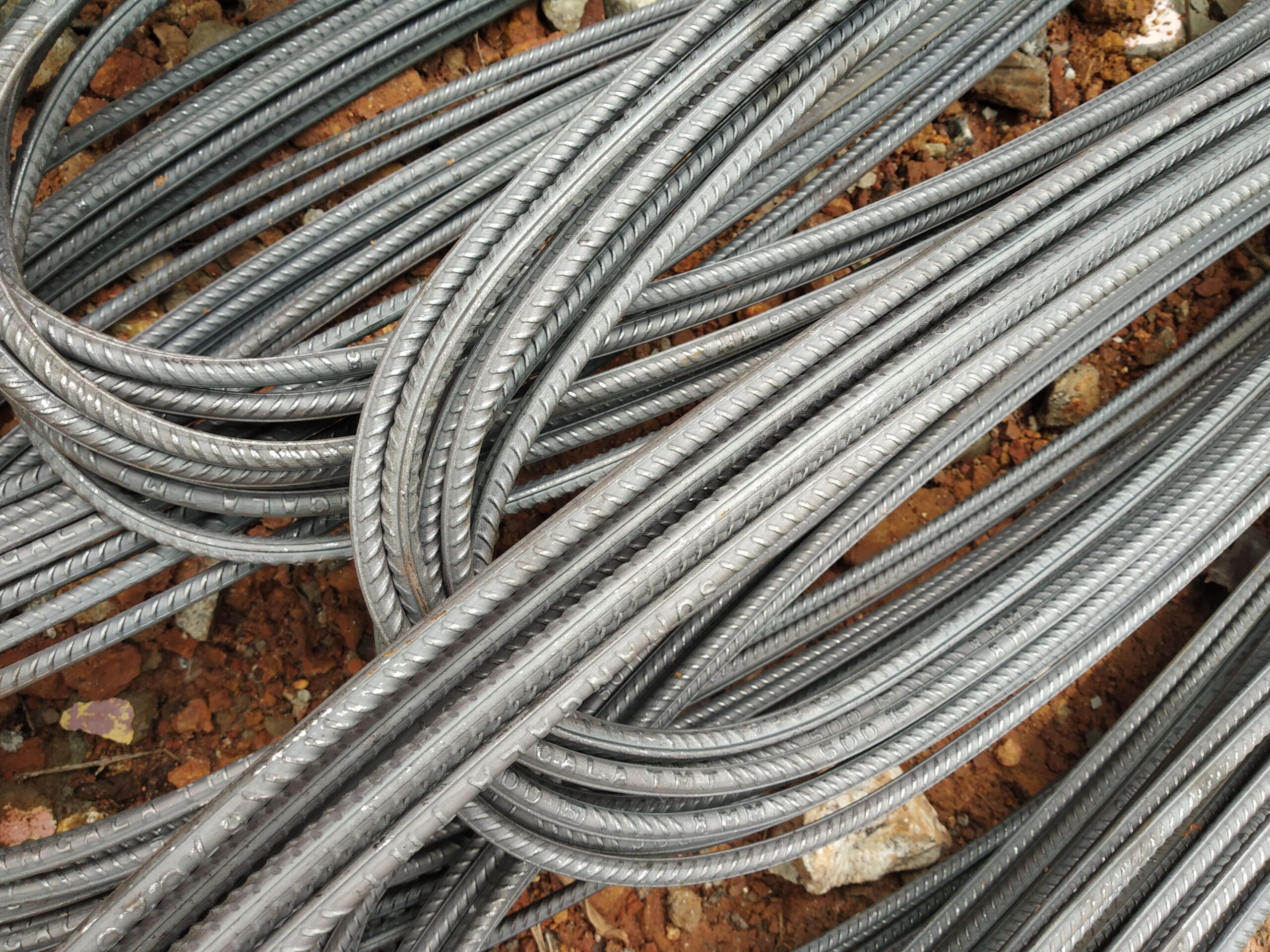
Rebar Ductility Explained: Class A, B, and C
What the ductility classes defined in DIN 488 and EN 10080 actually mean — the key parameters (k ratio, Agt), how they differ between B500A, B500B, and B500C, and which class your project requires.
Why Rebar Ductility Matters in Structural Design
Ductility in reinforcing steel refers to the ability of the bar to undergo significant plastic deformation before fracture. In structural concrete, this property is not merely a material quality indicator — it is a safety mechanism. Ductile reinforcement allows a structure to deform and redistribute forces when overloaded, giving occupants time to evacuate and preventing sudden brittle collapse. This is why DIN 488 and EN 10080 define ductility classes rigorously and why Eurocode 2 (EN 1992-1-1) links ductility class to design method.
The Two Key Ductility Parameters
Both DIN 488 and EN 10080 quantify rebar ductility using two measurable parameters:
- k = ft/fy (tensile-to-yield ratio): The ratio of actual tensile strength (Rm) to actual yield strength (Re). A higher k value means the steel has more capacity beyond yield — the “strain-hardening reserve” that allows load redistribution. If k is too close to 1.0, the bar offers almost no plastic plateau and can fracture with minimal warning.
- Agt (total elongation at maximum force): The uniform elongation at peak load, expressed as a percentage. This measures how much the bar can stretch in the plastic zone before necking begins. Higher Agt = more plastic rotation capacity in the structural element.
Ductility Classes A, B, and C — Parameters Compared
| Class | Grade (DIN 488) | k = Rm/Re | Agt (%) | Typical Product |
|---|---|---|---|---|
| A (Normal ductility) | B500A | ≥ 1.05 | ≥ 2.5% | Cold-rolled coil, welded mesh |
| B (High ductility) | B500B | ≥ 1.08 | ≥ 5.0% | Hot-rolled deformed bar (standard) |
| C (Very high / seismic) | B500C | 1.15 ≤ k < 1.35 | ≥ 7.5% | Seismic / DCM-DCH structures |
Class A — Normal Ductility (B500A)
B500A is the normal-ductility grade, typically produced by cold-rolling. With k ≥ 1.05 and Agt ≥ 2.5%, it offers a modest strain-hardening reserve. It is well-suited for applications where plastic redistribution demands are low: standard mesh reinforcement (DIN 488-4), slabs with dominant membrane action, and coil products destined for automated stirrup or mesh machines. Eurocode 2 Clause 5.6 restricts plastic analysis to Class B and C bars in most situations, so Class A limits the design methods available.
Class B — High Ductility (B500B)
B500B is the dominant grade in European structural construction. The higher minimum k ≥ 1.08 and Agt ≥ 5.0% provide meaningful plastic rotation capacity. Eurocode 2 permits plastic analysis, moment redistribution (up to 30% in some cases), and most standard design approaches when Class B or higher reinforcement is used. For general procurement — beams, columns, foundations, retaining walls, bridge decks — B500B hot-rolled deformed bar is the standard specification. The B500B bars we supply are produced to DIN 488 with full EN 10204 3.1 Mill Test Certificates confirming k and Agt values.
Class C — Very High Ductility / Seismic (B500C)
B500C targets seismic-resistant structures designed to Ductility Classes Medium (DCM) or High (DCH) under EN 1998-1 (Eurocode 8). The upper-bound cap on k (k < 1.35) is as important as the lower bound — it prevents overly strong bars from attracting more force than the structure was designed to resist (capacity design principle). With Agt ≥ 7.5%, Class C provides maximum plastic rotation capacity for moment-frame columns and shear walls in seismic zones. Specifying B500C in non-seismic contexts adds cost without structural benefit.
Choosing the Right Ductility Class
The correct ductility class for a project is determined by the structural design, not by procurement preference. The structural engineer’s specification will state the required class (A, B, or C) based on the design method used and the seismicity of the site. Common defaults:
- Standard non-seismic construction: B500B (Class B)
- Mesh / slabs / secondary elements: B500A (Class A) is often acceptable
- Seismic DCM/DCH frames and walls: B500C (Class C) required
Related Resources
Standards & Certification
DIN 488, EN 10080, Mill Test Certificates — full compliance documentation.
Learn more →Yield Strength of Rebar
The 500 MPa in B500B — what yield strength means and how it is verified.
Learn more →Tensile Strength & Rm/Re Ratio
Understanding the k ratio and how it relates to ductility class.
Learn more →Frequently Asked Questions
What is the difference between Class A and Class B rebar ductility?
Why does Class C have an upper limit on the k ratio?
Is B500B sufficient for seismic zones?
Where can I find the ductility class on a Mill Test Certificate?
Source German-standard rebar with full export documentation
Tell us your specification and destination port — we’ll respond with a detailed quotation.