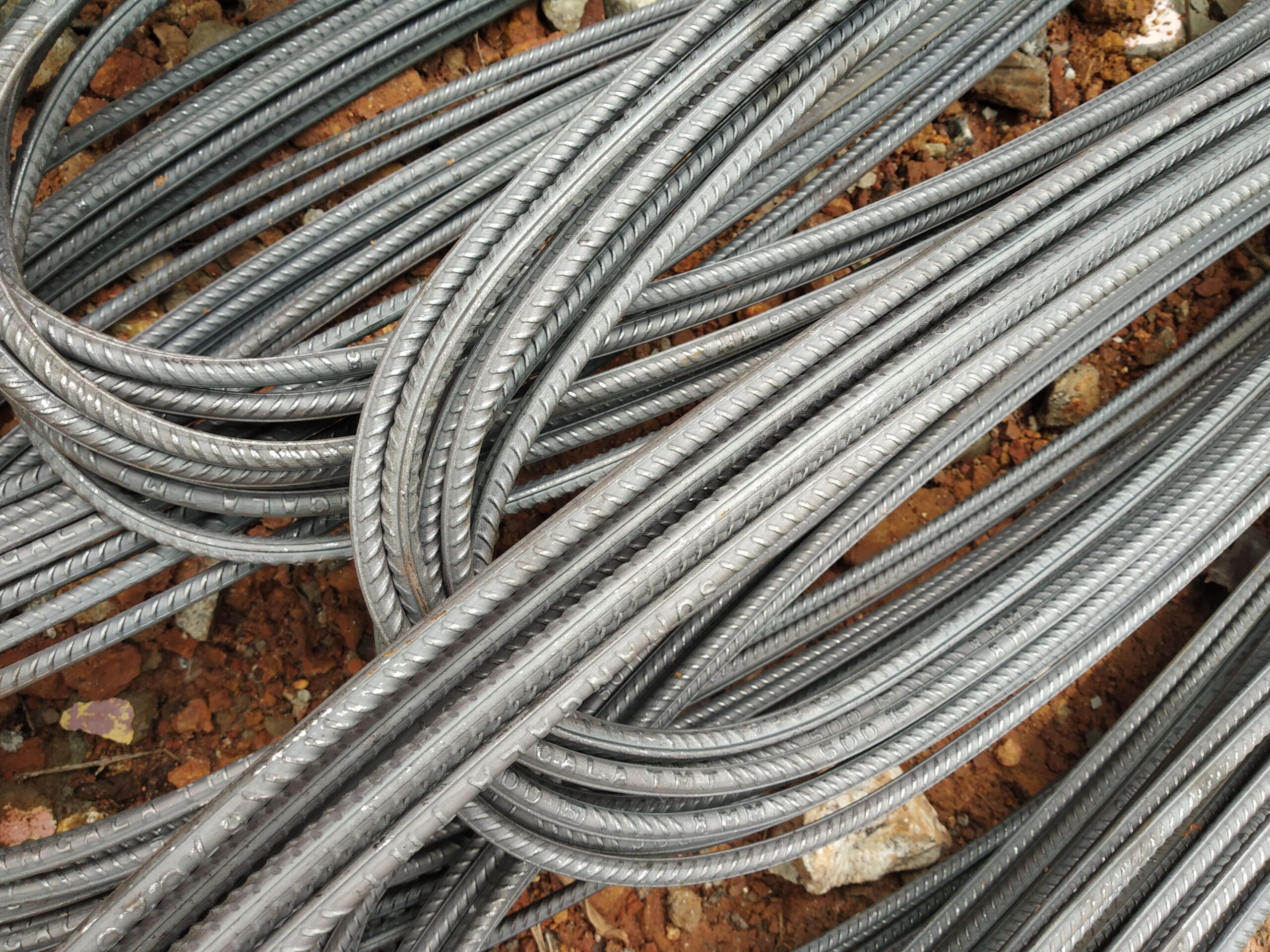
Reinforcing Steel for Breakwaters: DIN 488 / EN 10080 Supply Guide
Reinforced concrete breakwater elements — caissons, crown walls, toe protection slabs, and wave-dissipating structures — endure the most extreme marine loading of any coastal structure. This guide covers reinforcement detailing for RC breakwater components, typical bar sizes, arrangement, concrete cover, and how Steel Rebar Germany supplies B500B bar, mesh, and cut-and-bend to DIN 488 / EN 10080 for coastal defence and port protection projects worldwide.
The Structural Role of Reinforced Concrete in Breakwater Construction
Breakwaters protect harbours, ports, and coastlines from wave energy, storm surges, and longshore sediment transport. While many older breakwaters are built entirely from rock armour or mass concrete without reinforcement, modern breakwater designs — particularly large-volume gravity caisson breakwaters, crown walls, and hybrid structures — incorporate reinforced concrete elements where tensile forces, bending moments, and impact loads demand ductile structural behaviour.
Key RC elements in breakwater construction include: caisson cells (rectangular or circular hollow RC boxes), crown walls atop rubble mound foundations, anchor slabs and tie rods, wave screen panels, and access platforms. Each element has distinct reinforcement requirements governed by EN 1992-1-1, EN 1991-1-4 (wind/wave), and specialist coastal engineering standards such as the ROM (Spanish Port Authority guidelines) or CIRIA / EurOtop wave overtopping methods. B500B to DIN 488 / EN 10080 is the baseline structural grade for all reinforced elements.
Typical Bar Sizes and Arrangement in Breakwater Elements
The following indicative figures are drawn from typical RC breakwater caisson and crown wall design practice. Actual specification depends on caisson dimensions, water depth, wave climate, and structural analysis.
| Breakwater Element | Typical Bar Dia (mm) | Typical Spacing (mm) | Weight kg/m | Section mm² |
|---|---|---|---|---|
| Caisson cell walls (inner & outer curtain) | 16–25 | 150–200 | 1.58–3.85 | 201–491 |
| Caisson base slab | 20–32 | 150–200 | 2.47–6.31 | 314–804 |
| Caisson top slab / access deck | 16–20 | 150–200 | 1.58–2.47 | 201–314 |
| Crown wall vertical bars | 16–20 | 100–150 | 1.58–2.47 | 201–314 |
| Crown wall horizontal bars | 12–16 | 150–200 | 0.888–1.58 | 113–201 |
| Wave screen / parapet | 16–20 | 100–125 | 1.58–2.47 | 201–314 |
| Toe protection slab | 16–20 | 150–200 | 1.58–2.47 | 201–314 |
Concrete Cover in Extreme Marine Exposure
Breakwater RC elements face the most aggressive concrete exposure classification in EN 206: XS3 (tidal, splash, spray) for above-water surfaces, and XS2 (permanently submerged) for caisson walls below mean low water. Seawater splash on breakwater crest and crown wall elements causes cyclic wetting-drying and chloride enrichment that accelerates corrosion onset if cover is inadequate.
Minimum c_nom values for breakwater RC elements in practice:
- Caisson outer wall (XS2/XS3): c_nom = 55–70 mm
- Crown wall outer face (XS3): c_nom = 60–75 mm
- Caisson base slab soffit (permanently submerged): c_nom = 50–60 mm
- Access deck / top slab (XS1/XS3): c_nom = 50–60 mm
Concrete specification must complement the cover: low w/c ratio (< 0.40), CEM III/B or equivalent sulphate-resistant cement, air entrainment for XF (freeze-thaw) zones, and minimum cement content 360–400 kg/m³. Chloride-resistant plastic spacers are mandatory — metallic spacers must not be used in XS3 zones.
Cut-and-Bend Supply for Caisson and Crown Wall Construction
Breakwater caisson construction — typically via slipforming or panel formwork in a dry dock or casting yard, then float-out and positioning — benefits considerably from pre-cut and pre-bent reinforcement:
- Caisson wall panels: two-layer reinforcement mats (inner and outer curtain) cut to cell dimensions, with lapped or coupler-connected vertical bars for multi-lift construction
- Caisson base slab mats: heavy-duty bottom reinforcement with pre-formed hooks and starter bar assemblies for wall-to-slab connections
- Crown wall U-bars and stirrups: formed to precise dimensions for rapid placement along the breakwater crest
- Wave screen panels: dense reinforcement mats with edge hairpins for wave impact resistance
Cut-and-bend rebar delivered to the casting yard reduces labour hours in the congested formwork zone and improves crack-control bar placement accuracy. For long vertical bars in caisson walls, mechanical couplers (parallel-thread, 12–40 mm) eliminate congested laps and allow each lift to be cage-fixed before the next lift of formwork.
Mesh Reinforcement in Breakwater Slabs
Caisson base slabs, access deck slabs, and toe protection slabs with uniform reinforcement are well-suited to welded reinforcing mesh panels to DIN 488-4. Standard Q-type panels (square grid, 6.0 × 2.3 m) can be specified with heavier bar diameters (Q524, Q636 or custom R-mesh) for the high-load base slab zones. Using mesh in uniform slab areas and loose bar in edge and connection zones is a common hybrid approach that maximises placement speed while maintaining structural accuracy.
Export Supply for International Coastal Defence Projects
Breakwater and coastal defence projects — often funded by port authorities, national governments, or development banks — require rigorous supply chain documentation. Steel Rebar Germany provides:
- Mill Test Certificate (EN 10204 3.1) with full heat traceability and mechanical/chemical data
- CE/DoP under EN 10080 for every product
- Certificate of Origin for customs clearance
- Seaworthy bundled packing (~2 t per bundle, heat-tagged) for FCL container or break-bulk
- Packing list with bundle count, diameter, and heat numbers
For large-volume caisson casting programmes, we can coordinate phased delivery to the casting yard to match the construction sequence. See our export and delivery page and Middle East export page for regional logistics. Enquire via Request a Quote.
Frequently Asked Questions — Rebar for Breakwaters
Technical and procurement questions for coastal defence and breakwater reinforcement supply.
What concrete cover is required for breakwater caisson walls?
Which rebar grade is used for reinforced concrete breakwater elements?
Can you supply reinforcement for large-volume caisson casting programmes?
Are mechanical couplers used in breakwater caisson construction?
What export documentation is required for internationally funded port and breakwater projects?
Source German-standard rebar with full export documentation
Tell us your specification and destination port — we’ll respond with a detailed quotation.