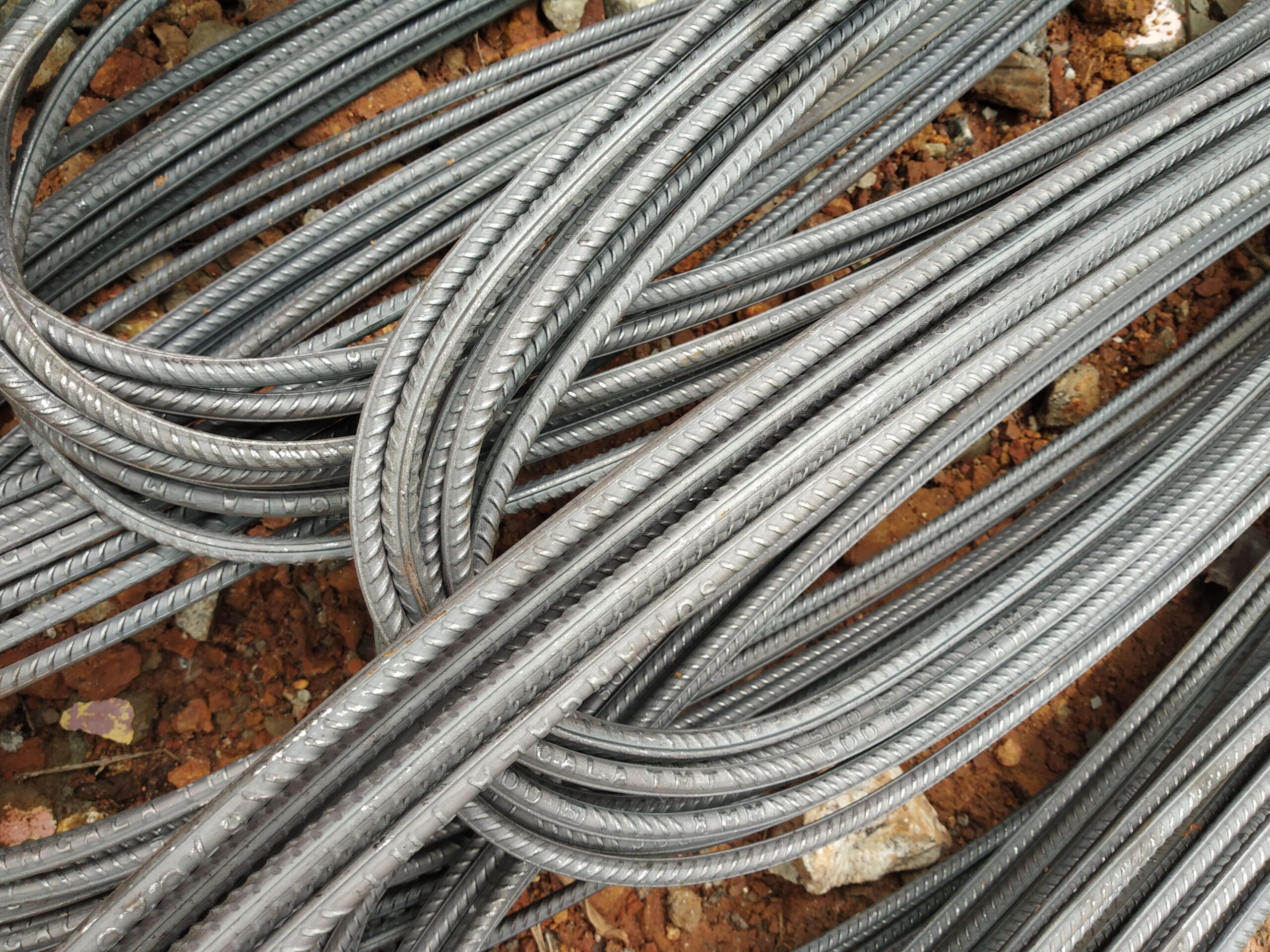
Rebar Lap Length and Anchorage: Eurocode 2 Basics
Rebar lap length and anchorage are fundamental concepts in reinforced concrete detailing under Eurocode 2. This guide explains the principles of bond, anchorage length, and lap splices — key knowledge for specifiers sourcing DIN 488 / EN 10080 compliant reinforcing steel.
Why Anchorage and Lap Length Matter
Reinforcing bars must transfer forces to the surrounding concrete across their full embedment length. If a bar is too short at a support or splice point, the bond between steel and concrete can fail before the bar reaches its design strength — a potentially catastrophic outcome. Anchorage length is the minimum embedment required for a single bar end; lap length is the overlap required when two bars are used to make a continuous splice.
Eurocode 2 (EN 1992-1-1), Clause 8, governs these requirements for structures designed under the Eurocodes. The national annex of each member state may modify certain parameters.
Bond Stress and the Basic Anchorage Length
The conceptual basis of anchorage design is equilibrium: the tensile force in the bar (fyd × As) must equal the bond force accumulated over the anchorage length (fbd × perimeter × lb). Solving for length gives the basic required anchorage.
Key variables in the calculation include:
- Design bond strength (fbd) — depends on concrete strength class (C20/25 through C50/60+) and bond conditions (good or poor).
- Bar diameter (φ) — larger bars require proportionally longer anchorage lengths.
- Steel grade yield strength (fyd) — B500B at 500 MPa drives higher force demand than lower-grade steels.
- Bond conditions — “good bond” (vertical bars cast in the lower portion, or inclined bars) achieves higher fbd values than “poor bond” (horizontal bars in the upper zone of deep pours).
Modification Factors
Eurocode 2 Clause 8.4 allows the basic anchorage length (lb,rqd) to be modified by factors (α1 to α5) that account for:
| Factor | Effect | Notes |
|---|---|---|
| α₁ — bar shape | Reduction for hooks, bends, loops | Straight bars: α₁ = 1.0 |
| α₂ — concrete cover | Reduction for cover exceeding minimum | More cover improves confinement |
| α₃ — transverse reinforcement | Reduction if links present along anchorage zone | More links = better confinement |
| α₄ — welded transverse bars | Reduction for welded bars along anchorage | Rarely used in standard detailing |
| α₅ — transverse pressure | Reduction under compressive stress perpendicular to bar | Applicable in some support zones |
The product of these factors is subject to a minimum, so anchorage cannot be reduced below a code floor regardless of combinations applied.
Lap Splices
When a bar cannot be run continuously (due to length limitations or phased construction), a lap splice overlaps two bars side by side over a calculated lap length (l0). The lap length is derived from the design anchorage length, then multiplied by a factor α₆ that depends on the percentage of bars lapped at the same cross-section.
Key principles for lap detailing:
- Stagger laps so that not all bars are lapped at the same cross-section — Eurocode 2 specifies a minimum stagger distance to limit the fraction lapped at one location.
- Transverse reinforcement (links or U-bars) is required within the lap zone where the lapped bar area exceeds a threshold.
- Tension laps are generally longer than compression laps of the same bar and concrete grade.
- Laps are generally not permitted in zones of high stress concentration (e.g., plastic hinge zones in seismically designed structures).
Mechanical Couplers as an Alternative to Laps
For large-diameter bars (typically ≥ 25 mm) or congested detailing situations, mechanical couplers — parallel-thread or taper-thread devices — offer a compact splice that avoids the congestion and additional steel tonnage of a conventional lap. See our rebar couplers page for available types and diameters (12–40 mm).
For a broad overview of available steel grades see our steel grades guide, and for detailed grade properties visit the B500B rebar page.
Frequently Asked Questions
Common questions about rebar lap lengths, anchorage, and Eurocode 2 detailing.
What is the difference between anchorage length and lap length?
Does concrete strength class affect lap and anchorage lengths?
Can I stagger laps to reduce transverse reinforcement requirements?
When should I use mechanical couplers instead of lap splices?
Does the rebar grade (B500B vs B500C) affect lap length?
Source German-standard rebar with full export documentation
Tell us your specification and destination port — we’ll respond with a detailed quotation.