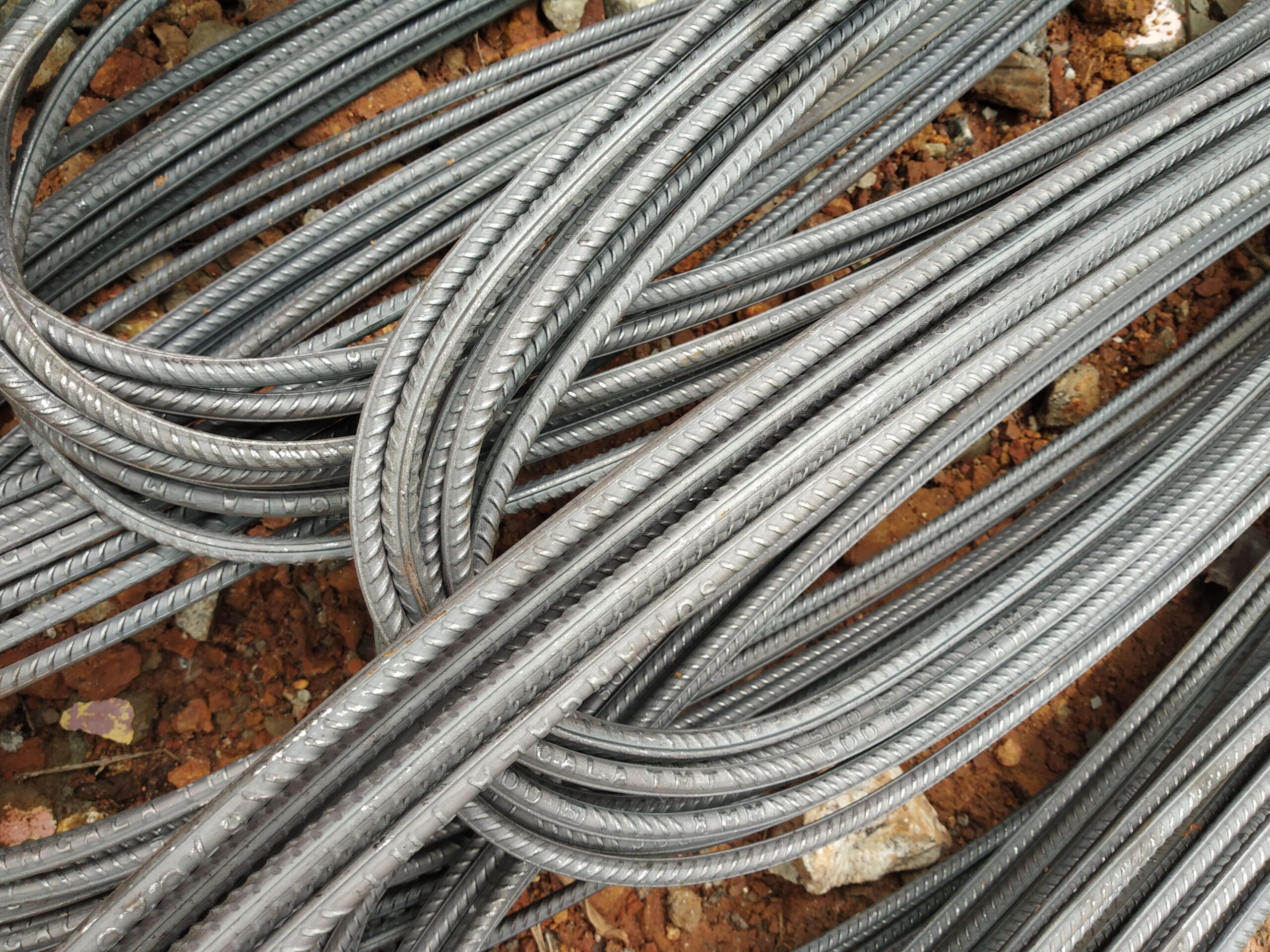
Rebar Market Kuwait
An exporter’s view of Kuwait’s reinforcing-steel market — demand drivers, price benchmarks and how a German wholesale supplier delivers bulk B500B and Grade 60 rebar to Shuwaikh and Shuaiba at direct export prices.
Kuwait rebar market overview
Kuwait’s rebar market is shaped by a steady pipeline of public infrastructure and a construction sector that leans heavily on reinforced concrete. Housing programmes, road and bridge works, port and utility upgrades, and the long-horizon developments tied to the country’s national vision all convert directly into reinforcing-steel tonnage. For any wholesaler, supplier or exporter serving the Gulf, Kuwait is a focused but reliable destination where certified material and dependable delivery matter more than headline volume.
On the supply side, Kuwait combines local electric-arc-furnace (EAF) rebar production with substantial imports. Domestic mills are scrap-fed and cover a share of standard reinforcing bar, but project-grade and higher-specification material — along with welded mesh and coil — is frequently imported. That import dependence is what keeps the Kuwaiti rebar market closely tied to regional and international mill pricing, freight and duty. Because Kuwait sits inside the GCC customs union, intra-GCC flows and tariff treatment form a key part of every landed-cost calculation, so importers benchmark continuously against neighbouring markets such as Saudi Arabia, the United Arab Emirates and Qatar.
What drives Kuwait rebar demand
- Government capital spending: roads, bridges, housing and utility infrastructure underpin baseline rebar consumption.
- Real estate and commercial construction: reinforced-concrete frames keep B500B and Grade 60 bar in constant demand.
- Industrial and port projects: the Shuaiba industrial zone and port works absorb heavy structural and reinforcing steel.
- Oil-sector and downstream investment: associated civil works generate steady secondary demand for bulk rebar and mesh.
Prices & market insight
Rebar prices in Kuwait are not set in isolation — they track global benchmarks adjusted for freight, duty and local supply-demand balance. Locally produced bar follows scrap and billet costs, since Kuwaiti EAF mills are scrap-fed, while imported reinforcing steel, mesh and coil move with Turkish, Asian and European mill prices plus ocean freight. Project cycles add a domestic layer: when several large tenders award at once, near-term demand and lead times tighten regardless of where the metal originates.
Rather than rely on a single quoted figure, professional buyers track ranges and direction of travel using independent market intelligence. Useful references include SteelOrbis and worldsteel, alongside the local trade statistics published by Kuwait’s Central Statistical Bureau. For a delivered-to-Kuwait comparison on certified material, request a current export price rather than relying on spot indices alone — landed cost depends on grade, quantity, port and shipment window, none of which a published index captures.
Bulk supply & import: your German rebar exporter to Kuwait
Steel Rebar Germany is a wholesale supplier and exporter serving Kuwaiti importers, contractors and distributors directly. We ship bulk B500B and Grade 60 (ASTM A615) reinforcing bar, welded mesh, coils and cut-and-bend, mill-certified to BS 4449 / ASTM A615, with full mill test certificates (MTC) accompanying every consignment. Material enters Kuwait by sea through the Kuwait Ports Authority gateways — Shuwaikh for general cargo and container traffic, and Shuaiba for bulk and heavy steel cargoes near the industrial zone.
Our model is deliberately simple: mill-to-site, no middlemen. That means direct export prices on bulk orders, traceable certification for inspection and approval, and consolidated container or break-bulk shipments sized to the project. Explore our rebar products range and our TMT steel rebar specifications, see how we serve other destinations on the steel by country hub, or review the full Kuwait market on our Kuwait steel page.
Bulk Orders
Container & break-bulk consignments to Shuwaikh and Shuaiba, every shipment mill-certified.
Export Prices
Direct mill-to-site pricing — no distributor markup on bulk rebar, mesh or coil.
Certified Material
B500B / Grade 60 to BS 4449 & ASTM A615, with full mill test certificates.
Official data sources for Kuwait
Always verify duties, standards and statistics against primary government sources before committing to a purchase. The following Kuwaiti authorities publish the regulations and data that govern steel imports and the rebar market:
- Ministry of Commerce and Industry (MOCI) Regulates commercial and industrial activity, import licensing and trade policy. moci.gov.kw/en
- Public Authority for Industry (PAI / KOWSMD) Industrial development plus Kuwait’s standards & metrology and conformity services. pai.gov.kw
- General Administration of Customs Customs tariffs, clearance procedures and the automated customs system for imports. customs.gov.kw
- Central Statistical Bureau (CSB) Kuwait’s national statistics office — foreign trade, industry and economic data. csb.gov.kw
- Kuwait Ports Authority (KPA) Operates Shuwaikh, Shuaiba and Doha ports — vessel, container and tariff information. kpa.gov.kw
- Central Bank of Kuwait (CBK) Macroeconomic and statistical bulletins useful for cost, FX and demand context. cbk.gov.kw/en
Rebar Market Kuwait — supplier FAQ
What is your minimum order quantity (MOQ) for bulk rebar to Kuwait?+
What is the lead time to Kuwait’s main ports?+
How is bulk rebar pricing set for export to Kuwait?+
Sourcing bulk rebar for a project in Kuwait?
Get a mill-certified export quote on B500B and Grade 60 rebar, mesh and coils — delivered to Shuwaikh or Shuaiba, direct from the mill.