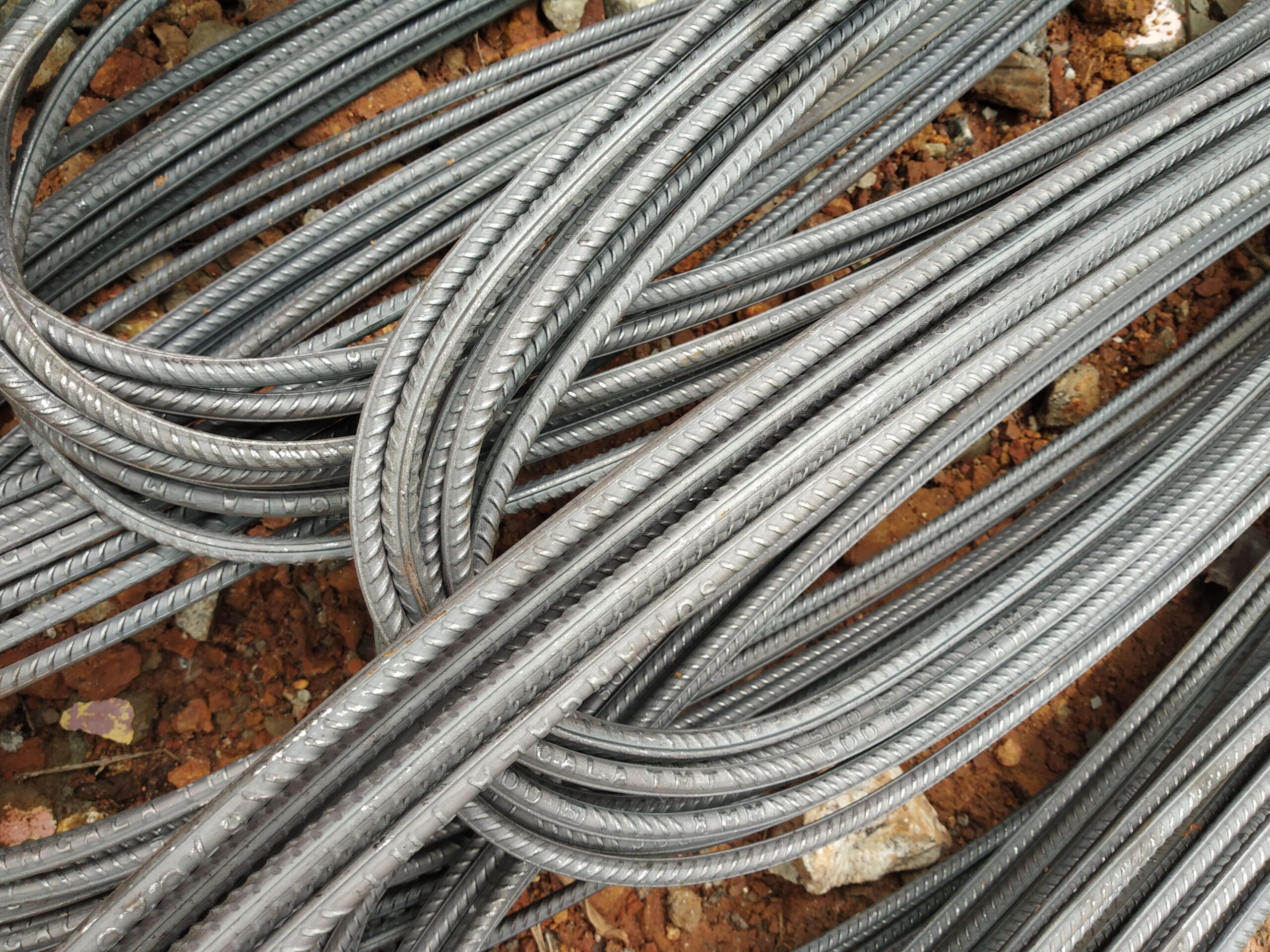
Rebar Mill Certificate Sample Explained — What Every Buyer Must Check
A mill test certificate (MTC) is the legal proof that your reinforcing steel meets the grade and mechanical properties you ordered. This guide walks through every field of a real rebar MTC, shows you what figures to verify, and explains how German exporters issue them under EN 10204.
What Is a Mill Test Certificate for Rebar?
A rebar mill certificate — formally called a Material Test Report or Inspection Certificate — is a document issued by the steel manufacturer (or an accredited third-party lab) confirming that a specific heat or batch of reinforcing steel has been tested and conforms to the applicable standard. For German and EU-standard rebar, the governing document type is EN 10204, which defines four inspection certificate types:
- 2.1 — Declaration of compliance with order (no test data)
- 2.2 — Test report with non-specific inspection (manufacturer data)
- 3.1 — Inspection certificate, authorised representative of manufacturer — the standard requirement for structural rebar exports
- 3.2 — Inspection certificate, independent third-party inspector — required on some public-sector and seismic projects
For B500B and B500C rebar supplied under DIN 488 / EN 10080, importers should always request a 3.1 certificate as a minimum. Some procurement standards (e.g. BS 4449 in the UK, ASTM-equivalent conversions for US-based projects) may additionally require a 3.2 report.
Field-by-Field Breakdown of a Typical Rebar MTC
Below is a reference table mapping each section of a German rebar MTC to what you should verify. Cross-reference these against your purchase order before accepting delivery.
Rebar MTC Field Checklist
Verify every row against your PO and the applicable standard before signing off.
| MTC Field | What It Shows | What to Verify |
|---|---|---|
| Certificate type | EN 10204 type (3.1 or 3.2) | Must be 3.1 minimum for structural use |
| Heat / Cast number | Unique melt identifier | Match bar markings & delivery note |
| Steel grade / designation | B500B, B500C etc. | Must match PO grade exactly |
| Standard reference | DIN 488 / EN 10080 | Confirm correct standard for your project |
| Diameter(s) & section area | Nominal dia mm & mm² | Match ordered diameters |
| Yield strength Re (MPa) | Actual measured value | ≥ 500 MPa; typical range 520–600 MPa |
| Tensile strength Rm (MPa) | Actual measured value | B500B: k = Rm/Re ≥ 1.08 |
| Agt — total elongation at max force | Ductility indicator % | B500B: ≥ 5.0%; B500C: ≥ 7.5% |
| Bend / rebend test | Pass/Fail | Must show “pass” for DIN 488 compliance |
| Chemical composition | C, Mn, Si, S, P, Ceq % | Ceq ≤ 0.50% for weldability (EN ISO 17660) |
| Quantity / weight (t) | Batch tonnage certified | Matches delivery note weight |
| Mill / issuer stamp | Authorised signatory | Must be manufacturer rep or accredited lab |
| Date of issue | When tests were performed | Should pre-date or match shipment date |
How to Read the Mechanical Properties Section
The mechanical properties block is the core of any rebar MTC. For B500B (the most widely traded grade for export), the minimum requirements under DIN 488 are:
- Characteristic yield strength (Re): ≥ 500 MPa
- Tensile-to-yield ratio (k = Rm/Re): ≥ 1.08
- Total elongation at maximum force (Agt): ≥ 5.0%
For B500C (seismic/high-ductility grade), the limits are tighter: k must fall in the range 1.15 ≤ k < 1.35 and Agt ≥ 7.5%. If your project engineer specifies B500C, verify that the MTC explicitly references this sub-grade — a standard B500B certificate is not a substitute.
The bend and rebend test (often listed as “Biegeversuch” on German certificates) confirms the bar can be bent to the mandrel diameter specified in DIN 488 without cracking — critical for stirrups and hook formation on site.
Chemical Composition and Weldability
Most rebar MTCs include a chemical analysis section listing carbon (C), manganese (Mn), silicon (Si), sulphur (S), phosphorus (P), and sometimes copper (Cu) and nitrogen (N) percentages. The key derived figure is the carbon equivalent (Ceq), typically calculated as:
Ceq = C + Mn/6 + (Cr + Mo + V)/5 + (Ni + Cu)/15
For good weldability under DIN EN ISO 17660, Ceq should be ≤ 0.50%. German B500B rebar typically achieves 0.38–0.48% Ceq. If your project involves welded rebar connections (e.g. welded mesh assemblies or coupler pre-fabrication), confirm this figure explicitly with your supplier before ordering.
Certificate of Origin and CE Marking
An MTC does not replace a Certificate of Origin — these are separate documents. The CE marking (Declaration of Performance under the Construction Products Regulation) confirms the product’s fitness for use within the EU market and references the harmonised standard EN 10080. When buying from a German mill or distributor, you should receive:
- EN 10204 3.1 Inspection Certificate (MTC)
- CE Declaration of Performance (DoP) referencing EN 10080
- Certificate of Origin (for customs / import duty purposes)
- Packing list with bundle weights and bar markings
See our full guide to export & delivery documentation → for a complete document checklist by destination region.
Bar Markings vs. MTC: Confirming Identity
Every DIN 488-compliant rebar carries rolled-in markings identifying the mill, grade, and diameter. On delivery, your QC team should cross-check:
- Mill identifier mark (unique per producer, registered with DIN/EAD)
- Grade indicator (e.g. two longitudinal ribs = B500B in German convention)
- Nominal diameter marking
- Heat number tag on each bundle — must match the MTC heat/cast number
If bundle tags are missing or the heat number cannot be matched to an MTC, the consignment should be quarantined and an inspection checklist triggered immediately.
Frequently Asked Questions — Rebar Mill Certificates
What is the difference between a 3.1 and 3.2 rebar certificate?
Can I request a rebar mill certificate before shipment?
What does Agt mean on a rebar certificate and why does it matter?
Do German rebar MTCs include the carbon equivalent (Ceq)?
How long should I retain rebar mill certificates on a project?
Source German-standard rebar with full export documentation
Tell us your specification and destination port — we’ll respond with a detailed quotation including EN 10204 3.1 MTCs, CE Declaration of Performance, and Certificate of Origin.