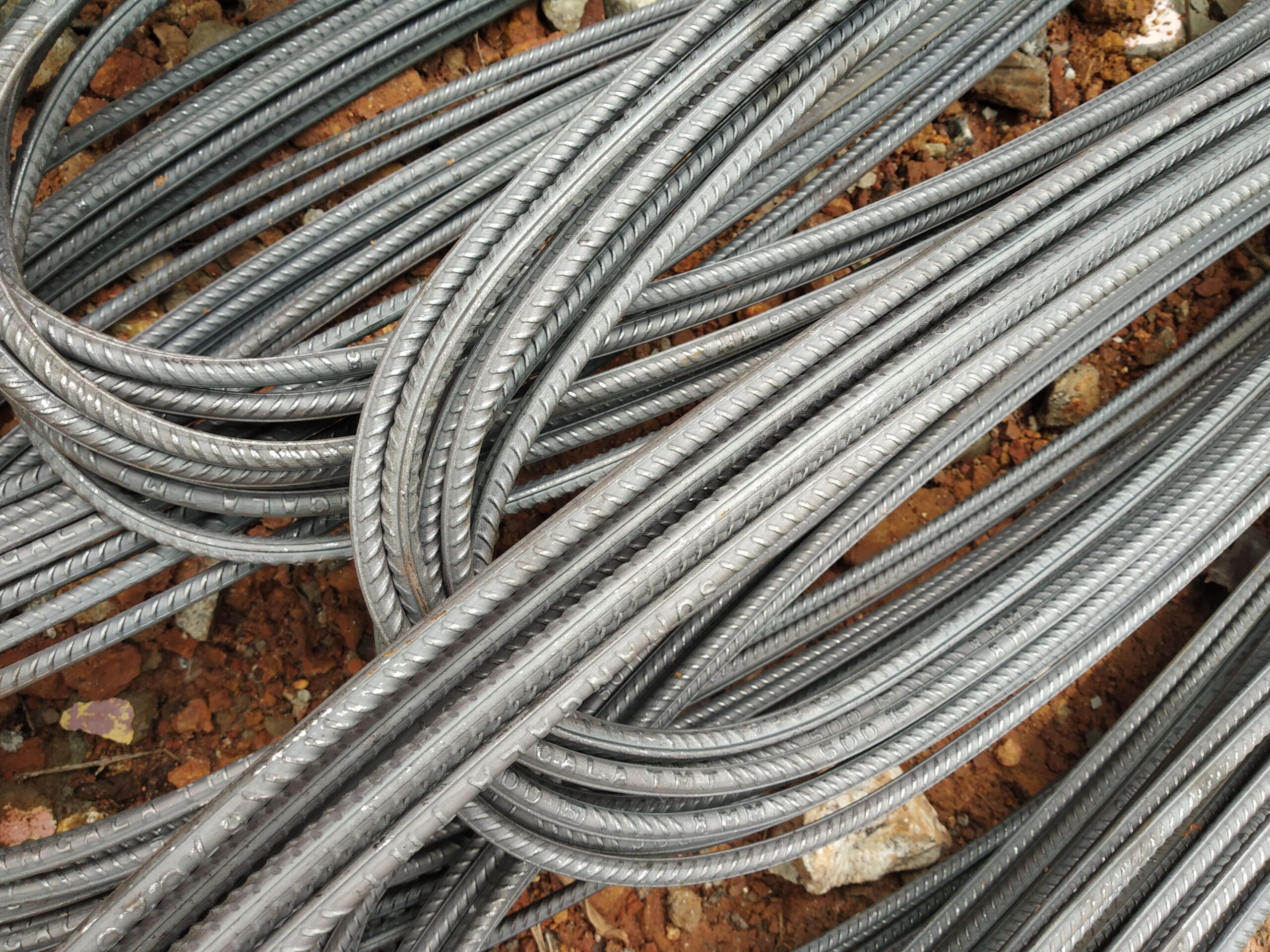
Rebar Quantity Take-Off Method — How to Calculate Steel Weight for Your Order
A rebar quantity take-off (QTO) converts your structural drawings into a tonnes-by-diameter order schedule. This guide explains the methodology step by step, provides the standard weight formula, and walks through a worked example so you can prepare an accurate bill of quantities before requesting a quote.
What Is a Rebar Quantity Take-Off?
A rebar quantity take-off is the process of extracting every reinforcing bar from a set of structural drawings, calculating its linear length, applying the weight-per-metre formula for that diameter, and summing the result into a schedule of tonnes by bar diameter. The output feeds directly into procurement — it is the document you send to your supplier when requesting a quote, and it becomes the basis of your purchase order.
An accurate QTO prevents two common problems: over-ordering (tying up cash and storage space at the destination) and under-ordering (causing construction delays while you wait for supplementary shipments). For export orders crossing international borders, the QTO also informs container loading calculations and freight cost estimates.
The Rebar Weight Formula
The standard weight formula for steel rebar is derived from the density of steel (7,850 kg/m³) and the cross-sectional area of a circular bar:
Weight (kg/m) = d² (mm) × 0.00617
Where d is the nominal diameter in millimetres. This formula is exact for the standard steel density and gives results consistent with DIN 488 nominal weight values. For example:
- 12 mm bar: 12² × 0.00617 = 144 × 0.00617 = 0.888 kg/m
- 16 mm bar: 16² × 0.00617 = 256 × 0.00617 = 1.578 kg/m
- 20 mm bar: 20² × 0.00617 = 400 × 0.00617 = 2.468 kg/m
Standard Rebar Weight and Section Reference Table
Nominal values per DIN 488 / EN 10080 for B500B hot-rolled deformed bar.
| Diameter (mm) | Weight (kg/m) | Cross-section (mm²) | Bars per tonne (12 m) |
|---|---|---|---|
| 8 | 0.395 | 50.3 | ≈ 211 |
| 10 | 0.617 | 78.5 | ≈ 135 |
| 12 | 0.888 | 113 | ≈ 94 |
| 14 | 1.21 | 154 | ≈ 69 |
| 16 | 1.58 | 201 | ≈ 53 |
| 20 | 2.47 | 314 | ≈ 34 |
| 25 | 3.85 | 491 | ≈ 22 |
| 28 | 4.83 | 616 | ≈ 17 |
| 32 | 6.31 | 804 | ≈ 13 |
| 40 | 9.86 | 1257 | ≈ 8 |
Bars per tonne (12 m) figures are indicative and calculated as 1000 ÷ (weight kg/m × 12 m). Actual packing quantities vary by mill and bundle configuration.
Step-by-Step Rebar QTO Method
Follow these five steps to produce a complete take-off schedule from structural drawings:
Step 1 — Gather drawings and bar bending schedules
Collect all structural layout drawings and, if available, the bar bending schedule (BBS) prepared by the structural engineer. A BBS lists every bar by its shape code (DIN 488 or BS 8666 shape codes), diameter, total length per bar, and number of bars. If a BBS is not available, you will need to measure lengths directly from the reinforcement layout drawings.
Step 2 — List every unique bar by diameter
Create a spreadsheet with columns: bar mark, diameter (mm), shape code, total cut length per bar (m), quantity (No.), and total linear metres. Group bars by diameter. Include lap lengths — for B500B, standard lap lengths per Eurocode 2 range from approximately 40–60× the bar diameter depending on cover and concrete class.
Step 3 — Calculate total linear metres per diameter
Multiply the cut length per bar by the quantity for each bar mark. Sum to get total linear metres per diameter across the entire structure.
Step 4 — Convert to kilograms and tonnes
Apply the weight formula: total metres × weight kg/m for that diameter. Sum all diameters to get the overall tonnage. Add a wastage allowance (typically 3–5% for cut-and-waste on complex shapes) if the BBS does not already account for it.
Step 5 — Format the procurement schedule
Present your take-off as a table showing diameter, total kg, and total tonnes. Include the required grade (B500B or B500C), delivery standard (DIN 488 / EN 10080), required lengths, and destination port. This is the information your supplier needs to provide an accurate quotation. See the rebar procurement checklist → for the full set of details to include.
Worked Example — Simple Raft Foundation
Consider a 20 m × 15 m raft slab reinforced with T16 bars at 200 mm centres both ways, top and bottom (4 layers). Indicative calculation:
- Bars in one direction: 20 m span ÷ 0.2 m spacing = 100 bars per layer; 4 layers × 2 directions = 800 bar runs
- Bar length per run ≈ 15 m (plus laps on longer spans — simplified here)
- Total linear metres T16: 800 × 15 = 12,000 m
- Weight at 1.58 kg/m: 12,000 × 1.58 = 18,960 kg ≈ 19.0 tonnes
This is a simplified indicative calculation for illustration. A real project BBS would account for varying bar lengths, laps, hooks, and trimmer bars, and the structural engineer’s drawings take precedence. Always have your QTO reviewed against the structural design before placing an order.
Frequently Asked Questions — Rebar Quantity Take-Off
What wastage percentage should I add to a rebar quantity take-off?
What is the difference between a rebar schedule and a bar bending schedule?
Should I include lap lengths in my rebar quantity take-off?
How do I convert a rebar quantity take-off into a purchase order for export?
Can I use the DIN 488 weight formula for all rebar grades?
Source German-standard rebar with full export documentation
Tell us your specification and destination port — we’ll respond with a detailed quotation including EN 10204 3.1 MTCs, CE Declaration of Performance, and Certificate of Origin.