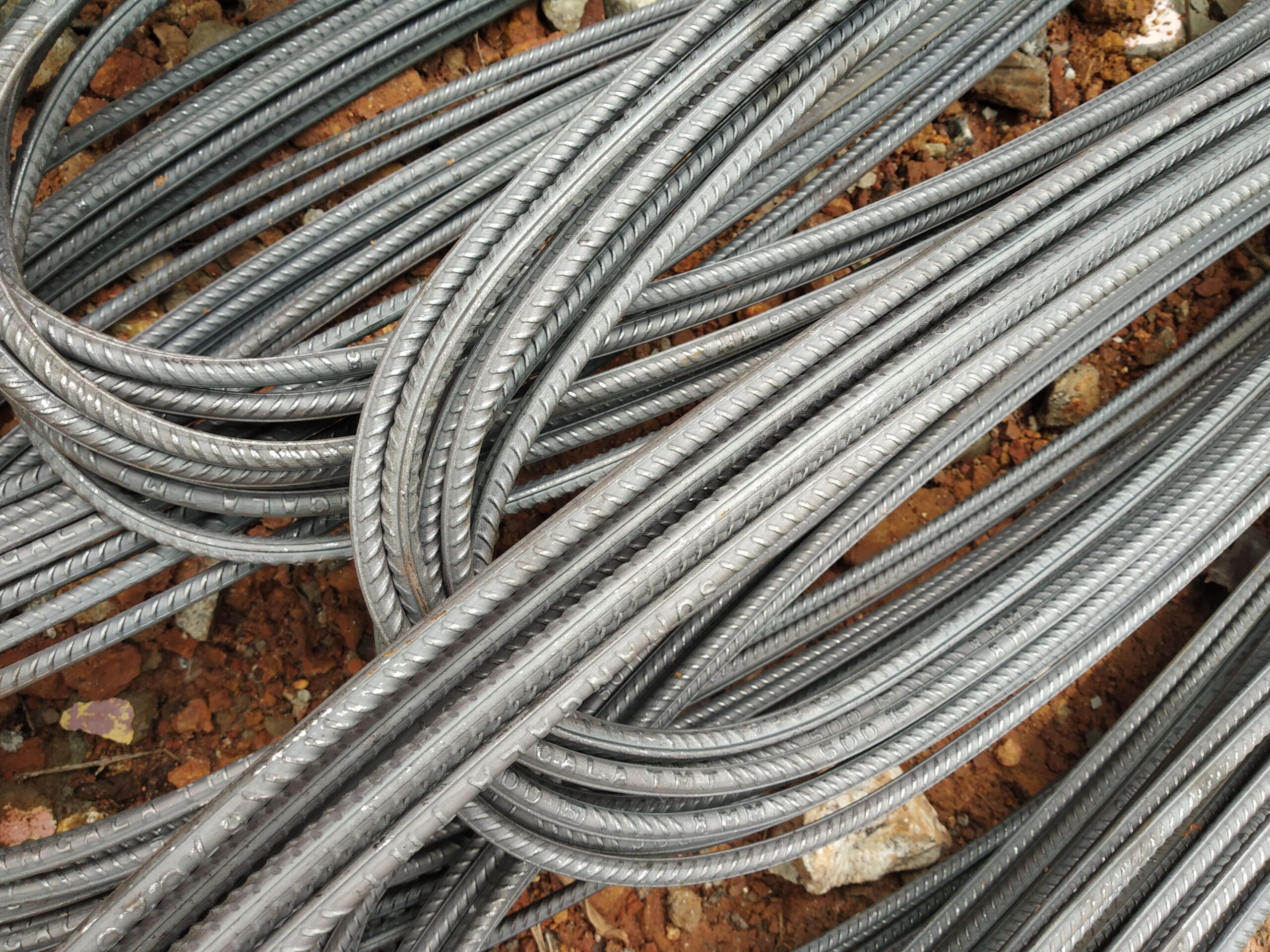
Rebar Storage and Handling on Site: Best Practice
Correct rebar storage and handling on site preserves the structural integrity, bond capacity, and traceability of your reinforcing steel from delivery to placement. This guide covers best-practice procedures for DIN 488 / EN 10080 compliant bar, coil, and mesh products.
Why Proper Rebar Storage and Handling Matters
Reinforcing steel delivered to site in conformance with DIN 488 and EN 10080 can be compromised by poor on-site storage and handling. The consequences range from reduced bond strength due to contaminated surfaces, to safety hazards from improperly stacked bundles, to traceability failures that invalidate the Mill Test Certificate chain of custody. In reinforced concrete construction, inspectors and structural engineers rely on the integrity of stored rebar matching the delivered specification — any uncertainty requires re-testing at the buyer’s cost.
Receiving and Inspection at Delivery
The first step is a systematic receiving inspection before bundles are offloaded or stacked:
- Check bundle labels against the Mill Test Certificate (MTC) — verify heat number, grade (e.g. B500B), diameter, and standard (EN 10080 / DIN 488). Every bundle should carry a durable tag or label that matches the MTC.
- Inspect bundle integrity — binding wires should be intact; loose or broken bundles must be re-stacked carefully before storage to prevent individual bars sliding.
- Visual surface check — light surface rust (adherent, no pitting) is acceptable per EN 10080. Reject bars with deep pitting, delaminating scale, or contamination with oil, grease, or cement.
- Quantity check — verify bundle count and total weight against the packing list before signing the delivery note.
Storage Area Setup and Ground Conditions
The storage area layout directly affects bar condition and site safety:
| Requirement | Recommended Practice | Reason |
|---|---|---|
| Ground surface | Compacted hardcore, concrete slab, or timber bearers at ≥150 mm above grade | Prevents ground contact corrosion and contamination |
| Drainage | Area graded to drain; no standing water under or around bundles | Accumulated moisture accelerates corrosion |
| Separation from other materials | Minimum 300 mm clearance from cement, chemicals, fuel stores | Prevents contamination of bar surface |
| Overhead cover | Tarpaulin or temporary shelter for extended storage (>4 weeks) | Reduces weathering and differential corrosion |
| Grade segregation | Separate bays or stacks labelled by grade and diameter | Prevents misidentification; maintains traceability |
| Stack height | Maximum 1.5 m for manual handling; mechanical stacking with spreader beam for higher | Stability and safe manual handling |
Handling Procedures: Cranes, Spreader Beams, and Manual Lifting
Reinforcing bar bundles — typically ~2 t per bundle in seaworthy export packing — require mechanical lifting for offloading and repositioning. Key handling principles:
- Use a spreader beam rather than a single central lifting point. A central sling concentrates load and can cause a long bundle to bow, potentially overstressing bars and disturbing the bundle geometry.
- Sling angle — maintain a sling angle of ≥60° from horizontal to avoid excessive horizontal compression on the bundle ends.
- Never drag bundles across ground or other materials; dragging damages the rib geometry and surface.
- Individual bars — carry, never drag. For bars over 6 m, two-person carry or mechanical assist prevents permanent bending under self-weight.
- Cut-and-bent cages — pre-fabricated column or beam cages should be lifted using purpose-made lifting eyes or slings at engineer-specified pick points to prevent distortion.
Traceability and Grade Segregation
Maintaining traceability from the MTC to the placed bar is a legal and contractual obligation on most structural projects. Best practice includes:
- Retain bundle labels and MTC copies on site until the concrete pour is complete and recorded.
- Log each delivery in a rebar register: delivery date, supplier, heat number, grade, diameter, quantity, and MTC reference.
- When cutting and bending, transfer the heat number to the cut pieces using paint pen or attached tag — do not rely on visual identification of cut ends.
- Store different grades (B500A coils, B500B bars, B500C seismic bars) in clearly labelled, physically separated zones. B500C must never be mixed with B500B without clear identification, as the grades are visually identical.
For product-specific guidance, see our rebar products hub and the steel grades comparison page.
Related Resources
Products Overview
Full range: B500B bars, coils, mesh, couplers, stirrups, spacers, and lattice girders.
View products →Cut & Bend Rebar
DIN 488 shape codes, cut lengths, and bent cages supplied ready for placement.
View cut & bend →Export & Delivery
Seaworthy bundle packing, container loading, and MTC chain-of-custody guidance.
View export info →Frequently Asked Questions: Rebar Storage and Handling
Common questions from site engineers and procurement managers on rebar logistics.
How long can rebar be stored on site without significant degradation?
Is light surface rust on rebar a problem?
How should cut-and-bent bars be stored differently from straight bars?
What documentation should accompany rebar on site?
Source German-standard rebar with full export documentation
Tell us your specification and destination port — we’ll respond with a detailed quotation.